

The first week after an international move can feel strangely quiet and completely chaotic at the same time.
Your bags might be unpacked, but the real work starts when you try to get WiFi installed, understand why a simple appointment requires three different documents, or figure out which office handles which form.
If you’re wondering what to do after moving to Italy, the honest answer is: not everything at once.
The right things, in the right order.
That order matters more than most people expect.
A lot of settling-in problems come from approaching Italian bureaucracy the same way you would back home — expecting quick answers, digital confirmations, and clear procedures.
Italy works on its own rhythm.
Patience, preparation, and local knowledge are your best tools.
Once you accept that, things genuinely start to feel more manageable.
Start with your address, documents, and phone
Before anything else, make sure these three things are in place — because almost everything else depends on them.
If you’ve just moved into a rental or newly purchased home, double-check that your tenancy or ownership documentation is correct and complete.
Keep both digital and printed copies of everything in one organised folder.
In Italy, you’ll be asked for the same documents repeatedly, by different offices, often with little notice.
Being prepared is not paranoia — it’s the single most effective time-saving habit you can build early on.
Your phone setup matters more than it might seem.
If you’re still relying on a foreign number, everyday tasks quickly become awkward: delivery calls, utility appointments, and interactions with local offices are all just smoother with an Italian number.
It also helps shift your mindset from “visiting” to “living here”.
Then deal with your internet connection right away.
Don’t assume it will sort itself out in a couple of days.
In some areas — especially more rural towns in Abruzzo — setup can involve waiting periods, technician visits, or follow-up calls that move on Italian time.
If you work remotely, this is non-negotiable: get it started immediately.
Get your home utilities working
Before you chase every administrative task, make your home functional.
Electricity, gas (where relevant), water, waste collection registration, and internet — these are your foundation.
The challenge is that utility setup depends on several variables at once: your property type, your municipality, your specific provider, and whether the previous tenant closed their accounts correctly.
Sometimes the issue is the process itself.
Often it’s the language.
A call that sounds routine can become an hours-long delay when you’re trying to navigate technical Italian terms and account numbers you’ve never seen before.
There’s no shame in getting help at this stage.
Actually, it’s usually the smartest move.
Setting up utilities in Italy is one of those things that looks simple on a list but can eat days of your time if something goes wrong and you don’t know who to call or what to say.
“Italy usually has a solution for every problem — but finding it often requires knowing the right person to ask” — a sentiment shared by almost every expat who has settled here successfully.
Handle residency and admin calmly and methodically
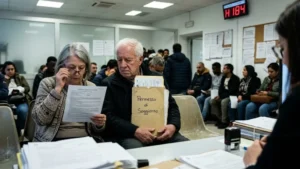
One of the most stressful parts of moving abroad is that routine paperwork suddenly feels high stakes.
You’re not just filling out forms — you’re trying to establish your legal presence in a new country while hoping you’ve understood everything correctly.
For EU citizens, the key step is registering your residency at your local Comune (town hall) — a process called Iscrizione Anagrafica.
This is what unlocks your access to the national health service, your Italian ID card, and many other services.
It’s not optional, and the sooner you do it, the sooner other things open up.
You can read a detailed breakdown of how Italian residency works for expats to understand exactly what’s involved.
When you go to any local office, arrive prepared.
Bring originals, copies, your ID, your Italian tax code, proof of address, and any appointment confirmation you’ve received.
Treat any list of required documents as a minimum, not a guarantee — it’s unfortunately common to be asked for one additional item that wasn’t mentioned.
Frustrating, yes.
Unusual? Not at all.
If your Italian is limited, this is often the point where overwhelm sets in — not because you’re incapable, but because navigating bureaucratic language is tiring even for native speakers.
Having someone bilingual by your side, or helping you prepare in advance, can change the entire experience.
It’s the difference between a productive morning and a wasted day.
According to Savory & Partners, expats should also plan for administrative steps to take longer than expected — building a buffer of several weeks into your timeline is realistic, especially for residency and health registration.
The document sequence that unlocks everything else
One thing that catches many newcomers off guard is how interdependent the Italian administrative system is.
You need your Codice Fiscale to formalize the purchase or rental contract (you can get it if you have at least a document proving your intention to reside in Italy).
You need your Codice Fiscale and your Italian address to open an Italian bank account.
You need a bank account to pay bills.
And you need several of the above to register with the local health authority (ASL) and choose your medico di base (local GP).
This is the sequence — and jumping steps, or trying to do everything simultaneously, is what creates the famous “bureaucracy loop” that drives expats to despair.
Here’s a simplified order that tends to work well:
- Get your Codice Fiscale — your Italian tax code, essential for almost everything (we can help with this)
- Secure your address documentation (rental contract or purchase deed)
- Register residency at the Comune (residency registration support)
- Set up utilities — electricity, gas, water, internet (utility setup support)
- Open an Italian bank account (bank account support)
- Register with the ASL and choose your GP to get your Tessera Sanitaria (health card) (health card support)
Each step builds on the one before it.
Understanding this turns a pile of overwhelming tasks into a manageable roadmap.
Sequence is everything.
As A Way Abroad notes, the health card (Tessera Sanitaria) specifically requires your Codice Fiscale and registered residency — you can’t skip those steps and expect the healthcare registration to work.
Set up daily life, not just paperwork
Settling in successfully isn’t only about official steps.
It’s also about removing the small daily frictions that make a new place feel exhausting rather than exciting.
Find your nearest grocery store, pharmacy, post office, and a coffee bar you actually like.
Learn when things close — afternoon closures (pausa pranzo) are still common in smaller towns, and many shops don’t open on Sunday.
Notice the rhythms of your neighbourhood.
In Abruzzo especially, daily life still runs on local habits that aren’t posted anywhere and aren’t obvious until you’ve lived them for a few weeks.
Transportation belongs in this phase, too.
- If you have a car, understand the parking rules in your area and where resident permits apply.
- If you rely on public transport, test your route before you need it under time pressure.
And if you’ve brought a foreign-registered vehicle, be aware that re-registering it in Italy is a process worth starting early.
This is also the right time to start building small daily interactions in Italian.
Ordering a coffee, asking at a shop, understanding opening hours — these moments seem trivial, but they are often the first signs that life here is starting to feel livable.
Moving to Italy without speaking much Italian is very common, and it gets easier faster than most people expect.
What to do if you feel isolated after moving
This part deserves honest attention because almost nobody talks about it enough.
Even a move you wanted deeply — one you planned for months or years — can come with a hard emotional dip once the adrenaline wears off.
You might feel tired, overly dependent on others, and oddly homesick while surrounded by scenery you love.
That doesn’t mean you made the wrong decision.
It usually means you’re in the middle of a real transition, not a holiday.
Unfamiliar systems, language barriers, and the mental load of daily admin can make capable, confident adults feel off-balance in ways they didn’t expect.
The best response isn’t to force instant belonging.
Start smaller:
- Return to the same bakery twice.
- Introduce yourself to a shop owner.
- Walk the same street at the same time each day.
Repetition creates comfort long before connection does.
If you’ve moved to Abruzzo specifically, local, on-the-ground support can genuinely change the quality of your early months — not just practically, but emotionally.
Knowing there’s someone who speaks your language, understands the local system, and is rooting for your move to work makes the place feel less unknown.
And that feeling, more than any single completed form, is often what turns a stressful start into a solid foundation.
Give yourself a realistic settling-in timeline
A lot of expats feel behind because they expected to feel settled after a month. That’s usually far too soon. You might have the keys, the groceries, and the internet sorted — and still not feel anchored.
That’s completely normal.
Think in phases instead of deadlines:
- Phase 1 — Function: utilities working, documents in hand, basic routines in place
- Phase 2 — Familiarity: you know your neighbourhood, your admin is organised, you’re navigating daily life with less friction
- Phase 3 — Belonging: you have favourite spots, a few local contacts, and Italy starts to feel like your life, not an extended trip
You don’t need to rush any of these phases.
What you do need is enough structure to move through the early months without burning out.
That also means being honest about where to spend your energy.
Some tasks are worth doing yourself — especially if learning the system is part of your plan.
Others are better handled with support, because the cost of getting them wrong, or the delay in figuring them out alone, is simply too high.
There’s no prize for doing every difficult thing alone.
If you’re still asking what to do after moving to Italy, here’s the simplest version: make your home workable, get your paperwork in order, and let your days become easier to live in.
Once those foundations are in place, Italy stops feeling like a puzzle to solve — and starts feeling like your actual life.
And that’s when the move begins to feel real, in the best possible way.
—
Ready to settle in without the guesswork?
Every person who moves to Italy goes through a version of this.
The overwhelming admin, the language barrier at the wrong moment, the feeling that you’re just one document short of everything clicking into place.
You’re not alone in that — and you don’t have to figure it all out by yourself.
At Wanderlust Abruzzo, we help English- and German-speaking expats get settled in Abruzzo with calm, practical, bilingual support — from utilities and paperwork to the kind of local knowledge that only comes from actually living here.
Whether you need help with one specific step or support across the whole settling-in process, we’re here.
Get in touch today and let’s talk about your move
—
Frequently Asked Questions
What should I do first after moving to Italy?
Start with the three things that everything else depends on: confirm your address documentation is correct, get your Codice Fiscale (Italian tax ID), get an Italian phone number, and begin your internet setup. Then move on to your residency registration, and utilities — in that order.
How long does it take to feel settled after moving to Italy?
There is no right or wrong answer here. Most expats find that genuine day-to-day comfort comes after three to six months, not weeks. The early phase — getting utilities, documents, and routines in place — can feel chaotic. That’s normal. Think in phases: function first, then familiarity, then belonging.
Do I need to register with my local Comune after moving to Italy?
Yes. If you’re planning to stay long-term, registering your residency (Iscrizione Anagrafica) at your local town hall is a required step. It’s also what unlocks access to the national health service, your Italian ID card, and various other services. EU citizens can do this without a visa, but the paperwork still matters.
Can I manage Italian bureaucracy without speaking Italian?
You can manage some of it — especially with preparation and translated documents — but it’s genuinely harder without some Italian or bilingual support. Office staff in smaller towns often speak little to no English, and technical or legal language adds another layer of complexity. Having someone bilingual with you at key appointments makes a real difference.
Is it worth getting local relocation support after arriving in Italy?
For many expats, especially in the first few months, yes. A local guide who knows the system, speaks Italian, and understands the specific procedures in your area can save you weeks of frustration. It’s not about not being capable — it’s about not having to learn a completely unfamiliar system from scratch while also adjusting to a new country.

 English
 Deutsch