
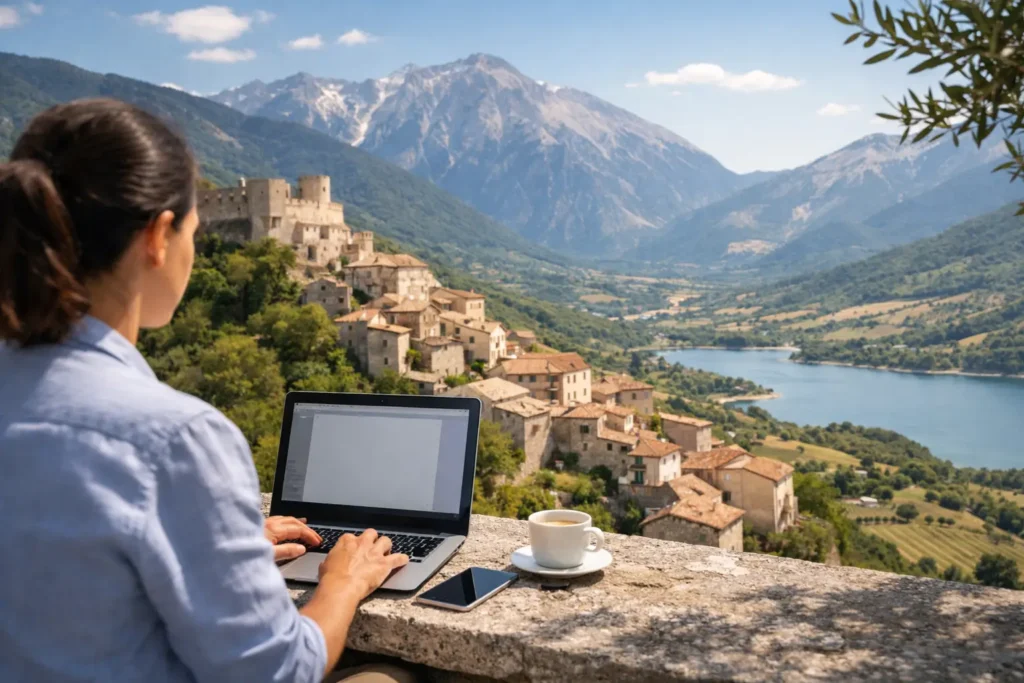
Wenn deine Vorstellung von einem besseren Arbeitstag Bergblick, eine ausgedehnte Mittagspause, niedrigere Lebenshaltungskosten und Wochenenden beinhaltet, die sich wie echte Wochenenden anfühlen, dann ist ein Umzug als Remote Worker nach Abruzzo kein loser Tagtraum.
Es ist eine praktische Idee.
Der Teil, der dabei meistens unterschätzt wird, ist jedoch nicht die Schönheit der Region.
Es ist die Kluft zwischen der Begeisterung für das Leben in Italien und dem tatsächlichen Aufbau einer Struktur, die es dir erlaubt, ohne ständige Reibungspunkte zu arbeiten, zu leben und durchzuatmen.
Abruzzo kann ein wunderbarer Ort für einen Neuanfang sein, wenn du remote arbeitest– besonders, wenn du dir mehr Platz, ein weniger hektisches Tempo und eine bodenständigere Version des italienischen Lebens wünschst.
Allerdings kann es anfangs auch verwirrend sein.
- Die perfekte Stadt für deinen Lebensstil ist vielleicht nicht die perfekte Stadt für deine WLAN-Bedürfnisse.
- Eine Wohnung, die online makellos aussieht, erweist sich im Alltag womöglich als unpraktisch, sobald man die richtigen Fragen stellt.
- Einfache administrative Aufgaben können weitaus mehr Zeit in Anspruch nehmen als gedacht, wenn man sie in einer fremden Sprache erledigen muss.
Das bedeutet nicht, dass der Umzug eine schlechte Idee ist.
Es bedeutet nur, dass der Schritt am besten gelingt, wenn man ihn mit einer gesunden Mischung aus Vorfreude und Realismus angeht.
Warum das Remote-Arbeiten in Abruzzo so viele Menschen anspricht
Die meisten Menschen, die über Abruzzo nachdenken, suchen keinen glamourösen Neustart.
Sie suchen Entlastung:
- Entlastung von hohen Mieten,
- überfüllten Städten,
- und langen Arbeitswegen.
Und sie suchen einen Ausweg aus dem Gefühl, dass das Leben schlichtweg zu teuer und zu schnell geworden ist..
Abruzzo bietet eine seltene Kombination, die man in Europa kaum noch findet.
Du hast die Küste, die Berge, historische Orte und eine starke lokale Kultur – aber ohne das Preisschild und den Druck, die oft mit den bekannteren Reisezielen Italiens einhergehen.
Für Remote Worker ist das ein entscheidender Faktor.
Du wählst keinen Ort für einen einwöchigen Urlaub.
Du wählst die Kulisse für deinen ganz normalen Dienstag.
Der Alltag fühlt sich hier menschlicher an:
- Du hast einen leichteren Zugang zu frischen, lokalen Lebensmitteln,
- mehr Platz in den eigenen vier Wänden,
- und ein ausgeprägteres Bewusstsein für die Jahreszeiten.
Je nachdem, wo du dich niederlässt, kannst du nahe am Meer wohnen und dennoch Hügelstädte oder Bergregionen mit relativer Leichtigkeit erreichen.
Diese Vielfalt macht den Reiz aus.
Aber es gibt einen Kompromiss.
Je charmanter und versteckter ein Ort liegt, desto eher stößt du an praktische Grenzen – sei es bei den öffentlichen Verkehrsmitteln, den Englischkenntnissen vor Ort oder der Verfügbarkeit von Dienstleistungen.
Das ist kein Grund, kleinere Städte zu meiden.
Es bedeutet nur, dass deine Entscheidung darauf basieren sollte, wie du tatsächlich lebst und arbeitest.
Was Remote Worker vor dem Umzug bedenken sollten
Die romantische Version einer Auswanderung beginnt meist mit der Landschaft.
Die reale Version beginnt mit dem Alltag.
Wenn du online arbeitest, ist dein Zuhause nicht nur dein Wohnort.
Es ist auch dein Büro, deine Kulisse für Videocalls, deine Lebensader im Internet und der Ort, an dem du dich erholst, nachdem du dich mit fremden Systemen auseinandergesetzt hast.
Das verschiebt die Prioritäten.
Das Thema Wohnen ist dafür das beste Beispiel.
Eine charmante Immobilie in einem wunderschönen Dorf klingt ideal. Wenn aber die Heizung schlecht ist, der Arbeitsplatz unergonomisch oder die Internetverbindung unzuverlässig, wird das tägliche Leben schnell stressig.
Das Gleiche gilt für Lagen, die auf der Karte praktisch aussehen, sich ohne Auto aber isoliert anfühlen.
Denke zuerst an deinen Arbeitsstil.
- Benötigst du täglich schnelles, stabiles Internet für Calls und Uploads?
- Musst du für regelmäßige Reisen in der Nähe eines Bahnhofs sein?
- Bist du in einer fußläufigen Stadt am glücklichsten oder bevorzugst du mehr Platz und Ruhe außerhalb des Zentrums?
- Wünschst du dir eine aktive Expat-Gemeinschaft oder suchst du gezielt ein rein lokales Umfeld?
Diese Fragen sind weitaus wichtiger als das perfekte Bild.
Ein gelungener Umzug ist nicht der, der auf Social Media am romantischsten aussieht.
Es ist der, der sich auch dann noch machbar anfühlt, wenn das Neue seinen ersten Reiz verloren hat.
Die Wahl der richtigen Region in Abruzzo
Es gibt nicht den einen, besten Ort in Abruzzo für Remote Worker.
Es hängt stark von deinen Prioritäten ab.
Wenn du eine gut angebundene, praktische Struktur suchst,machen Küstenregionen und größere Städte den Übergang oft einfacher.
Die Gegenden um Pescara, Francavilla al Mare oder Silvi bieten eine bessere Balance aus Dienstleistungen, Verkehrsmitteln und alltäglichem Komfort.
Das kann besonders hilfreich sein, wenn dies dein erster Umzug nach Italien ist oder du schnell einsatzbereit sein musst.
Wenn deine Prioritäten eher auf Ruhe, Landschaft und niedrigeren Immobilienkosten liegen,sind die Orte im Landesinneren attraktiver.
Diese Gegenden können zutiefst bereichernd sein, erfordern jedoch oft mehr Geduld und Planung.
Du wirst ein Auto brauchen.
Zudem musst du akzeptieren, dass Termine, Lieferungen und administrative Abläufe nicht in der Geschwindigkeit ablaufen, die du vielleicht gewohnt bist.
Keine der Optionen ist absolut besser.
- Manche Menschen blühen in einer ruhigen Hügelstadt auf und blicken nie wieder zurück.
- Andere stellen fest, dass sie mehr Infrastruktur in der Nähe brauchen, um sich wohlzufühlen.
Der Schlüssel liegt darin, einen Standort zu wählen, der dein tatsächliches Arbeitsleben unterstützt, nicht nur dein idealisiertes.
Die praktische Seite eines Remote-Work-Umzugs nach Abruzzo
Das ist der Teil, über den viele nicht genug sprechen – vermutlich, weil er sich weniger gut für Fotos eignet.
Aber genau hier entsteht oft der meiste Umzugsstress.
Selbst einfache organisatorische Aufgaben können am Anfang auslaugen.
Die Suche nach einer Wohnung, zu verstehen, was im Mietvertrag enthalten ist, Versorgungsbetriebe anzumelden, das WLAN freizuschalten, lokale Termine zu koordinieren und den grundlegenden Papierkram zu erledigen, kostet Kraft.
Wenn du nicht sicher Italienisch sprichst, kann sich jeder Schritt komplizierter anfühlen, als er eigentlich sein sollte.
Das ist oft die wahre Herausforderung einer Auswanderung.
Kein einzelnes, riesiges Problem, sondern ein Berg aus kleinen, ungewohnten Aufgaben, die alle Telefonate, Formulare, präzises Timing und Ortskenntnisse erfordern.
Das WLAN ist dafür ein gutes Beispiel.
Für Remote Worker ist das kein unbedeutendes Detail.
Dennoch können die Verfügbarkeit und die Installationszeiten von Internetanschlüssen je nach Gebiet und Gebäude stark variieren.
Du musst nicht nur wissen, ob der Dienst grundsätzlich existiert, sondern auch, wie zuverlässig er voraussichtlich sein wird und wie lange die Einrichtung dauert.
Wenn du bei deiner Ankunft bereits feste Arbeitstermine hast, sind diese Details essenziell.
Beim Wohnraum verhält es sich ähnlich.
Fotos erzählen selten die ganze Geschichte.
Eine Immobilie kann geräumig wirken, sich in der Praxis aber als unpraktisch erweisen.
Die Heizung, der Lärmpegel, die Klarheit des Vertrags, die Qualität der Möbel und die Nähe zu alltäglichen Dienstleistungen beeinflussen maßgeblich, wie gut du dich einlebst.
Was günstig klingt, kann frustrierend werden, wenn die Struktur deine Arbeit oder deinen Komfort nicht unterstützt.
Hier kann eine lokale, zweisprachige Unterstützung den entscheidenden Unterschied machen.
Jemanden vor Ort zu haben, der sowohl die Systeme als auch die unausgesprochenen praktischen Realitäten versteht, kann dir Zeit, Stress und teure Fehler ersparen.
Wir von Wanderlust Abruzzo helfen Menschen genau in dieser Phase des Einlebens, damit sie nicht versuchen müssen, alles komplett allein zu entschlüsseln.
Was häufig unterschätzt wird
Viele Remote Worker nehmen an, dass der schwierige Teil vorbei ist, sobald sie eine Unterkunft gefunden haben.
Meistens beginnt genau dann die zweite Phase.
Das Einleben ist nicht nur administrativ.
Sondern auch emotional.
Du stellst dich auf:
- einen anderen Rhythmus,
- andere Erwartungen,
- und andere Wege ein, Dinge zu erledigen.
Selbst wenn der Umzug absolut positiv ist, kann er ermüden.
Du versuchst, im Job produktiv zu bleiben, während du gleichzeitig Supermärkte, SIM-Karten, Transportwege und die Frage klärst, wen du anrufen musst, wenn etwas nicht mehr funktioniert.
Das kann zu einer seltsamen Erfahrung führen.
- Auf der einen Seite lebst du das Leben, das du dir gewünscht hast.
- Auf der anderen Seite fragst du dich, warum die Bestätigung eines einzigen Termins sich wie ein Vollzeitjob anfühlt.
Das ist völlig normal.
Es bedeutet nicht, dass du die falsche Entscheidung getroffen hast.
Es bedeutet nur, dass eine Auswanderung eine Eingewöhnungskurve hatund die meisten Menschen mehr Unterstützung benötigen, als sie erwarten.
Ein reibungsloserer Umzug resultiert meist daraus, vermeidbaren Stress frühzeitig zu reduzieren.
as kann bedeuten, für das erste Jahr eine besser angebundene Stadt zu wählen, sich vor der Ankunft Hilfe bei der Einrichtung zu organisieren oder sich selbst eine realistische Übergangszeit zu gestehen, anstatt zu erwarten, dass innerhalb einer Woche alles perfekt läuft.
Ist Abruzzo für jeden Remote Worker das Richtige?
Nein, und das sollte man auch so deutlich sagen.
Wenn du die ständige Energie einer Großstadt, ein hochgradig internationales Umfeld und sofortige Verfügbarkeit in allen Lebensbereichen brauchst, wird dir Abruzzo vielleicht zu ruhig oder zu langsam sein.
Wenn deine Arbeit von häufigem persönlichem Networking oder dem schnellen Zugang zu großen Wirtschaftszentren abhängt, musst du die Lage und die Reise-Logistik sehr sorgfältig planen.
Wenn du jedoch nach einem großzügigeren, bodenständigeren und bezahlbareren Lebensstilmit echtem italienischen Charakter und Raum zum Atmen suchst, kann Abruzzo eine exzellente Wahl sein.
Besonders, wenn du möchtest, dass dein Arbeitsleben dein Privatleben unterstützt, anstatt es komplett zu verschlingen.
Der Umzug funktioniert meist am besten für Menschen, die flexibel und neugierig sind und bereit, ein gewisses Maß an Komfort gegen Lebensqualität einzutauschen.
Nicht jeder möchte diesen Tausch eingehen.
Viele tun es.
Ein Umzug als Remote Worker nach Abruzzo bedeutet nicht, in eine Fantasiewelt zu fliehen.
Es geht darum, eine Version des Alltags aufzubauen, die sich besser, ruhiger und nachhaltiger anfühlt – und sich selbst die richtige Unterstützung zu holen, damit die praktischen Hürden nicht den Grund überschatten, warum man überhaupt auswandern wollte.
—
Dein Leben als Remote Worker in Abruzzo aufbauen
Ein Umzug als Remote Worker nach Abruzzo gelingt am besten, wenn man ein wenig „Großstadt-Komfort“ gegen eine außergewöhnliche Lebensqualität eintauscht.
Bei Wanderlust Abruzzohelfen wir dir bei diesen Übergang, damit deine Arbeit während des Einlebens nicht leidet.
Wir helfen dir, die Immobilie zu finden, begleiten dich zu den Terminen für die Wohnsitzanmeldungund unterstützen dich bei der Einrichtung deines Strom-, Gas- und WLAN-Anschlusses.
Wir unterstützen dich bei der lästigen Bürokratie und den administrativen Aufgaben, damit du dich voll auf deinen Bildschirm konzentrieren und deine Wochenenden in den Bergen oder am Meer verbringen kannst.
—
Häufig gestellte Fragen (FAQs)
Gilt die 50%ige Steuererleichterung auch für Freiberufler?
Ja, das „Impatriati“-Regime gilt sowohl für Angestellte als auch für Selbstständige, vorausgesetzt, du erfüllst die spezifischen Anforderungen an den Wohnsitz und deine berufliche Qualifikation.
Wie hoch ist die durchschnittliche Internetgeschwindigkeit in Pescara?
In den an das Glasfasernetz angeschlossenen Gebieten kannst du Download-Geschwindigkeiten von bis zu 1 Gbps und Uploads von 200-300 Mbpserwarten. In entlegeneren Regionen bieten Anbieter wie Eolo, Micso, und Starlink Download-Geschwindigkeiten von rund 100 Mbps.
Kann ich das Digitale Nomaden Visum direkt in Italien beantragen?
Im Regelfall nein. Du musst den Prozess beim italienischen Konsulat in dem Land beginnen, in dem du deinen offiziellen Wohnsitz hast. Sobald du das Visum erhalten hast, beantragst du den Permesso di Soggiorno innerhalb von 8 Tagen nach deiner Ankunft in Italien.
Ist für Remote Worker in Abruzzo ein Auto zwingend notwendig?
Wenn du im Zentrum von Pescaralebst, kannst du problemlos mit dem Fahrrad und dem Zug durchkommen. In fast allen anderen Teilen der Region ist ein Auto unerlässlich , um Einkäufe zu erledigen, die Umgebung zu erkunden und die Berge zu erreichen.
Wie kann ich die WLAN-Geschwindigkeit vor dem Einzug überprüfen?
Wir empfehlen immer, den aktuellen Vermieter vorab um einen Screenshot eines aktuellen Speedtests zu bitten oder die offiziellen Breitband-Mapping-Tools Italiens , um das technische Potenzial des spezifischen Gebäudes zu prüfen.

 English
 Deutsch