
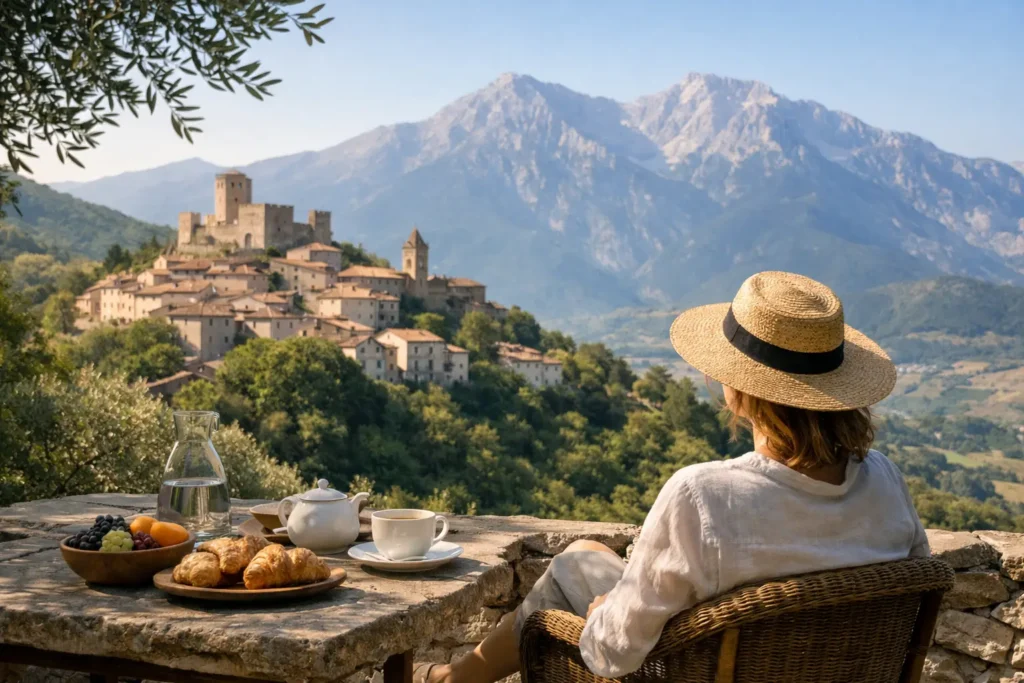
Um 13:00 Uhr hat der Haushaltswarenladen geschlossen, dein Nachbar unterhält sich immer noch auf der Straße und niemand scheint sich im Entferntesten daran zu stören, dass der Tag langsamer geworden ist.
Dieser Moment verrät dir mehr über das entschleunigte Leben in Abruzzo als jedes glänzende Foto es je könnte.
Es ist keine Fantasie von endloser Freizeit.
Es ist eine echte, tägliche Veränderung von Tempo, Prioritäten und Erwartungen – und für viele Menschen, die hierher ziehen, ist das genau der Punkt.
Wenn du über einen Umzug nachdenkst, sticht Abruzzo oft zuerst aus sehr praktischen Gründen hervor.
Immobilien sind zugänglicher als in bekannteren italienischen Regionen.
Die Landschaft ist außergewöhnlich, ohne für Touristen übermäßig inszeniert zu wirken.
In einer einzigen Region hast du Berge, Strände, Bergdörfer und funktionierende italienische Gemeinschaften – alle innerhalb einer Autostunde voneinander entfernt.
Aber was die Menschen tendenziell hier hält, ist etwas, das schwerer zu messen ist.
Das Leben kann sich hier einfach menschlicher anfühlen.
Warum das entschleunigte Leben in Abruzzo Auswanderer begeistert
Viele Menschen, die ins Ausland ziehen, wechseln nicht nur das Land.
Sie versuchen, die Form ihres täglichen Lebens zu verändern – müde von Hektik, Pendeln, zu hohen Preisen und der Organisation jeder Stunde rund um Produktivität.
Sie suchen Raum, Zeit zum richtigen Kochen, Platz zum Spazierengehen und Durchatmen.
Abruzzo kann diese Art von Neuanfang wirklich unterstützen.
Wie ein britisches Paar, das seit sechs Jahren in der Region lebt, beschreibt, kamen sie für ein langsamerer Tempo und haben es auch bekommen.
Sie ist ist weniger materialistisch, naturverbundener und weniger gekünstelt als viele bekanntere italienische Reiseziele.
Das ist Teil ihres Werts.
In vielen Städten in Abruzzo folgt der Alltag immer noch lokalen statt globalen Rhythmen:
- Das Mittagessen zählt noch etwas.
- Nachbarn bemerken es, wenn du neu bist.
- Geschäfte schließen mitten am Tag.
- Saisonspezifisches Essen wird nicht wie ein Luxustrend behandelt.
- Die Landschaft selbst lädt zur Entschleunigung ein – du bist selten weit vom Meer, von der Natur oder von Bergblicken entfernt, und das verändert das Gefühl einer ganzen Woche.
Für Auswanderer ist das nicht nur als Kulisse attraktiv, sondern als echte Veränderung der Routine.
Vielleicht gehst du zu Fuß zum lokalen Bäcker, anstatt alles online zu bestellen, planst deine Woche um Markttage herum oder lernst, welches Café nach dem morgendlichen Schulweg am belebtesten ist.
Diese Details klingen klein.
Zusammen erschaffen sie ein Leben, das sich geerdet statt hektisch anfühlt.
Laut dem Ratgeber von International Living zum Ruhestand in Abruzzobietet die Region eine der besten Kombinationen aus Erschwinglichkeit und Lebensqualität in ganz Italien – mit einem monatlichen Budget für ein Paar, das auf etwa 1.500 bis 1.700 US-Dollar geschätzt wird.
Dieser finanzielle Freiraum ist selbst eine Form von langsamerem Leben: Weniger finanzieller Druck bedeutet mehr Freiheit, in einem Tempo zu leben, das zu dir passt.
Was Entschleunigung in Abruzzo nicht ist
Das ist der Teil, der genauso wichtig ist, und es lohnt sich, hier direkt zu sein:
Ein entschleunigtes Leben ist nicht dasselbe wie ein einfaches Leben.
Ein Umzug nach Abruzzo kann ruhiger sein als das Leben in einer internationalen Großstadt – aber das bedeutet nicht, dass jeder Teil der Erfahrung entspannt ist.
Bürokratie kann immer noch verwirrend sein.
Die Anmeldung der VersorgungsbetriebeWohnsitzangelegenheiten zu regeln, eine Unterkunft zu suchen und die alltägliche Administration zu bewältigen, kann sich besonders stressig anfühlen, wenn du das in einer anderen Sprache, in einem unvertrauten System und gleichzeitig mit allem anderen tust.
Es gibt auch einen bedeutenden Unterschied zwischen dem Besuchen und dem Leben hier.
Ein zweiwöchiger Aufenthalt in einem wunderschönen Bergdorf kann sich nahe am Perfekten anfühlen.
Ein dauerhafter Umzug wirft mehr praktische Fragen auf:
- Brauchst du ein Auto? In den meisten Gegenden im Landesinneren: Ja.
- Sind öffentliche Dienste immer schnell und digital? Nicht zwingend.
- Wird jeder Englisch oder Deutsch sprechen? Oft nicht, besonders außerhalb von international angebundenen Bereichen.
- Wird sich der Ort im Februar genauso lebendig anfühlen wie im August? In kleineren Orten oft: Nein.
Nichts davon macht den Umzug zu einer schlechten Idee.
Es bedeutet einfach, dass die beste Version von Entschleunigung entsteht, wenn die Erwartungen realistisch sind.
Das Ziel ist nicht, anzukommen und nie wieder mit Unannehmlichkeiten konfrontiert zu sein.
Das Ziel ist es, ein Leben mit mehr Sinn und weniger Lärm aufzubauen – während man die Systeme und Rhythmen um sich herum versteht.
Die täglichen Rhythmen, die dein Leben langsam verändern
Einer der Gründe, warum sich Menschen hier gut einleben, ist, dass sich alltägliche Gewohnheiten fast ohne Zwang verschieben.
Mahlzeiten und Essen
Mahlzeiten sind oft weniger hektisch.
Selbst vielbeschäftigte Menschen neigen dazu, mit mehr Bedacht zu essen.
Das Einkaufen kann lokaler und häufiger werden – was auf dem Papier uneffizient klingt, sich in der Praxis aber oft besser anfühlt.
Statt eines riesigen wöchentlichen Supermarkteinkaufs wird deine Woche vielleicht durch kleinere Routinen und regelmäßigen Kontakt mit vertrauten Gesichtern auf dem Markt oder im Dorfladen geprägt.
Die Esskultur in Abruzzo unterstützt dies ganz natürlich: saisonal, regional und wert, aufmerksam genossen zu werden.
Zeit im Freien
In Abruzzo ist die Natur kein gelegentlicher Ausflug, den man Wochen im Voraus plant – sie ist Teil der Struktur des ganz normalen Lebens.
Ein Strandspaziergang vor oder nach dem Abendessen, eine Fahrt in die Hügel am Sonntag, eine Morgenwanderung in den Bergen: Diese Dinge können zur Routine statt zur Ausnahme werden.
Das wiegt schwerer, als die meisten erwarten.
Ein Lebensstil fühlt sich dann nachhaltig an , wenn die Dinge, die dich beruhigen, nah genug sind, um sie leicht zu erreichen.
Der soziale Rhythmus
In vielen Gemeinden in Abruzzo findet das tägliche soziale Leben immer noch auf sichtbare, unaufgeregte Weise statt.
Die Menschen halten für einen Kaffee an und unterhalten sich tatsächlich.
Gespräche finden auf der Straße statt.
Piazzas funktionieren immer noch als Treffpunkte und nicht als reine Fotokulissen.
Für Neulinge kann sich das sowohl tröstlich als auch ungewohnt anfühlen.
Wenn du aus einer anonymeren Kultur kommst, erfordert die lokale Nähe möglicherweise Umstellung.
Aber im Laufe der Zeit stellen viele Auswanderer fest, dass diese Art der alltäglichen Wiedererkennung die Einsamkeit verringert , die einen Neuanfang in einem neuen Land oft begleitet.
Die Kompromisse, die ehrliche Aufmerksamkeit verdienen
Ein langsameres Leben ist nicht automatisch für jeden das Richtige – und es hilft, sich darüber im Klaren zu sein, was einen frustrieren könnte.
Wenn du von ununterbrochenen Kulturveranstaltungen, nächtlicher städtischer Energie oder hochgradig effizienten digitalen Dienstleistungen lebst, können sich einige Teile von Abruzzo zu ruhig oder zu analog anfühlen:
- Dinge dauern hier länger.
- Prozesse sind manchmal weniger transparent, als du es dir wünschen würdest.
- Flexibilität ist nicht nur hilfreich – sie ist notwendig.
Auch der Standort macht einen erheblichen Unterschied.
Wie wir in unserem Leitfaden zum Stadt- oder Dorfleben in Abruzzountersuchen, kann sich ein Ort, der im August charmant wirkt, im Februar isoliert anfühlen.
Küstenstädte können sich ganz anders anfühlen als Dörfer im Landesinneren.
Manche Menschen wünschen sich die Ruhe einer kleineren Gemeinschaft und stellen dann fest, dass sie schnelleren Zugang zu Dienstleistungen oder ein etabliertes Auswanderer-Netzwerk brauchen.
Andere nehmen an, dass sie eine größere Stadt brauchen, und entdecken, dass sie an einem viel ruhigeren Ort am glücklichsten sind.
Deshalb funktionieren Auswanderungsentscheidungen am besten, wenn sie auf tatsächlichen Lebensstilmustern beruhenund nicht nur auf Ästhetik.
Die schönste Aussicht der Welt hilft nicht, wenn deine alltägliche Logistik erschöpfend wird.
Wer diesen Lebensstil meistens liebt
Abruzzo passt oft zu Menschen, die bereit sind, am lokalen Leben teilzunehmen, anstatt es nur von außen zu konsumieren.
Wenn du Routinen, Natur, gutes Essen und Gemeinschaften schätzt, die noch ihre eigene, unverwechselbare Identität haben, wirst du dich hier vielleicht wirklich zu Hause fühlen.
Es passt meist besonders gut zu:
- Remote-Workern , die einen ruhigeren, geräumigeren Stützpunkt suchen, ohne auf Infrastruktur zu verzichten
- Ruheständlern und angehenden Ruheständlern , die Erschwinglichkeit, Natur und eine echte Gemeinschaft suchen – nicht nur Sonnenschein.
- Paaren, die einen Neuanfang im Lebensstil suchen und bereit sind, Bequemlichkeit gegen Sinn einzutauschen
- Familien , die sich mehr Platz im Freien, ein ruhigeres Schulumfeld und weniger finanziellen Druck wünschen
Wie Expats Living in Rome in ihrem Abruzzo-Ratgeber anmerken, gehören zu den täglichen Aktivitäten der Einheimischen oft der Besuch von Märkten, das Teilen eines langen Espresso an der Bar und der Besuch regionaler Feste – und Auswanderer, die sich auf diese Rhythmen einlassen, anstatt sich ihnen zu widersetzen, leben sich meist am entspanntesten ein.
Die Menschen, die am meisten kämpfen , sind selten diejenigen, die auf Herausforderungen stoßen – das tut jeder.
Es sind meist diejenigen, die erwarten, dass sich der Umzug wie eine durchgestylte internationale Dienstleistung verhält..
Abruzzo ist persönlicher als das.
Lokaler.
Unperfekter.
Aber auch das ist Teil seines Werts.
Wie man ein entschleunigtes Leben in Abruzzo tatsächlich zum Funktionieren bringt
Die Menschen, die sich hier gut einleben, machen fast immer eine Sache von Anfang an richtig: Sie behandeln den Lifestyletraum und den praktischen Umzug als gleich wichtig.
Das bedeutet, bodenständige Fragen zu stellen, bevor du dich festlegst:
- Mit welcher Art von Instandhaltung der Immobilie fühlst du dich wohl?
- Wie viel möchtest du jede Woche Auto fahren?
- Brauchst du Fußläufigkeit, Schulen, Zugverbindungen oder zuverlässiges Internet für Remote-Arbeit?
- Hoffst du auf ein vollständiges Eintauchen in das italienische Leben oder würdest du dich in der Nähe einiger anderer internationaler Bewohner wohler fühlen?
Es bedeutet auch, mit einer echten Übergangsphase zu rechnen.
Selbst wenn Abruzzo emotional genau das Richtige ist, können sich die ersten Monate unruhig anfühlen.
Du liebst vielleicht deine Umgebung und fühlst dich trotzdem von Terminen, unvertrauten Abläufen und Sprachbarrieren überwältigt.
Ein langsamerer Lebensstil beginnt nicht in dem Moment, in dem du deine Umzugskartons auspackst.
Er beginnt gewöhnlich erst, wenn die größten Hürden genommen sind und sich deine tägliche Routine zu stabilisieren beginnt.
An diesem Punkt ist ein e lokale zweisprachige Unterstützung der entscheidende Wendepunkt sein.
Für viele Neulinge ist das größte Hindernis nicht, ob Abruzzo zu ihnen passt – sondern ob sie die praktische Einrichtung bewältigen können, ohne auszubrennen.
Hilfe bei Wohnen, Wohnsitz, Versorgungsverträgen und Orientierung kann die stressige Phase verkürzen und dich das, weswegen du umgezogen bist, tatsächlich genießen lassen.
Genau deshalb existieren Angebote wie Wanderlust Abruzzo – nicht, weil ein Umzug mühelos sein sollte, sondern weil er nicht schwerer sein sollte, als er sein muss.
Ein Leben mit mehr Freiraum
Bei Entschleunigung in Abruzzo geht es nicht darum, einen rustikalen Traum vorzuspielen.
Es geht darum, ein Leben mit mehr Raum zu schaffen – mehr Zeit, um deine Umgebung wahrzunehmen, mehr Verbindung zum Ort und mehr Platz, um in einem Tempo zu leben, das sich wirklich nachhaltig anfühlt.
Es ist auch kein dauerhafter Urlaub:
- Es wird frustrierende Tage geben.
- Systeme, die nicht so funktionieren, wie sie sollen.
- Sprachbarrieren genau im falschen Moment.
- Das Gefühl, dass das Leben einfacher war, bevor du alles auf Italienisch regeln musstest.
Aber für die richtige Person, am richtigen Ort, mit realistischen Erwartungen und etwas Unterstützung vor Ort bietet Abruzzo etwas wirklich Seltenes: Keine Postkartenversion von Italien, sondern ein Leben, zu dem man dazugehören kann.
Und für viele Menschen erweist sich das als weitaus wertvoller als Schnelligkeit.
—
Du denkst über ein langsameres Leben in Abruzzo nach – und möchtest wissen, ob es das Richtige für dich ist?
Die Frage nach dem Lebensstil und die praktische Frage sind gleich wichtig – und man bespricht sie am besten gemeinsam mit jemandem, der die Region von innen kennt.
Bei Wanderlust Abruzzohelfen wir englisch- und deutschsprachigen Auswanderern bei beiden Seiten des Umzugs: der Vision davon, wie das Leben hier aussehen kann, und den praktischen Schritten, um dorthin zu gelangen, ohne unterwegs auszubrennen.
Egal, ob du dich in der frühen Planungsphase befindest oder bereits fest entschlossen bist, den Schritt zu wagen: Wir helfen dir gerne dabei, es durchzudenken.
Nimm noch heute Kontakt mit uns auf und lass uns über deinen Umzug nach Abruzzo sprechen
—
Häufig gestellte Fragen (FAQs)
Ist Abruzzo ein guter Ort für ein entschleunigtes Leben?
Ja – absolut. Abruzzo bietet eine Kombination, die anderswo in Italien schwer zu finden ist: niedrigere Kosten, Zugang zur Natur an mehreren Fronten (Meer, Berge, Nationalparks), starke lokale Gemeinschaftsrhythmen und Orte, die sich immer noch authentisch italienisch und nicht rein touristisch anfühlen. Es ist eine der am häufigsten genannten Regionen in Auswanderer- und Ruhestands-Ratgebern für Menschen, die ein geerdeteres, unaufgeregteres Lebenstempo suchen.
Wie sieht der Alltag in Abruzzo wirklich aus?
Das hängt davon ab, wo du lebst, aber in den meisten Orten gehören der morgendliche Kaffee an der lokalen Bar, der Einkauf auf Märkten oder in kleinen Nachbarschaftsläden, ein ruhigerer Nachmittag und Abende dazu, die sich eher um Essen und Gespräche als um Unterhaltung drehen. Die Natur ist erreichbar statt eine Ausnahme – Spaziergänge, Strandbesuche und Fahrten durch die Landschaft werden Teil der normalen Woche statt besonderer Anlässe.
Ist Entschleunigung in Abruzzo für Remote-Worker realistisch?
Ja, wenn du deinen Standort sorgfältig auswählst. Die Internet-Infrastruktur in Abruzzo hat sich deutlich verbessert, insbesondere in Städten und Küstengebieten. Ländliche Immobilien und Berg-Objekte können immer noch schwanken, daher ist die Bestätigung der tatsächlichen Verbindung an einer spezifischen Immobilie – und nicht nur das Überprüfen von Abdeckungskarten – vor einer Zusage unerlässlich. Mit verlässlichem Internet bietet Abruzzo Remote-Workern eine hervorragende Lebensqualität zu einem Bruchteil dessen, was sie in den meisten nordeuropäischen Städten kosten würde.
Was sind die größten Herausforderungen bei der Entschleunigung in Abruzzo?
Die Hauptherausforderungen sind die Übergangsphase selbst – Bürokratie, Sprachbarrieren und die mentale Belastung beim Navigieren in einem unvertrauten System – sowie die Wahl des richtigen Standorts, bevor du dich festlegst. Ein Ort, der sich im Sommer perfekt anfühlt, kann sich im Winter isoliert anfühlen. Italienische Verwaltungsprozesse dauern länger, als die meisten Neulinge erwarten. Und das langsamere Tempo kann, obwohl es das Ziel war, frustrierend wirken, bevor die Routinen etabliert sind, die es angenehm machen.
Wie lange dauert es, bis man die Vorteile der Entschleunigung in Abruzzo wirklich spürt?
Die meisten Auswanderer beschreiben die ersten drei bis vier Monate als die herausforderndsten – aufregend, aber auch ermüdend. Sobald die praktischen Grundlagen geschaffen sind (Wohnen, Versorgungsverträge, Wohnsitz, Alltagsroutinen), stellt sich der Wandel ganz natürlich ein. Die meisten Menschen fühlen sich irgendwo zwischen sechs Monaten und einem Jahr nach der Ankunft wirklich eingelebt – und genießen das Tempo aus vollem Herzen. Die Übergangsphase ist real, aber das, was danach kommt, ist es auch.

 English
 Deutsch