
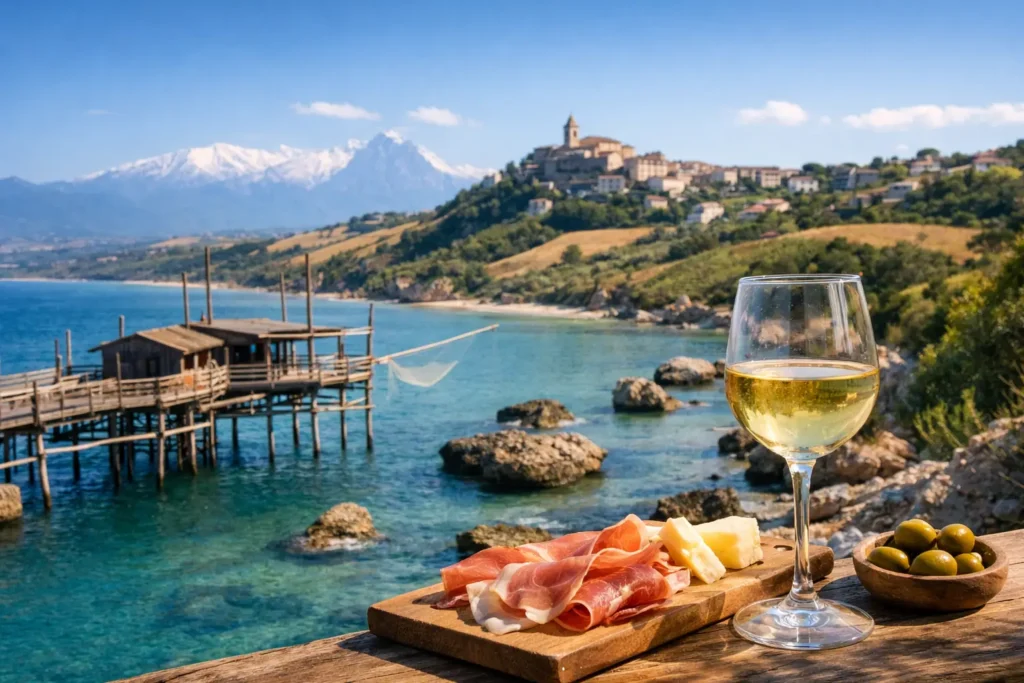
Wenn du dich fragst, was die echten Insider-Tipps für Abruzzo sind, lautet die ehrlichste Antwort: Die Region ist großzügig, wunderschön und sehr lebenswert – aber sie ergibt viel mehr Sinn, sobald du aufhörst, sie wie ein Urlaubsziel zu behandeln, und anfängst, sie als einen Ort zu verstehen, an dem das echte Leben stattfindet.
Dieser Perspektivwechsel verändert alles:
- Wo du wohnen möchtest
- Wie du mit Papierkram umgehst
- Was du von einer Unterkunft erwartest
- Wie schnell du dich einlebst
Und ob sich diese ersten Monate wie ein Abenteuer oder wie ein langsames Anstauen von vermeidbarem Stress anfühlen.
Abruzzo spricht viele Menschen aus guten Gründen an.
Laut dem Auswanderer-Leitfaden 2026 von Impatriaentfallen mittlerweile 19,1 % aller italienischen Immobilienanfragen ausländischer Käufer auf Abruzzo – direkt hinter der Toskana, aber zu einem Bruchteil des Preises.
Du erhältst Meer, Berge, historische Städte, geringere Lebenshaltungskosten und ein Tempo, das sich menschlicher anfühlt, als es der Großteil Europas bieten kann.
Doch dieselben Qualitäten, die die Region so attraktiv machen, können Neuankömmlinge überraschen.
Der Alltag ist lokaler, beziehungsorientierter und weniger unmittelbar, als viele Auswanderer erwarten.
Hier ist, was wirklich hilft.
Wähle deinen Ort nach deiner Wochenroutine, nicht nach deinem Traumfoto
Das ist der erste und wichtigste Insider-Tipp – und derjenige, der am konsequentesten ignoriert wird.
Ein Bergdorf kann an einem sonnigen Samstag magisch wirken, aber deutlich weniger bezaubernd, wenn du an einem Dienstag im Februar verlässliches WLAN, einen schnellen Weg zum Supermarkt, einen Parkplatz und eine entspannte Fahrt zu deinen Terminen brauchst.
Küstenstädte wie Silvi, Pineto, Francavilla al Mareoder Ortona eignen sich oft besser für Neuankömmlinge, die ein sanfteres Ankommen suchen – Dienstleistungen in der Nähe, ein unkomplizierterer Alltagsrhythmus und weniger Fallen durch die Abhängigkeit vom Auto.
Orte im Landesinneren können tief bereichernd sein, verlangen dir aber meist mehr ab: mehr Fahrerei, mehr Planung, mehr Toleranz für langsamere Systeme und saisonale Ruhe.
Wie Live and Invest Overseas anmerkt, wird dir jeder Auswanderer in Abruzzo bestätigen, dass Italienischkenntnisse das Leben erheblich erleichtern – und besonders in kleineren Städten ist die Sprachbarriere ausgeprägter.
Das sollte in deine Standortentscheidung einfließen, nicht nur in deinen Sprachlernplan.
Der praktische Test: Stelle dir deinen unspektakulärsten Dienstag vor.
- Was brauchst du?
- Wo musst du hin?
- Wie weit ist es?
Wenn die Antworten an dem Ort funktionieren, den du in Betracht ziehst, bist du wahrscheinlich auf dem richtigen Weg.
Besuche die Region in der Jahreszeit, in der du dort leben möchtest
Abruzzo im August und Abruzzo im Februar sind zwei völlig unterschiedliche Erfahrungen – und viele Menschen treffen ihre Entscheidung auf der Grundlage von nur einer davon.
Der Sommer an der Küste ist lebendig, gesellig und voller Energie.
Die Strände sind belebt, die Cafés haben lange geöffnet und die gesamte Region wirkt überaus gastfreundlich.
Der Winter offenbart den wahren Rhythmus: kürzere Öffnungszeiten, kühlere Wohnungen, ruhigere Orte und ein Tempo, das viel weniger aufgeführt und sehr viel ehrlicher ist.
Manche Menschen lieben das – die Stille, die leeren Strände, die Abende am Kamin.
Andere finden es schwerer als gedacht, besonders wenn die Wohnung schlecht isoliert ist oder der Heimatort spürbar leerer wird.
Wenn du es mit dem Umzug nach Abruzzo ernst meinst, besuche die Region im Herbst oder Frühwinter , bevor du dich festlegst.
Du wirst die Straßenverhältnisse sehen, das tatsächliche Tempo des Ortes verstehen, spüren, wie die Immobilie mit Kälte umgeht, und eine weitaus fundiertere Entscheidung treffen.
Verstehe, dass „nah“ relativ ist
Auf der Karte können Entfernungen in Abruzzo überschaubar aussehen.
In der Praxis zählen Straßen, Hügel, einspurige Abschnitte, Parkplätze und der lokale Verkehr.
Eine Immobilie, die 20 Minuten von Pescara entfernt liegt, kann absolut praktisch sein – oder überraschend isolierend. Es hängt davon ab, wie oft du diese Strecke fahren musst und was dir unterwegs begegnet.
Besonders Bergstraßen verdienen im Winter eine Probefahrt, bevor du entscheidest, dass sie das ganze Jahr über alltagstauglich sind.
Das ist eines der Insider-Details, die im Auswanderer-Ratgeber 2026 von Your Overseas Home ausdrücklich hervorgehoben werden: Gute Verkehrsanbindungen und die Nähe zur medizinischen Versorgung sind für die langfristige Lebensqualität von enormer Bedeutung, und diese Dinge tauchen nicht immer in Inseraten oder Kartensuchen auf. Frage direkt danach.
Die Wohnungssuche wirkt einfach – ist es aber oft nicht
Viele Neuankömmlinge nehmen an, dass die Wohnungssuche in Abruzzo einfach sein wird , weil die Preise im Vergleich zu größeren internationalen Märkten verlockend aussehen.
Manchmal stimmt das.
Aber gute Entscheidungen beim Umzug hängen nicht nur vom Preis ab.
Manche Immobilien sind charmant, aber unpraktisch für die Art und Weise, wie Auswanderer tatsächlich leben.
- Wunderschöne alte Bauelemente, aber kaum Stauraum.
- Bergblick, aber extrem schwierige Beheizung im Winter.
- Mietwohnungen, die bezugsfertig aussehen, bis du nach Internetgeschwindigkeit, Müllabfuhr, Parkplätzen oder der genauen Möblierung fragst.
Das sind nicht zwingend Ausschlusskriterien – es sind die Details, die wichtig werden, sobald die erste Flitterwochen-Phase nachlässt.
Die Fragen, die du stellen solltest, bevor du dich festlegst
Einer der stärksten Insider-Tipps für Abruzzo ist es, frühzeitig ganz alltägliche Fragen zu stellen:
- Wie wird die Wohnung beheizt und wie effizient ist das System?
- Wie dick sind die Wände? Gibt es im Winter Probleme mit Feuchtigkeit?
- Wie lange steht die Immobilie schon leer?
- Wie ist der Mobilfallempfang im Gebäude?
- Kann Glasfaser-Internet installiert werden oder ist das noch ungewiss?
- In welchem Stockwerk liegt die Wohnung und gibt es einen Aufzug?
- Was ist in der Miete enthalten – Möbel, Nebenkosten, Hausgeld?
Wenn du remote arbeitest, sind diese Fragen keineswegs nebensächlich.
Eine Immobilie, der es an verlässlichem Internet fehlt oder die im Januar kaum warm zu halten ist, kann alles beeinträchtigen, was du dir aufbauen möchtest.
Es hilft auch, über die Immobilie selbst hinauszudenken.
Eine schöne Wohnung in einer ruhigen Gegend kann sich isolierend anfühlen, wenn du noch wenig Italienisch sprichst und für jede Besorgung ein Auto brauchst.
Eine weniger romantische Wohnung in einem gut angebundenen Viertel kann dir die ersten sechs Monate erheblich erleichtern.
Es gibt keine allgemeingültige richtige Antwort – es hängt davon ab, ob deine oberste Priorität Gemeinschaft, Praktikabilität, Platz oder Aussicht ist.
Du kannst hier nachlesen, wie sich Stadt- und Dorfleben in Abruzzo unterscheiden, und somit besser erkunden, was zu deinen tatsächlichen Bedürfnissen passt.
Bürokratie läuft besser, wenn du aufhörst, Schnelligkeit zu erwarten
Die wenigsten Menschen ziehen ins Ausland, weil sie sich auf Formulare, Behördentermine und Ämterbesuche freuen.
Aber genau hier baut sich Stress am schnellsten auf.
In Abruzzo, wie in weiten Teilen Italiens, können einfache Aufgaben mehr Schritte umfassen als erwartet und weniger Klarheit bieten als erhofft.
Der beste Insider-Zug ist es, das System nicht jedes Mal emotional zu bekämpfen, wenn es langsamer wird.
Der Schlüssel liegt darin, sich auf Wiederholungen einzustellen, mehr Dokumente mitzubringen als nötig gedacht und Puffer im Zeitplan einzuplanen
Wenn dir jemand sagt, dass du mit einem zusätzlichen Zettel wiederkommen sollst, bedeutet das nicht, dass alles schiefgegangen ist.
Es bedeutet meistens einfach, dass du eine ganz normale italienische Behördenerfahrung machst..
Höflichkeit zählt mehr als perfektes Italienisch..
Genauso wie eine gute Organisation.
Ausgedruckte Kopien, Lichtbildausweis, Adressnachweis und schriftliche Notizen können überraschend viel Zeit sparen.
Sogar wichtige Details übersetzt und griffbereit zu haben, kann Verwirrung erheblich reduzieren.
Was viele Auswanderer überfordert, ist nicht ein einzelnes grosses Hindernis,sondern die Summe vieler kleiner Unsicherheiten auf einmal.
Deshalb macht eine lokale zweisprachige Begleitung in Abruzzo einen so praktischen Unterschied.
Ein Prozess, der sich alleine undurchsichtig anfühlt, wird oft machbar, wenn jemand auf Deutsch oder Englisch erklären kann, was gerade passiert, was fehlt und was als Nächstes zu tun ist.
⚠️ Verwaltungsverfahren, erforderliche Dokumente und lokale Behördenpraktiken können je nach Gemeinde variieren und sich im Laufe der Zeit ändern. Überprüfe vor Terminen immer die aktuellen Anforderungen.
Der Alltag funktioniert über Beziehungen
In Abruzzo geht es nicht nur um Logistik.
Es geht auch darum, wie Menschen miteinander umgehen – und einer der Insider-Tipps, den Neuankömmlinge oft spät entdecken, ist: Beständigkeit zählt mehr als Show.
- Du musst niemanden beeindrucken.
- Du musst einfach auftauchen, die Leute grüßen, geduldig sein und bekannt werden.
Die Kassiererin, die dich in der ersten Woche kaum wahrnimmt, ist in der vierten Woche vielleicht schon viel herzlicher.
Der Nachbar, der zurückhaltend wirkt, wird vielleicht genau die Person, die dir verrät, welcher Handwerker tatsächlich zurückruft oder wo es das beste Olivenöl der Stadt gibt.
Vertrauen baut sich durch wiederholten Kontakt auf, nicht durch schnelle Oberflächlichkeit.
Das kann sich ungewohnt anfühlen, wenn du aus einer Kultur kommst, in der Effizienz das Hauptmerkmal für guten Service ist.
In Abruzzo steht die menschliche Verbindung oft gleichberechtigt neben der Effizienz– manchmal sogar darüber.
Das kann frustrierend sein, wenn du eine schnelle Antwort willst.
Es wird tröstlich, wenn du dir ein neues Leben aufbaust und dich nicht anonym fühlen möchtest.
Du kannst hier noch mehr darüber lesen, wie die Menschen in Abruzzo eigentlich ticken und was du im ersten Jahr realistischerweise in Bezug auf die soziale Integration erwarten kannst.
Lerne den Rhythmus – und Abruzzo wird einfacher
Ein sehr praktischer Insider-Tipp ist es, auf das Timing zu achten.
Öffnungszeiten variieren.
Viele Geschäfte schließen mittags noch immer.
Der August verändert die Küstenregionen – die Strände füllen sich, Parkplätze werden knapp und manche Dienstleistungen werden langsamer oder voller.
Rund um Feiertage verschieben sich Routinen auf eine Weise, die nicht immer irgendwo angeschrieben steht.
Neuankömmlinge machen sich das Leben oft unnötig schwer, indem sie an jedem Wochentag eine einheitliche Verfügbarkeit erwarten.
Ein entspannterer Ansatz: Lerne dein lokales Muster frühzeitig kennen.
- Welcher Supermarkt eignet sich am besten für einen kurzen Stopp?
- An welchem Tag ist Wochenmarkt?
- Wann parkt es sich am einfachsten?
- Welches Café hat früh genug geöffnet, um deinen Morgen zu strukturieren?
- Bei welchem Amt sind die Schlangen Anfang der Woche kürzer?
Diese Details klingen klein.
Aber sie schaffen sehr schnell ein Gefühl der Kontrolle – und genau dieses Gefühl sorgt dafür, dass sich ein neuer Ort nach und nach wie ein Zuhause anfühlt statt wie ein ständiges Rätsel.
Auch der Lebensmitteleinkauf ist ein Thema, das man ernst nehmen sollte.
Große Supermärkte sind nützlich, aber Lebensqualität entsteht in Abruzzo oft durch die Kombination mit Bäckereien, lokalen Gemüsegeschäften und kleinen Nachbarschaftsläden.
Du bekommst oft bessere Qualität, bessere Beratung und ein stärkeres Zugehörigkeitsgefühl – was Teil dessen ist, was die Esskultur hier so wertvoll macht , dass man sich wirklich darauf einlässt, anstatt sie nur zu konsumieren.
Autofahren: Hilfreich, manchmal unerlässlich, immer bedenkenwert
Kann man in Abruzzo ohne Auto leben?
In manchen Gegenden: Ja.
Kann man als Neuankömmling komfortabel ohne Auto leben?
Das hängt stark davon ab, wo du deinen Stützpunkt wählst.
In und um größere oder gut angebundene Städte wie Pescara, Vastooder Lancianolässt sich der Alltag ohne ständiges Autofahren bewältigen.
In kleineren Orten wird ein Auto schnell von „hilfreich“ zu „unerlässlich“ – für Besichtigungen, Einkäufe, Behördentermine und alles, was über Gemeindegrenzen hinausgeht.
Das ist einer der Kompromisse, die regelmäßig unterschätzt werden.
Ein ruhigerer, günstigerer Wohnort geht oft mit erheblich mehr Transportabhängigkeit einher.
Wenn du deinen Umzug rund um Freiheit und Einfachheit planst, überlege genau, ob diese Einfachheit aus niedrigeren Kosten oder aus leichterer Erreichbarkeit entstehen soll.
Manchmal spart ein wenig mehr Miete für eine besser angebundene Lage ein großes Maß an täglicher Reibung.
Was Neuankömmlinge im Nachhinein am liebsten früher gewusst hätten
Die Menschen, die sich in Abruzzo gut einleben, sind nicht immer diejenigen mit dem größten Budget oder dem flüssigsten Italienisch..
- Es sind meist diejenigen, die mit realistischen Erwartungen ankommen und genug Unterstützung haben, um vermeidbare Fehler zu umgehen.
- Sie wissen, dass die erste Wohnung nicht für die Ewigkeit sein muss.
- Sie wissen, dass Papierkram länger dauert als gedacht.
- Sie wissen, dass lokales Wissen – über Viertel, Versorgungsverträge, Termine und Handwerker – kein Luxus ist.
- Und sie wissen, dass sich am Anfang überfordert zu fühlen keineswegs bedeutet, dass der Umzug eine schlechte Idee war.
Für viele Auswanderer ist der wahre Insider-Tipp kein geheimer Strand oder ein verstecktes Restaurant.
Es ist der Entschluss, sich selbst ein sanfteres Ankommen zu gönnen.
Wenn du die Unsicherheit in den ersten Monaten reduzieren kannst, wird alles andere sehr viel leichter zu genießen – die Küste, die Wochenenden in den Bergen, die ruhigen Morgenstunden, das bessere Essen und das Gefühl, dass das Leben hier mehr Raum hat.
Das ist der Teil, den dir selten jemand erzählt.
Es ist nicht schwer, Abruzzo zu lieben.
Die eigentliche Herausforderung besteht darin, deine Ankunft so ruhig zu gestalten, dass du es auch wirklich spüren kannst.
—
Du möchtest nach Abruzzo ziehen – mit weniger überraschenden Hürden?
Die Tipps in diesem Beitrag sind genau die Dinge, von denen wir sehen, dass sie für die von uns begleiteten Auswanderer den größten Unterschied machen.
Nicht das Spektakuläre – sondern das ganz normale, praktische Wissen, das aus dem Ausland schwer zu finden ist und das man oft zu spät lernt.
Bei Wanderlust Abruzzohelfen wir deutsch- und englischsprachigen Auswanderern bei der Wohnungssuche, der Bürokratie, den ersten Wochen und dem Prozess des echten Ankommens.
Persönlich, zweisprachig und direkt vor Ort.
Nimm noch heute Kontakt mit uns auf und lass uns über deinen Umzug nach Abruzzo sprechen
—
Häufig gestellte Fragen (FAQs)
Was sollte ich wissen, bevor ich nach Abruzzo ziehe?
Das Wichtigste: Wähle deinen Wohnort nach deinem alltäglichen Rhythmus aus, nicht nach seinem Aussehen an einem sonnigen Wochenende. Besuche die Region in der Jahreszeit, in der du dort leben möchtest. Stelle vor einer Zusage konkrete, praktische Fragen zur Unterkunft. Stelle dich darauf ein, dass die italienische Verwaltung länger dauert als gedacht, und plane entsprechend. Und komme mit einem finanziellen sowie emotionalen Puffer für die ersten Monate an – sie sind meist teurer und anstrengender als geplant.
Was sind die häufigsten Fehler, die Auswanderer beim Umzug nach Abruzzo machen?
Einen Wohnort nach Urlaubsbesuchen statt nach dem Alltagsleben auszuwählen. Die Abhängigkeit vom Auto in ländlichen Gegenden zu unterschätzen. Vor der Unterschrift nicht genug praktische Fragen zur Immobilie zu stellen. Zu erwarten, dass italienische Behördenabläufe im selben Tempo wie zu Hause funktionieren. Und nicht genügend Zeit oder finanziellen Puffer für die Übergangsphase einzuplanen.
Ist Abruzzo für Auswanderer besser an der Küste oder im Landesinneren geeignet?
Das hängt von deinen Prioritäten ab. Küstenstädte bieten meist mehr Dienstleistungen, leichtere Erreichbarkeit und einen sanfteren Übergang für Neuankömmlinge. Orte im Landesinneren und in den Hügeln bieten mehr Platz, niedrigere Preise und ein starkes Gefühl für das traditionelle italienische Leben – erfordern aber für die meisten Besorgungen ein Auto und mehr Toleranz für saisonale Ruhe. Viele Auswanderer starten an der Küste und ziehen weiter ins Landesinnere, sobald sie die Region besser kennen.
Wie lange dauert es, bis man sich in Abruzzo eingelebt hat?
Die meisten Auswanderer beschreiben ein echtes alltägliches Wohlbefinden nach etwa drei bis sechs Monaten – sobald Unterkunft, Versorgungsverträge und grundlegende Routinen stehen. Sich emotional wirklich zu Hause zu fühlen dauert meist etwas länger. Am schnellsten leben sich diejenigen ein, die realistische Standortentscheidungen getroffen, die Bürokratie frühzeitig geregelt und durch regelmäßige Alltagsroutinen lokale Vertrautheit aufgebaut haben.
Muss ich Italienisch sprechen, um in Abruzzo zu leben?
Nicht fließend – aber es macht einen erheblichen Unterschied, besonders außerhalb der international geprägteren Gebiete. Selbst einfaches Italienisch für Begrüßungen, Termine und alltägliche Begegnungen hilft sowohl praktisch als auch sozial enorm weiter. Die meisten Einheimischen schätzen die Bemühung sehr, und es ist oft der einzelne Faktor, der das Einleben an einem neuen Ort am stärksten beschleunigt.



 English
 Deutsch