
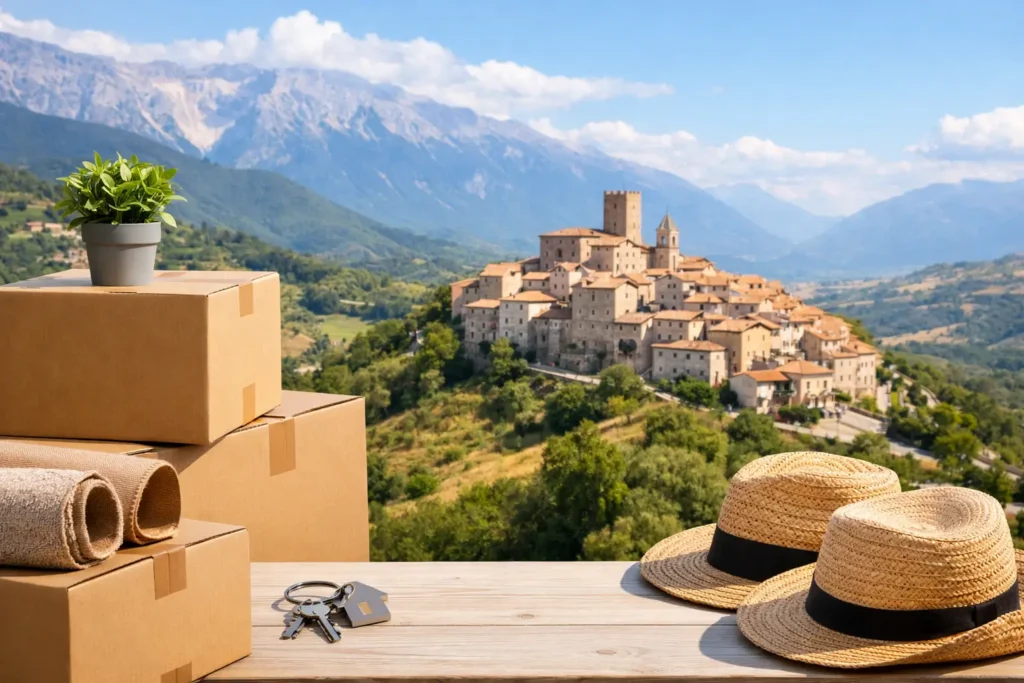
A sunny week in August can make almost anywhere in Italy feel like the perfect place to start over. But if you are asking when to visit Abruzzo because you are seriously thinking about moving here, the best timing is not always the most obvious.
A holiday and a relocation scouting trip are two very different things, and choosing the right season can save you stress, money, and some very unrealistic expectations.
Abruzzo changes a lot across the year.
- Beach towns feel different in January than they do in July.
- Hill towns can seem wonderfully peaceful in one season and a little too quiet in another.
- Mountain areas that feel magical in winter may be less practical if you are trying to understand everyday access, services, and travel times.
That is why the real answer depends on what you need from your visit.
When to visit Abruzzo depends on your goal
If your main goal is to fall in love with the region, late spring and early fall are usually the easiest times to visit.
- the weather is pleasant
- towns are lively without feeling packed
- and you can move around comfortably
You get a more balanced picture than you would in peak summer or the middle of winter.
If your goal is to house hunt, test daily life, and explore neighborhoods, spring and fall are also strong choices, but for slightly different reasons.
- Offices, agencies, and local services are generally operating at a normal rhythm.
- Roads are easier to navigate.
You can sit in a town square, visit supermarkets, check parking, and notice what life feels like when people are simply living rather than vacationing.
If your goal is to handle practical appointments during the same trip, avoid assuming summer is ideal just because you have time off.
August in Italy often means reduced hours, closures, slower responses, and a general pause in normal routines.
It can still be a lovely time to visit, but not the most efficient if you need things done.
Spring is often the sweet spot
From April through June, Abruzzo is especially appealing for future expats.
The landscape is green, the weather is mild, and daily life is active without the intense heat of midsummer.
If you are driving between coastal towns, inland villages, and larger service centers, this season makes it much easier.
Spring is also one of the best times to notice practical details.
- You can see whether a home feels damp after winter
- how much sun a “bargain” property gets
- and what the roads and public spaces are like under normal conditions
These things matter more than people expect when they are choosing where to live.
For many people relocating from abroad, spring visits also feel emotionally manageable.
You are not battling extreme temperatures, crowded tourist areas, or the sleepy shutdowns of high summer.
That gives you more energy for the parts of relocation that require focus, like comparing areas, asking questions, and trying to imagine a real routine.
The trade-off is that some coastal places may still feel quieter than they do in summer.
If you are considering a beach town because you want year-round activity, spring gives you useful clues, but not the full peak-season picture.
Summer shows you the lively version of Abruzzo
If you want to understand what Abruzzo feels like at its most social and vibrant, summer has clear value.
Coastal towns such as Pescara, Francavilla al Mare, Ortona, Silvi, and Pineto are busier, restaurants and beach clubs are in full swing, and there is a stronger sense of movement everywhere.
For some future movers, this is exactly the energy they want.
Summer is helpful if you are choosing between a town that thrives in tourist season and one that stays steady year-round.
You will quickly see which places become crowded, where parking becomes frustrating, and how close your potential home is to noise, traffic, and beach activity.
That is useful information, especially if you are planning to live near the coast full-time.
But summer can also distort your impression.
- A charming town in July may feel much quieter by October.
- A road that seems manageable in June might become a daily headache in August.
- And if you are trying to organize viewings or practical appointments, holiday schedules can make everything slower.
So if you visit in summer, treat it as one version of Abruzzo, not the whole story.
It is excellent for atmosphere, but less reliable for understanding the normal pace.
Fall is ideal for a reality check
September through early November is one of the smartest windows for anyone asking when to visit Abruzzo before a move.
The heat eases, the summer crowds begin to thin, and everyday life settles back into place.
You can still enjoy beautiful weather, especially early in the season, but you also get a clearer picture of what living here actually feels like.
This is often the best time to compare locations honestly.
- Coastal areas are calmer.
- Inland towns feel more grounded.
You can test commute routes, visit shops and services during ordinary weeks, and notice whether a place feels pleasantly peaceful or just too isolated for your needs.
Fall is also good for people who are sensitive to the emotional side of relocation.
Moving abroad often comes with a mix of excitement and second-guessing.
Visiting Abruzzo when life is running normally can be reassuring.
You are not choosing a postcard.
You are choosing a future routine.
If you can only make one scouting trip, early fall is one of the strongest options because it offers both comfort and realism.
Winter is not for everyone, but it is very revealing
Winter is the season most people overlook, and in some cases, it is the most useful.
If you are thinking about living in a hill town, a mountain area, or a quieter inland community, winter shows you the truth quickly.
You will see how warm homes really are, how active the town feels, what services stay open, and whether the pace suits you once the holiday charm fades.
This matters because many relocation decisions are made during beautiful weather.
Then winter arrives, and the reality feels very different.
- Shorter days
- colder homes
- emptier streets,
- and longer drives to services can be either completely fine or deeply frustrating, depending on your expectations
That said, winter is not the best first introduction for everyone.
If you are already nervous about moving abroad, a gray January visit may make everything feel harder than it really is.
It can be better as a second trip, especially after you have already identified a few areas you like.
The best time to visit Abruzzo before moving
For most future expats, the best answer to when to visit Abruzzo is this: come once in late spring or early fall, and if possible, come back in a very different season before making final decisions.
That two-visit approach gives you something precious: context.
You see a place when it is easy to love, and you see whether it still works when conditions change.
- A town that feels perfect in May but too isolated in November may not be right for you.
- A coastal area that feels exciting in August but peaceful and manageable in October may be exactly right.
If two visits are not possible, be very intentional about the one you do take.
Do not fill it only with scenic lunches and beach walks.
Spend time doing ordinary things:
- Visit grocery stores.
- Check the drive to the nearest train station.
- Walk neighborhoods in the evening.
- Notice parking, noise, lighting, and whether the area still feels right once the first impression wears off.
If you are planning to relocate with children, pets, or remote work needs, this becomes even more important.
You are not only choosing beauty.
You are choosing logistics, comfort, and rhythm.
A better question than season alone
Sometimes the real question is not when to visit Abruzzo, but what you need to learn while you are here.
- If you need emotional reassurance, come in the spring.
- If you need to understand summer crowds, come in the summer, the peak season.
- If you need to test reality, choose fall.
- If you want to pressure-test your decision, winter can be surprisingly helpful.
That shift in mindset makes the trip far more useful.
Instead of hoping the region impresses you, you start observing whether it supports the life you want.
That is a much better foundation for a move abroad.
If you do decide to come for a relocation scouting trip rather than a vacation, it helps to plan your days differently.
Leave room for questions, comparison, and a few moments of uncertainty.
Those moments are not a sign that something is wrong.
They are often where the clearest answers begin.
—
Getting local, bilingual support for your move
A good visit should not only make Abruzzo look beautiful.
It should help you feel calmer about what daily life here would actually ask of you.
At Wanderlust Abruzzo, we encourage you to spend time doing “ordinary” things during your scouting trip.
We can help you structure these visits to ensure you see the version of Abruzzo you will actually live in.
—
Frequently Asked Questions (FAQs)
Are real estate agencies open in August?
Technically, yes, but many agents take 1–2 weeks off during mid-August. If you are coming specifically to view properties, always book your appointments at least a month in advance during the summer.
When is the best time to see the “Green” Abruzzo?
May is spectacular. The Gran Sasso and Majella national parks are in full bloom, and the contrast between the green hills and the snow-capped peaks of the Gran Sasso is at its peak.
Is it difficult to drive in Abruzzo during winter?
Main highways like the A24/A25 are well-maintained, but many inland roads require winter tires or chains by law from November 15th to April 15th. If you aren’t comfortable with mountain driving, stick to coastal scouting during the winter.
Can I handle residency paperwork in December?
You can, but keep in mind that the Christmas period involves many office closures and public holidays. Late spring or early fall remain the most efficient windows for bureaucratic appointments.
How long should a scouting trip last?
We recommend at least 7 to 10 days. This gives you enough time to visit both the coast and the mountains without feeling rushed, allowing you to experience the region’s diversity properly.



 English
 Deutsch