
Die ultimative Checkliste für den Umzug nach Abruzzo: Ein Schritt-für-Schritt-Leitfaden

Ziehst du nach Abruzzo? Nutze diese unverzichtbare Umzugs-Checkliste, um Papierkram, Wohnungssuche und Versorgungsverträge ganz ohne den typischen Expat-Stress zu meistern.
Zweisprachige Unterstützung bei der Relocation nach Italien: Warum Übersetzen alleine nicht reicht

Don’t get lost in translation. Learn why bilingual relocation support in Italy is the “Master Key” to navigating bureaucracy, housing, and utilities in Abruzzo.
Relocation-Service in Italien: Was dich erwartet

Don’t let Italian bureaucracy stall your move. Learn what expat relocation services in Italy actually cover and why local expertise is the key to a stress-free move.
Die italienische Gesundheitskarte für Ausländer erklärt: Dein Wegweiser

Wie bekomme ich die Tessera Sanitaria in Italien? Erfahre alles über Kosten, Dokumente und die Anmeldung bei der ASL in Abruzzo für Expats.
Wohnsitz in Italien für Expats erklärt: Was es ist und wie man es richtig macht
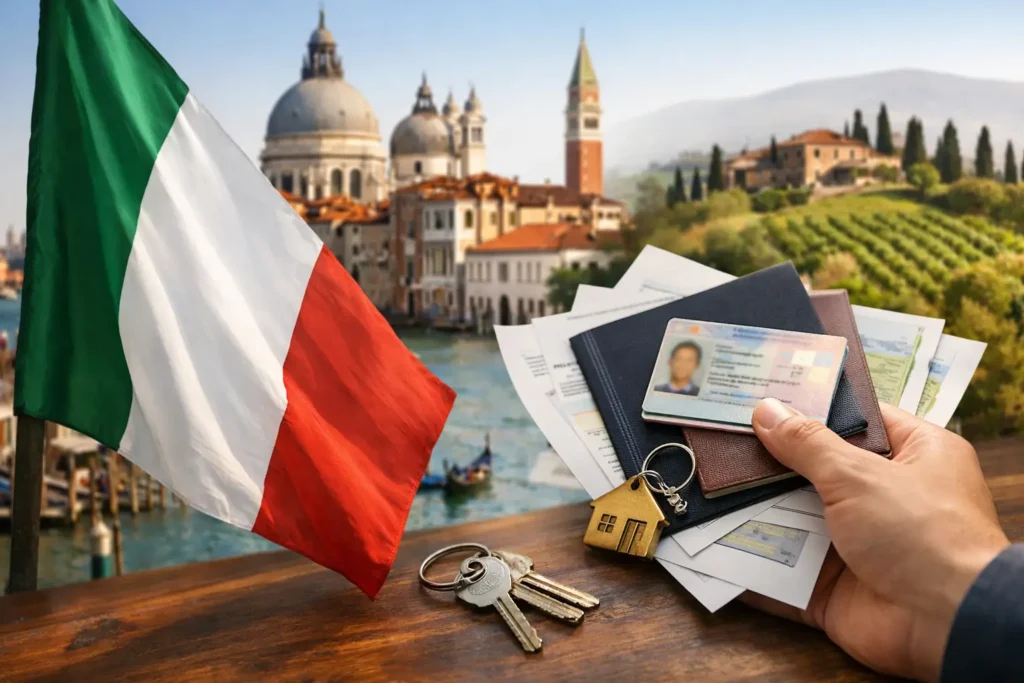
Residenz in Italien für Expats einfach erklärt. Erfahre alles über den Prozess, Dokumente und die Polizeikontrolle, damit dein Umzug in die Abruzzen legal & entspannt gelingt.
Umzug nach Abruzzo, Italien: 5 Realitäten, die in keinem Reiseführer stehen

Du planst deinen Umzug in die Abruzzen? Erfahre, was dich bei Wohnungssuche, Visum, Kosten und Alltag wirklich erwartet, damit dein Start entspannt und klar verläuft.
Auswandern nach Abruzzo: Dein 7-Schritte-Guide für einen stressfreien Umzug

Erfahre, wie du ohne Stress nach Abruzzo auswanderst. Von Visum und Wohnungssuche bis hin zu Residenz und Nebenkosten plane deinen Umzug mit unserem Guide.
Auswandern nach Abruzzo: Warum der Alleingang teurer ist, als du denkst

Quick answer: The real cost of a DIY move to Abruzzo includes wasted flights to view ghost listings, utility contracts with hidden add-ons you didn’t understand, delays from arriving without a codice fiscale, TARI fines from unregistered waste tax, and months of extra temporary accommodation while paperwork stalls. None of these are dramatic disasters — they’re ordinary, avoidable mistakes that compound quickly. Bilingual local support doesn’t add cost to your move; it removes the cost of getting these things wrong. You’ve spent months on Idealista and Immobiliare.it, mapped out villages near Pescara, considered the hills of Chieti province, and read every expat forum thread about life in Abruzzo. You’ve told yourself: “I can handle the move myself — how hard can it be to sign a lease and get the lights turned on?” It’s a very common thought. And it’s where the “Inexperience Tax” starts. In Italy, what you don’t know costs money — not just in stress, but in hard currency. Here’s an honest look at what the solo approach actually costs, versus what working with local, bilingual support looks like in practice. The Wasted Trip: Ghost Listings and Silent Agents The solo approach You find ten properties online and book flights to Abruzzo for a week. You email agents in English. Two reply. When you arrive: one property is already sold one looks nothing like the photos and the remaining viewings are scheduled in inconvenient locations without a car you’ve properly accounted for You’ve spent €1,200–1,800 on flights, accommodation, and car rental for zero usable results. This isn’t bad luck — it’s a structural feature of how the Abruzzo property market works. Local agents prioritise phone calls in Italian with buyers who can move quickly. International email enquiries, especially in English, often go unanswered simply because they require more effort and less certainty of result. As we explain in our guide to finding housing in Abruzzo, many of the best properties never even make it onto portals. They’re handled through local calls and relationships. The supported approach We make the calls in Italian before you book anything. Our digital property finder service pre-screens listings against your actual criteria. Not just price and size, but heating systems, internet availability, APE energy rating, and practical daily-life fit. Where useful, we can conduct a live video walkthrough before you travel. When you do fly, you’re seeing a shortlist of realistic options, not chasing listings that were already gone. The Utility Confusion and the Contract You Didn’t Fully Understand The solo approach You manage to reach a utility provider — eventually. The call is in rapid Italian and you catch about 60% of it. You agree to what sounds like a reasonable deal. Six months later, you realise you’re paying for a maintenance add-on you never wanted, or an insurance product that was bundled in during a conversation you couldn’t fully follow. Or the introductory rate you signed up for has risen significantly because the contract term you agreed to was different from what you assumed. This is one of the most common hidden costs of a solo move. Not a scam, just a communication gap that has financial consequences. The supported approach We don’t sign contracts on your behalf — you remain the decision-maker. But we stand with you through every call and appointment, translate the fine print, flag unusual clauses, and help you choose providers with straightforward terms. Our utilities setup support service covers electricity, gas, water, and internet — the four things that determine whether your first weeks in Abruzzo feel manageable or chaotic. More on what to expect in our Italy utility setup guide. The Codice Fiscale Catch-22 The solo approach You arrive in Abruzzo ready to start your life. You go to buy a SIM card. They ask for your codice fiscale. You head to the Agenzia delle Entrate, wait in a queue, discover you don’t have the right form completed in advance, and spend the rest of the day sorting it out. Meanwhile, the rental contract you wanted to sign is on hold, and the agent is starting to look at other requests. This happens regularly — and it’s entirely avoidable. Without the codice fiscale, you cannot: sign a lease or buy a property open a bank account set up utilities or register with the health service It sits at the front of a chain, and delays there ripple into everything that follows. The supported approach We assist you with our codice fiscale support service, either by: setting the appointment and accompanying you to the Agenzia delle Entrate in Abruzzo during a pre-move visit or redirecting you to our authorised delegation partner Italy Law Firms (ILF), if you’re still abroad You arrive on day one with your tax code already in hand and can move immediately on housing, utilities, and banking. Full details in our step-by-step codice fiscale guide. The Paperwork That Nobody Warned You About The solo approach A few months after arrival, a notice arrives from the Comune. The TARI (waste tax) for your property hasn’t been registered. There’s a fine. You also discover your lease wasn’t formally registered at the Agenzia delle Entrate — which means it can’t be used as proof of address for residency registration, and your residency application has stalled. The 45-day home verification window passed while you were travelling and the Local Police (Polizia Municipale) couldn’t reach you. You need to restart. None of these are dramatic failures — they’re the ordinary costs of navigating an unfamiliar system without someone to explain the sequence. The supported approach We walk you through the correct order: codice fiscale → registered lease → residency registration → utilities → bank → health service. We assist you with the TARI registration, accompany you to the town hall (Comune) for residency registration, and make sure the home verification visit happens smoothly — including ensuring your name is
Codice Fiscale in Italien: Was er ist – und wie du deinen bekommst
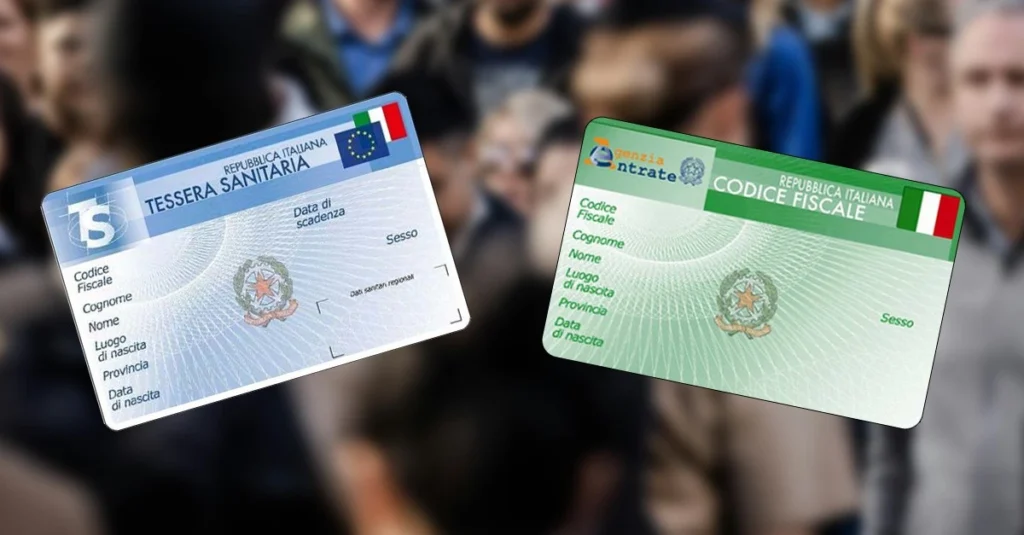
Quick answer: The Italian Fiscal Code or codice fiscale is Italy’s 16-character personal tax identification code — and it’s the single most important document to get before anything else happens in your Italian life. You’ll need it to sign a rental contract, open a bank account, set up utilities, register with the health service, and complete almost every other administrative step. It’s completely free to obtain at any Agenzia delle Entrate office in Italy, and you receive a paper certificate on the same day. If you’re still abroad, you can apply through a delegate in Italy using our codice fiscale support service or through an authorised online partner. If you’ve spent more than five minutes researching your move to Italy, you’ve probably already hit a wall called codice fiscale. But what is it, really — and why does everyone keep telling you to get it first? Think of it as your administrative DNA. It’s a 16-character alphanumeric code that the Italian government uses to identify you across every public and private institution in the country. While it’s technically a tax code, it’s used for almost everything in your daily life that goes well beyond taxes — from signing a lease to getting a SIM card or connecting your WiFi. This code is the master key that unlocks your life in Italy, and without it, very little else can move forward. What the Codice Fiscale Actually Is Codice fiscale is your Italian tax identification code, issued by Italy’s Revenue Agency (Agenzia delle Entrate). It’s used by public offices, landlords, banks, utility companies, employers, and healthcare providers to identify you in the system. It is not the same thing as a residence permit, and it is not proof of residency. Think of it as a personal ID code for administrative and financial life in Italy. You may need it long before you complete other parts of your move — in fact, for most people relocating to Abruzzo, it’s one of the very first documents to sort out because so many later steps depend on it. As The Traveler’s 2026 guide to the codice fiscale confirms, the code is far more broadly used in Italian daily administration than equivalent identifiers in most other countries — it’s required for everything from property purchases to phone contracts to gym memberships. Who Needs a Codice Fiscale? If you’re moving to Italy, you will need a codice fiscale for: Signing a rental contract or buying a property Opening an Italian bank account Setting up utilities (electricity, gas, water, internet) Getting a local SIM card Registering with the national health service (SSN) and getting your Italian health card (tessera sanitaria) Working or running a business in Italy Studying at an Italian institution Inheriting property or handling most official legal transactions Even people who are not yet full-time residents often need one early. If you’re house hunting in Abruzzo and want to sign a rental contract before your permanent move, a codice fiscale is typically required before the paperwork can proceed. Children can also have one, so families relocating together often need to apply for more than one at a time. Decoding the 16 Characters: What Do They Mean? Unlike tax numbers in many countries, which are purely random, the Italian codice fiscale is built directly from your personal data. Here’s how the 16 characters are constructed: First 3 letters: Derived from your surname (usually the first three consonants) Next 3 letters: Derived from your first name First 2 numbers: The last two digits of your birth year (e.g. 1985 becomes “85”) The 9th character: A letter representing your birth month (January = A, February = B, etc.) Next 2 numbers: Your day of birth plus gender. For men, it’s the date (01–31). For women, 40 is added (so a woman born on the 5th would show “45”) Next 4 characters: Your place of birth. For those born outside Italy, this starts with “Z” followed by a specific country code (e.g. Z112 for Germany) The last letter: A control character used to verify the entire string is correct One important note: cases of omocodia (two people generating the same code from their data) do occur, and the Agenzia delle Entrate uses internal disambiguation mechanisms to resolve them. This is part of why unofficial online generators are not a substitute for an officially issued code — and why you should always obtain yours through the proper channels. Codice Fiscale vs. Tessera Sanitaria: What’s the Difference? This is one of the most common points of confusion for expats. Are the fiscal code (codice fiscale) and the health card (tessera sanitaria) the same thing? Yes and no. Codice Fiscale: The number itself. It never expires. You can have it printed on a plain paper certificate and it’s legally valid for life. Tessera Sanitaria: A plastic card with a microchip. It contains your codice fiscale printed on the front, but it also links you to the National Health System (SSN) and functions as a European Health Insurance Card (EHIC) on the reverse side. The key distinction: you can get a codice fiscale certificate as a non-resident. You can only get the tessera sanitaria plastic card once you’ve officially registered your residency in Italy and completed your ASL health registration. For your first weeks in Italy, the paper certificate is completely sufficient — you’ll see the plastic card only after residency is confirmed. Full details on the health card process are in our tessera sanitaria guide. How to Get Your Codice Fiscale: Three Routes There are three main ways to apply, and the right one depends on where you are and your timeline. Route 1: In person at the Agenzia delle Entrate (most reliable and free of charge) If you’re already in Italy — or visiting before your move — this is the most direct and reliable route. Go to your nearest Agenzia delle Entrate office, bring your identification documents and a completed
 English
 Deutsch