
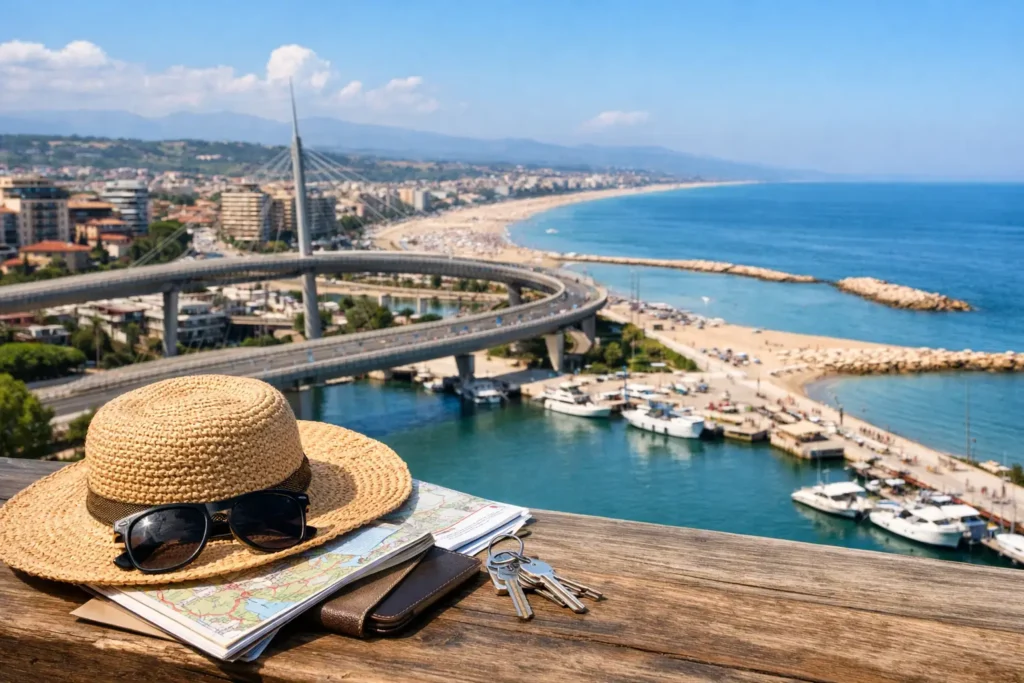
You usually feel Pescara before you understand it.
The sea is right there, the city is walkable in a way that immediately lowers your stress levels, and everyday life looks more manageable than it did from abroad.
Then the practical side kicks in.
Appointments, paperwork, housing questions, internet setup, grocery routines — and trying to figure out which office handles what.
That is where a realistic guide to settling into Pescara actually matters: not as a dream version of the move, but as help for the days when everything feels unfamiliar at once.
Pescara is often a very good fit for people who want city convenience without giving up access to beaches, mountains, and a slower regional rhythm.
It has enough infrastructure to make daily life genuinely workable, but it still feels manageable compared with larger Italian cities.
That balance is a big reason many newcomers choose it — alongside the fact that, according to Expiter’s quality of life data for Pescara, living costs are around 8.8% below the Italian average, with healthcare rated above average and a high number of GPs per capita.
The trade-off is that some systems still move at a very local pace, and things that seem simple on paper can take more time, more documents, or more patience than expected.
Why Settling Into Pescara Feels Easier Than Many Places
For many expats, Pescara offers a gentler landing than Rome or Milan.
The city is compact enough to get around without spending half your week commuting, and most essential services are relatively close together.
The airport handles routes to Milan, Turin, London, Brussels, Barcelona, and beyond.
The train station connects you to Rome in around four hours by train or two and a half hours by bus.
And the city centre is walkable enough that you can start building daily routines within the first week.
As Live and Invest Overseas notes in their Abruzzo guide, Pescara is the natural hub for expats who want good transport connections while still living in a region that feels genuinely Italian rather than internationalized.
You get access to the region’s airports, train links, and services — without the noise and density of a major metropolitan area.
That said, ease depends on what kind of move you’re making.
If you’re renting short-term first, the transition is usually smoother because you have time to learn the neighbourhoods before committing.
If you’re arriving with children, pets, or a significant amount of belongings, the first weeks will naturally involve more moving parts.
Pescara is approachable — but relocation is still relocation.
Start With the Right Neighbourhood, Not Just the Right Apartment
One of the most consistent mistakes newcomers make is focusing only on the property itself.
In Pescara, where you live shapes your first year in ways that the apartment alone cannot predict.
A place that looks perfect online can feel frustrating if it’s too far from the services you need, too noisy in summer, or less practical for winter routines.
Pescara Centro
The city centre appeals to people who want to be near shops, cafés, the train station, and the beach.
It’s convenient and lively — but that energy comes with more traffic, more noise, and generally higher rental prices.
In summer, especially, the area around the seafront can feel very different from the quieter winter version you may have visited.
It’s worth understanding that seasonal shift before committing.
Porta Nuova and residential areas
For people who want everyday services and a more residential atmosphere while staying connected to the city, areas like Porta Nuova tend to offer a good middle ground.
You’re still within reach of everything practical, but the pace feels calmer, and the rental market can be more competitive on price.
Closer to the seafront
Areas directly on or near the Lungomare look incredibly appealing at first glance — and in spring and autumn, they genuinely are.
In summer, seasonal crowds and tourist activity can change the experience considerably.
It’s worth visiting at different times of year before deciding.
This is where local context matters enormously.
An apartment can be technically available and reasonably priced while still having older systems, poor insulation, or a complicated utility situation that makes your first months harder than necessary.
Looking past the photos and asking practical questions early — ideally with someone who knows the local market — is time well spent.
The First Admin Steps: What to Prioritise
The paperwork side of moving is consistently the part people underestimate — not because it’s impossible, but because it rarely follows the neat sequence you expect.
Some steps depend on having a confirmed address first.
Others may require appointments, supporting documents, or translations you didn’t know would be needed.
The core sequence for EU and non-EU citizens in Pescara
- Get your Codice Fiscale — your Italian tax code, needed for almost everything that follows, including signing a rental contract or a purchase deed
- Confirm your rental contract or address — required before you can register residency
- Register residency at Pescara’s Ufficio Anagrafe — the iscrizione anagrafica that officially establishes your address
- Set up utilities — electricity, gas, water, and internet in your own name (utility setup support)
- Open an Italian bank account — significantly easier with proof of residency in hand
- Register with the local ASL — to get your Tessera Sanitaria (Italian health card) and choose your medico di base (General Practitioner)
It also helps to accept early that Italian administration can be very specific.
Two offices may ask for the same information in slightly different formats.
A process that sounds quick can still involve waiting.
None of that means you’re doing anything wrong — it means the system often assumes local knowledge that newcomers don’t yet have.
Having someone explain the sequence clearly, in your language, saves a significant amount of wasted energy.
You can read more about what to do after moving to Italy for a fuller picture.
⚠️ Administrative procedures can vary and change over time. Always verify current requirements with your local municipality or a relocation professional before your appointments.
Utilities, WiFi, and the Hidden Stress of Starting From Zero
People tend to imagine the big relocation milestones as the hardest part.
In reality, small practical gaps often create more sustained stress.
Not having internet in your new home, not knowing how bills are structured, or discovering a service is still registered in a previous tenant’s name can wear you down quickly — especially when everything else also feels new.
In Pescara, utility setup can be straightforward in some properties and frustratingly unclear in others.
Much depends on whether you’re moving into a fully active home, whether contracts need to be transferred or set up fresh, and how responsive providers are.
The same applies to internet setup: a centrally located building may still have limitations, delays, or inconsistent installation timelines depending on the provider and the infrastructure at your specific address.
This is one reason hands-on relocation support makes such a practical difference.
It’s not glamorous, but it saves energy at exactly the moment you have the least to spare.
When you’re also adapting to a new language, new routines, and the emotional weight of a significant life change, help with appointments and provider communication can set the tone for the entire first month.
Learning Daily Life in Pescara Takes a Few Weeks
Settling in is not just paperwork — it’s figuring out where you buy what you need, which shops are open when you need them, how to handle deliveries, where to park, how local transport actually works, and what rhythm the city keeps across different seasons.
Pescara becomes genuinely comfortable once you know your patterns.
Your grocery store, your coffee stop, your pharmacy, your route to the beach, your preferred market day.
Those routines sound small — but they are what turn a place from temporary to home.
Getting around Pescara
One of the city’s genuine advantages is that you don’t always need a car, especially if you live centrally.
Walking and cycling are realistic for a lot of daily life, and the train is useful for regional movement.
That can be a real relief for newcomers who aren’t ready to navigate Italian driving immediately.
That said, car access becomes more useful depending on your lifestyle.
If you plan to explore smaller towns regularly, attend appointments outside the city centre, or live slightly beyond the most connected areas, having a car opens things up considerably.
For some people, central Pescara is liberating without one.
For others — especially families — it starts to feel limiting.
It’s one of those decisions that depends entirely on how you actually intend to live.
Markets, shops, and daily rhythm
Pescara has a mix of large supermarkets and smaller local shops, a covered market (Mercato Coperto), and a range of neighbourhood businesses that still operate on Italian opening hours — meaning afternoon closures are common, and Sundays are quieter than many newcomers expect.
Adjusting to this rhythm is part of settling in, and it usually becomes second nature within a few weeks.
The Emotional Side of Settling In
Even when the move is exactly what you wanted, starting over can feel disorienting.
There’s excitement — but there’s also decision fatigue, a constant low-level cognitive load of navigating the unfamiliar, and moments where easy things stop feeling easy.
You may question:
- whether you planned well enough
- whether the apartment was the right choice
- whether your Italian is good enough
- whether everyone else somehow understands the system better than you do
That feeling is completely normal.
It doesn’t mean the move was a mistake — it means you’re in the middle of a real transition, not a holiday.
In Pescara, the shift tends to happen gradually:
- One day, you stop mentally translating every sign.
- You know which bakery you like.
- You can explain your address without checking your phone.
- You recognise your neighbours.
- You begin to feel less like a visitor and more like someone building a life.
For many expats, building a social network is what accelerates that shift most.
Pescara has a larger, more international population than most Abruzzo towns, which means English-speaking communities and expat social groups are easier to find here than elsewhere in the region.
When Local Support Makes the Biggest Difference
The hardest part of relocating is rarely one dramatic problem.
It’s the accumulation of many smaller ones — each manageable on its own, but draining in combination.
That’s one of the reasons why practical, bilingual support can change the entire tone of a move.
Having someone help with housing questions, accompany you to appointments, explain processes clearly, or organise setup tasks saves not just time, but confidence.
For English- and German-speaking newcomers especially, language barriers don’t just cause confusion — they create hesitation.
People delay tasks because they’re unsure what will happen or whether they’ll understand the answer.
Calm, local, bilingual support removes a lot of that friction.
Whether you need help with a single step or support across the whole settling-in process, you can find out more about what relocation support in Abruzzo actually looks like and whether it might be the right fit for your move.
Give Yourself a Softer Landing
A good move to Pescara doesn’t require perfection.
It requires enough structure to handle the essentials and enough patience to let the rest come into focus over time.
Choose your neighbourhood carefully.
Expect administration to take more energy than you think.
Treat daily routines as part of the settling-in process — not an afterthought.
And if the cost and logistics of relocating solo versus with support feel uncertain, it’s worth thinking through realistically rather than assuming you’ll figure it out as you go.
You don’t need to have every answer in week one.
You just need the right next steps, the right local context, and a little room to breathe while Pescara becomes familiar.
—
Planning Your Move to Pescara and Want to Get It Right?
Whether you’re still deciding on a neighbourhood or already have a lease signed, the early weeks of settling in are where the right support makes the biggest difference.
Less wasted time, fewer trips to the wrong office, and a much calmer start to your new life in Abruzzo.
At Wanderlust Abruzzo, we help English- and German-speaking expats navigate every practical step of moving to Pescara and the wider region — from housing and residency to utilities, appointments, and daily life.
Personal, bilingual, and on the ground.
Get in touch today and let’s talk about your move to Pescara
—
Frequently Asked Questions
Is Pescara a good city for expats?
Yes — Pescara is consistently one of the most practical entry points for expats moving to Abruzzo. It offers an international airport, good train connections to Rome and beyond, a walkable city centre, and year-round services that most smaller Abruzzo towns can’t match. Living costs are below the Italian average, healthcare is rated above average, and the city has an international-facing atmosphere that makes the first months easier than in more rural areas.
Which neighbourhood in Pescara is best for expats?
It depends on your lifestyle. Pescara Centro suits people who want maximum convenience, walkability, and proximity to the beach and train station — though it’s noisier and pricier. Porta Nuova offers a more residential feel with good service access. Areas near the seafront are beautiful but can feel very different in summer versus the quieter months. Visiting different areas at different times before committing is strongly recommended.
How long does it take to settle into Pescara?
Most expats find that day-to-day life starts to feel comfortable within six to eight weeks — once utilities are running, routines are established, and the neighbourhood feels familiar. The administrative side (residency, health card, bank account) can take longer depending on documentation and appointment availability. Emotional settledness typically follows practical settledness by a few weeks.
Do I need a car to live in Pescara?
Not necessarily, especially if you live centrally. Pescara is walkable and bikeable for a lot of daily errands, and the train handles regional travel well. That said, if you plan to explore smaller towns regularly, attend appointments outside the centre, or live beyond the most connected areas, a car becomes significantly more useful. It’s worth thinking honestly about how you intend to live before deciding.
What are the first things to do when settling into Pescara?
In order: get your Codice Fiscale, secure your rental contract, register residency at the Ufficio Anagrafe, set up utilities, open an Italian bank account, and register with the local ASL for your health card. Each step tends to unlock the next, so doing them out of sequence creates delays. Having someone guide you through the order — ideally in your language — saves a significant amount of time and frustration.

 English
 Deutsch