
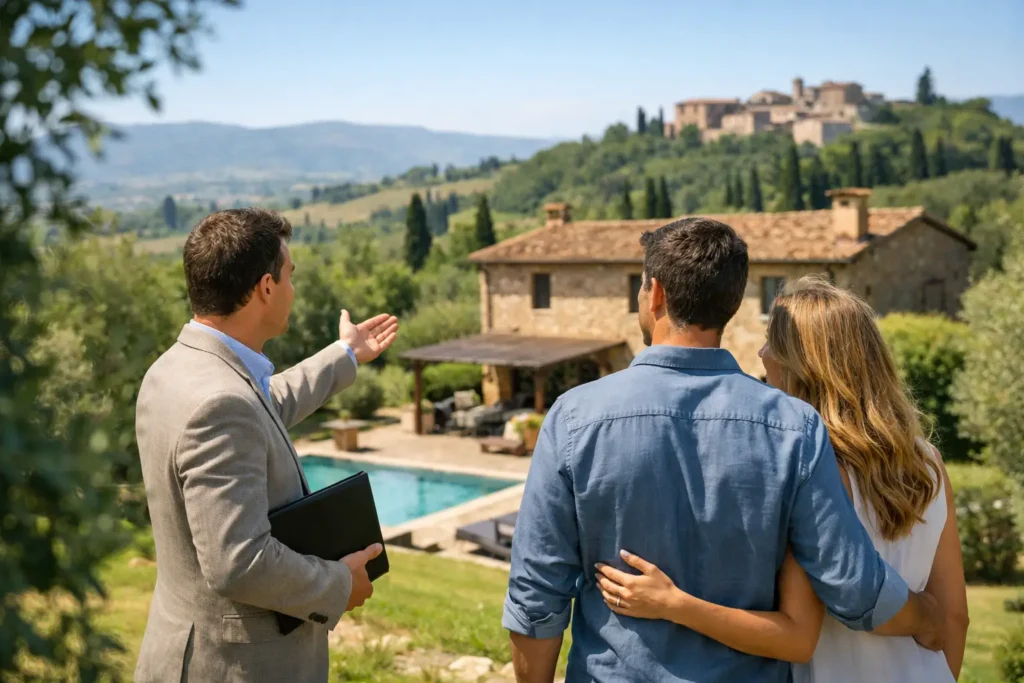
You can love a stone farmhouse online and still walk into a cold, dark, damp reality the moment the front door opens.
That gap between listing photos and real life is exactly why property viewings in Italy matter so much, especially if you’re moving from abroad and trying to make a smart decision fast.
A home can look charming in pictures and still be wrong for your daily life in ways that only show up when you’re standing in it, checking the water pressure, or realizing the “short drive” to town is actually a steep rural road you would hate in winter.
If you’re planning a move to Italy, viewings are not just about whether a place is pretty.
They are about whether the property works for the life you’re actually trying to build.
Why Property Viewings in Italy are Different
If you’ve rented or bought in the US, UK, or northern Europe, you may be used to a standardized process and listings that tell you everything.
In Italy, things are more variable.
Some agents are excellent and transparent; others are less proactive or work with incomplete data.
Properties also tend to come with more quirks.
Older buildings are common, heating systems vary, and the layout might feel unusual if you’re used to modern open-plan homes.
You’re not just asking, “Do I like this place?” You’re asking, “How will this property function in August, in January, and during daily life?”
What to Look for During a Viewing
Start with the practical basics before you get distracted by exposed beams or mountain views.
- Light and Sound: Check the light at the actual time of your visit. Open windows and listen. Church bells, barking dogs, or summer nightlife can all change how livable a place feels.
- Heating and Cooling: In older Italian homes, winter comfort is a bigger issue than people expect. Ask what type of heating the property has and what the monthly utility costs are like.
- Plumbing and Kitchens: Run the taps and check the water pressure. In older properties, plumbing can be one of those things that works “well enough” until it doesn’t.
- Access and Storage: These details sound boring until you’re carrying groceries up three flights of stairs or circling for parking every night.
Questions Worth Asking on the Spot
A good viewing is your chance to gather details that may never make it into the listing.
- Why is the owner selling or renting? The reaction can tell you a lot about potential issues with neighbors or the area.
- What exactly is included? In Italy, some homes come with kitchens, others are stripped bare. Always confirm what stays and what goes.
- Are there building fees (condominio)? These can add a high monthly cost that isn’t always listed.
- Is the property compliant? Especially when buying, it is vital to know if the physical layout matches the official floor plans (planimetria catastale).
Cost Estimates for Viewings & Due Diligence
If you find a place you love, your next step is a professional check.
In Abruzzo, hiring a Geometra (surveyor) to do a pre-purchase inspection is the smartest money you will spend.
| Service Type | Estimated Cost |
|---|---|
| Basic Geometra Inspection | €600 – €900 |
| Full Structural/Technical Report | €1,200 – €2,000 |
| APE (Energy Certificate) Required for sale/rent if missing | €150 – €300 |
Note: Prices are estimates and can vary based on the property size, age, and location in Abruzzo. These professional reports are often the best protection against hidden structural or legal issues.
If You’re Viewing From Abroad: Slow Down
Many people try to compress ten viewings into a three-day trip.
This often leads to “shutter fatigue”, where every beautiful tile starts to look the same.
Our Advice: Build in “buffer time”. Visit the neighborhood at 8:00 PM on a Friday. Walk the road to the nearest supermarket. If you are rushing, you are making an emotional decision, and in Italian real estate, emotions can be expensive.
Why Local Support Can Change the Outcome
Navigating the Italian real estate market is about knowing what is “normal” versus what is a red flag.
For expats moving to Abruzzo, having a local advocate reduces the risk of the “foreigner premium” or missing a technical issue.
As your local support person, we can help you with:
- Appointment Coordination: We handle the communication with real estate agencies to set up your viewing schedule, saving you the stress of language barriers.
- Accompanied Viewings & Translation: We go with you to the property to act as your translator, ensuring you can ask specific questions and understand the landlord or agent’s responses clearly.
- Video Visits: If you are still abroad, we can perform a video visit for you, providing a realistic look at the property’s condition before you book a flight.
- Professional Referrals: If a property looks promising, we can recommend a trusted geometra (surveyor) to handle the technical due diligence and ensure everything is legally in order.
—
A Final Reality Check
The goal is not to find a perfect Italian home—most properties involve trade-offs.
The real question is: can you picture your daily life here once the holiday feeling wears off?
That clarity is worth far more than a beautiful listing photo.
Take the Stress Out of Your Search: Book a Free Call with Us
—
Frequently Asked Questions
Is it common for Italian properties to have dampness?
Yes, particularly in older stone buildings or ground-floor apartments. During a viewing, check for “closed-up” smells or fresh paint in specific corners, which may be hiding moisture issues.
Do I need to pay a deposit just to view a house?
No. You should never pay a fee just to view a property. Fees are only involved once you make a formal offer or sign a contract.
Can I trust the square footage on the listing?
Italian listings often use superficie commerciale, which includes a percentage of the walls, balconies, and cellar. The actual walkable space (calpestabile) is usually smaller, so it’s always worth measuring or asking for the floor plan.
Are utility costs high in Abruzzo?
This depends heavily on the energy efficiency of the building. Older homes with high ceilings can be expensive to heat in winter, while modern apartments are much more efficient. Always ask to see the APE (Energy Performance Certificate).

 English
 Deutsch