
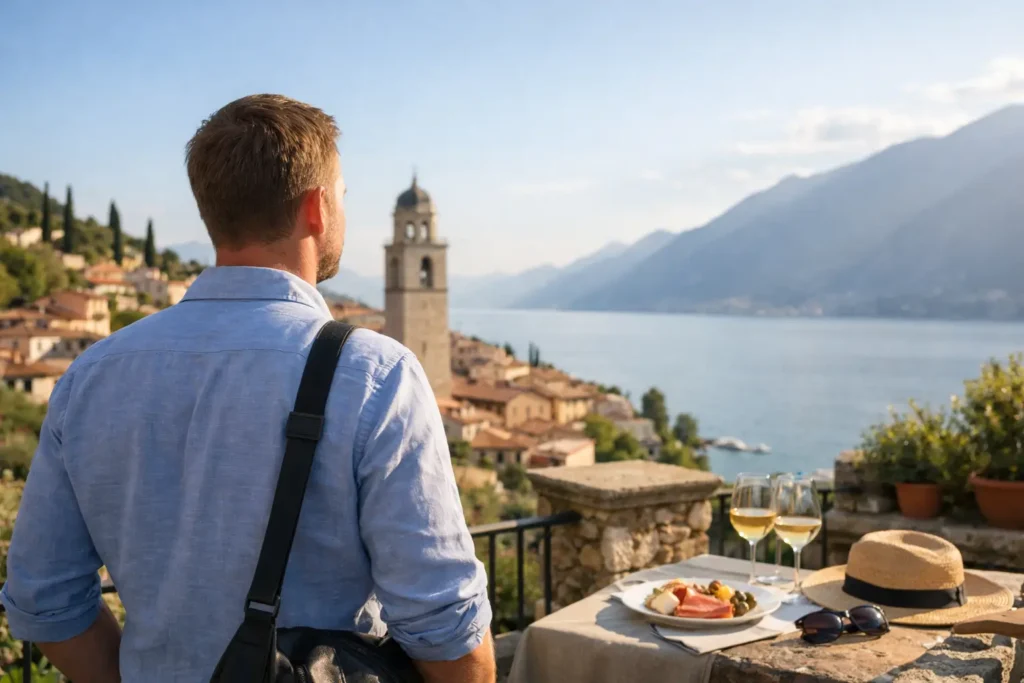
If you are asking where can a German live well in Italy, the real question is usually a little deeper.
You are not just looking for sunshine, better food, or lower costs.
You are trying to find a place where daily life feels manageable, where the pace suits you, and where the move does not turn into a constant struggle with distance, language, paperwork, and logistics.
You are looking for a place where the “Administrative Friction” doesn’t overshadow the beauty.
You want a rhythm that feels less pressured than Berlin or Munich, but without the frustration of a system that feels constantly broken.
That is why there is no single best answer.
Italy can be wonderful for Germans, but it works very differently depending on what you need most.
Some people want efficient connections back to Germany.
Some want a calm coastal town.
Others want mountains, culture, or a lower cost of living without feeling isolated.
The right place is the one that still feels livable in November, not just beautiful in August.
Where can a German live well in Italy? Start with lifestyle, not the map
A common mistake is choosing a place based only on photos or a short vacation.
A town can be charming and still be difficult to live in full-time.
Before comparing regions, it helps to think about what “living well” actually means for you.
For many Germans, it usually comes down to a few things:
- reliable infrastructure
- decent healthcare access
- a clean and safe environment
- everyday convenience
- a pace of life that feels less pressured than northern Europe without becoming frustratingly disorganized
If you are retiring, your priorities may be different from those of someone working remotely or raising children.
If you need airports, train links, and year-round services, your options narrow quickly.
Italy rewards clarity.
The more honest you are about your non-negotiables, the easier it becomes to identify the right region.
Northern Italy feels familiar, but it comes at a price
For Germans who want the easiest cultural adjustment, northern Italy often feels like the softest landing.
Regions such as South Tyrol, Trentino, and parts of Lombardy or Veneto tend to offer stronger infrastructure, more predictable services, and a standard of organization that can feel closer to what many Germans are used to.
South Tyrol is the most obvious example.
German is widely spoken, public services are generally well regarded, and the Alpine setting appeals to people who do not want to trade mountain life for southern heat.
If your ideal Italy still includes order, hiking, excellent winter access, and a strong cross-border feel, this region makes sense.
The trade-off is cost.
South Tyrol is not the affordable Italy that many people imagine.
Housing can be expensive, competition is high, and some towns feel more international and polished than deeply Italian.
For some people, that balance is perfect. For others, it defeats the reason they wanted to move in the first place.
Trentino can offer a similar appeal with a slightly different atmosphere.
It is attractive for outdoor-minded expats who want clean towns, mountain landscapes, and good services.
Verona, Bergamo, and parts of Veneto can also work well if you want city access and stronger transport connections.
But again, northern convenience often comes with northern prices.
As a summary:
- South Tyrol (Südtirol): German is an official language here. The infrastructure is world-class, and public services mirror the German standard. If you want hiking, Alpine order, and proximity to the border, this is it.
- The Trade-off: Real estate prices in Bolzano and Merano rival Munich. You are paying for “Germany with better wine,” which, for some, defeats the purpose of relocating to Italy.
- Lombardy & Veneto: Ideal for those who need city energy and airports like Malpensa or Orio al Serio. But be prepared: the cost of living here is the highest in the country.
Central Italy offers balance
If northern Italy feels a bit too expensive or too structured, central Italy often gives a better middle ground.
This is where many Germans find the lifestyle shift they were hoping for without giving up too much practicality.
Tuscany is the fantasy version for many foreign buyers, but daily life there depends heavily on where you land.
Florence and the most famous towns are beautiful, but they can be crowded and costly.
Smaller Tuscan towns may offer a lovely quality of life, yet they can become difficult if you need regular services, an international community, or easy mobility.
Umbria is often more grounded.
It shares some of Tuscany’s beauty but usually at a lower price point and with less tourism pressure.
It suits people who want green landscapes, historic towns, and a quieter daily routine.
Marche is another strong option, especially if you want a mix of hills, coast, and smaller cities without the price tag of more famous regions.
Then there is Abruzzo, which deserves much more attention than it usually gets.
Why Abruzzo is a strong answer for Germans
Abruzzo works especially well for Germans who want authenticity, space, nature, and affordability without moving somewhere that feels cut off from normal life.
It has beaches, mountains, national parks, historic towns, and many places where everyday costs are still realistic.
What makes it appealing is the balance.
You can find coastal towns with year-round life, inland villages with beautiful settings, and practical urban centers where daily errands are still manageable.
Compared with better-known regions, Abruzzo often gives you more house, more landscape, and more breathing room for the same budget.
That matters more than people expect.
A lower purchase or rental cost does not just save money.
It gives you flexibility while you are settling in, learning the area, and deciding what kind of life you actually want.
For Germans who are nervous about making a wrong decision, this region can be a smart place to test the move without committing to the pressure of a high-cost market.
And for those who need support with the practical side of relocating, local help on the ground can make the difference between feeling stuck and feeling settled.
The “Mountains-to-Sea” Lifestyle
In Abruzzo, you can be skiing in the morning in the Apennines and eating fresh seafood on the Adriatic coast in the afternoon.
For Germans used to the variety of the Alps and the North Sea, Abruzzo offers both in a single province.
Financial Incentives for 2026
Under Law 34/2026, Italy expanded the 7% Flat Tax for Retirees.
It now applies to towns with up to 30,000 residents (previously 20,000).
This means German retirees can move to vibrant coastal hubs like Francavilla al Mare or historic gems like Sulmona and pay just 7% tax on their German pension for 10 years.
Abruzzo Coastal towns vs inland villages for German expats
One of the biggest decisions is not north versus south. It is coast versus inland.
Many Germans imagine village life in Italy as peaceful and romantic.
Sometimes it is.
But a very small inland village can also mean long drives, fewer services, weaker public transport, and more dependence on Italian language skills.
That can be fine if you are prepared for it and want that lifestyle.
It can be exhausting if you still need appointments, internet reliability, social contact, or regular travel.
Coastal towns often make daily life easier.
They tend to have more year-round services, better road access, and a stronger rhythm outside the tourist season.
In regions like Abruzzo, towns such as Pescara, Francavilla al Mare, Ortona, Silvi, or Pineto can appeal to people who want the sea nearby without giving up convenience.
Inland towns can still be excellent choices if you prefer a quieter environment and are realistic about the trade-offs.
A beautiful hill town is much more livable when it is still close to supermarkets, healthcare, train stations, and ordinary services.
Southern Italy can be wonderful, but it asks more of you
Some Germans are happiest in southern regions such as Puglia, Calabria, or Sicily.
The climate can be fantastic, property prices may be lower, and the lifestyle can feel generous, warm, and deeply human.
If your dream is a slower life with strong local character, southern Italy can deliver that in a way the north often does not.
But this is where expectations matter:
- Services may be less predictable
- Bureaucratic processes can feel slower
- Language barriers may feel sharper, especially outside larger towns.
If you need structure, fast administration, or easy adaptation, the south may test your patience.
That does not mean it is a bad choice.
It means it is a better choice for some personalities than others.
People who thrive there are usually flexible, patient, and open to doing things differently.
Practical factors that matter more than people expect
When deciding where to live well in Italy as a German, daily details matter more than broad regional stereotypes:
- Ask yourself how often you will need to travel to Germany.
- Look at the nearest airport, not just the nearest beach.
- Think about winter, not just summer.
- Check whether the town still functions in the off-season.
- Internet quality matters if you work remotely.
- Walkability matters if you do not want to drive for every errand.
- Community matters if you are relocating to Italy alone.
Even something as simple as whether a town has active year-round cafes, local shops, and a normal weekly rhythm can affect how quickly you feel at home.
This is also why relocation support is so valuable in the early phase.
A place can look ideal online and feel completely different once you start viewing homes, asking practical questions, or trying to understand how a neighborhood actually works.
Local guidance helps you avoid choosing with your eyes only.
The best Italian home for a German is the one that fits real life
So, where can a German live well in Italy?
- If you want the easiest transition and do not mind higher costs, northern Italy is often the most familiar.
- If you want beauty and balance, central regions make a strong case.
- If you want more value, more authenticity, and a lifestyle that feels both grounded and livable, Abruzzo is one of the strongest options in the country.
The best move is rarely the most famous place.
It is the place where your budget, daily habits, travel needs, and comfort level with change all line up.
Italy can offer a very good life, but only if you choose the life you will actually live there.
Give yourself permission to choose practicality over fantasy.
That is usually where the good life starts.
—
Is it cheaper to live in Italy or Germany?
If you’re wondering whether it is cheaper to live in Italy or Germany, the answer is simple: it depends.
In Abruzzo, the answer is a resounding yes, but the “Administrative Gap” can be costly if you navigate it without local knowledge.
Wanderlust Abruzzo is your dedicated bilingual support when relocating to Italy, ensuring that your relocation doesn’t involve expensive trial and error.
We help you manage the logistics of your move from Germany to Abruzzo by:
- finding, vetting, and viewing properties
- assisting with your residency registration
- simplifying your utility setup and transfers
- supporting with the registration of your car
- helping with the registration of your pets, if you have any
- and much more
From your first Codice Fiscale to the different State office appointments, we provide the language support and local presence needed to secure your lifestyle.
We turn the administrative noise into a structured plan for your success.
Ready to see how your budget fits in Abruzzo? Book your free Strategy Call with us today.
—
Frequently Asked Questions (FAQs)
Do I need to speak Italian to live well in Abruzzo?
For social life, you can get by with basic Italian. For bureaucracy, healthcare, and utilities, you will probably need a bilingual assistant.
Can I use the 7% tax break if I live in Pescara?
No, Pescara is too large. However, neighboring towns like Francavilla al Mare or Spoltore often fall within the population limits, allowing you to enjoy city amenities while keeping the tax break.
Is healthcare in Abruzzo comparable to Germany?
Italy’s SSN is excellent, especially for primary care and emergency services. The voluntary enrollment cost is roughly €2,000/year — a fraction of German private premiums.
How is the climate for someone used to German winters?
Abruzzo winters are milder but can be damp. Coastal areas rarely see snow, while the mountains offer world-class skiing. Central heating is essential, and you should check the Energy Certificate (APE) of any property you consider.
Can I drive my German car in Italy?
Yes, but for only 3 months after obtaining residency. Then, you must register your car with Italian plates.

 English
 Deutsch