
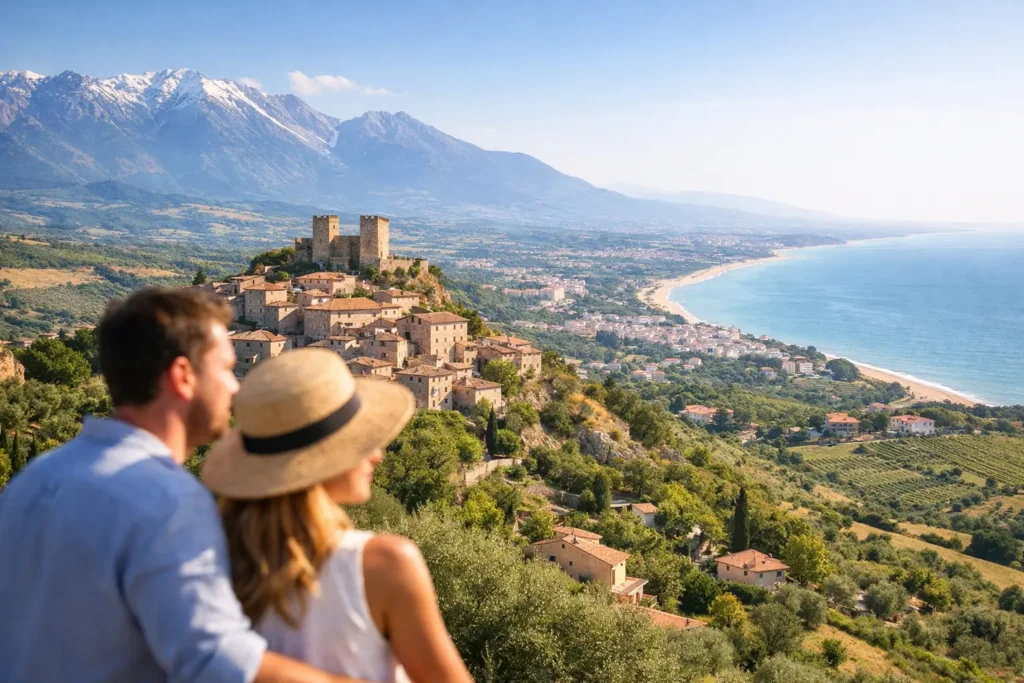
You can fall for Abruzzo in a weekend and still be completely unprepared for living here full-time. That’s usually the gap people are trying to close when they ask whether Abruzzo, Italy is a good place to live.
The honest answer is yes for many people — but not for everyone — and the difference usually comes down to what kind of life you want day to day, not just what looks good in photos.
Abruzzo appeals to expats who are tired of noise, inflated housing markets, packed tourist centres, and the feeling that life has become a long chain of errands and pressure.
It offers something many people say they want but struggle to actually find:
- space
- beauty
- slower rhythms
- and a stronger connection to place
But moving here also means adapting to local systems, different expectations, and a pace that can feel charming one day and maddening the next.
Is Abruzzo a Good Place to Live for Expats Specifically?
For many English- and German-speaking expats, Abruzzo is a very good place to live.
If your priorities are:
- affordability
- quality of life
- nature
- and a more grounded version of Italy
It tends to suit people who want a real home, not just a picturesque address.
One of Abruzzo’s biggest strengths is balance.
You have mountains, beaches, national parks, hill towns, and small cities, often within a short drive of each other.
That means daily life can feel varied without being hectic.
You can spend the morning dealing with practical life, have lunch in a quiet town square, and still get to the coast or countryside without turning it into a major event.
Compared with better-known regions, Abruzzo often feels less performative and more lived-in.
That matters more than people expect.
If you’re relocating rather than taking an extended holiday, authenticity becomes very practical.
You need functioning neighbourhoods, year-round services, local routines, and places where people actually live through all seasons — not just the Instagram-worthy ones.
What Daily Life in Abruzzo Actually Feels Like
Life here is often calmer — but calm is not the same as easy.
- Many newcomers love the sense of breathing room.
- Streets can feel less crowded.
- Family life is visible.
- Meals matter.
- Sundays still feel like Sundays.
There’s a rhythm to ordinary life that many expats find deeply reassuring after years of faster, more transactional environments.
At the same time, Abruzzo is not built around instant convenience.
You may need patience for opening hours, paperwork, delayed replies, and a less digitised way of getting things done.
If you’re used to solving every problem online in ten minutes, this can be one of the harder adjustments.
That doesn’t mean daily life is impossible.
It means you need realistic expectations.
The people who settle well are usually the ones who accept that relocation is not just about changing scenery — it’s about learning a new operating system.
The pace is slower, and that cuts both ways
A slower pace is one of the main reasons people move here.
It can lower stress, reduce living costs, and make room for a better routine.
If you work remotely, are retired, are raising children, or simply want more life outside of work, Abruzzo can feel like a genuine reset.
But slower systems also affect practical things like booking appointments, arranging utilities, dealing with service providers, and following up on administrative steps.
Those moments are where many expats feel most overwhelmed, especially early on when language barriers are still real.
Cost of Living in Abruzzo
Affordability is a major part of Abruzzo’s appeal — and the numbers back it up.
Based on current data from Impatria’s 2026 Abruzzo living guide, a couple can live comfortably in Abruzzo for around €1,100–1,500/month covering rent, groceries, and everyday expenses, depending on location and lifestyle. A single person can typically manage on €800–1,200/month.
More specifically:
- Rent: from €450/month for a one-bedroom in an inland town; €600–900/month on the coast or in Pescara
- Groceries: €200–350/month for one person shopping locally
- Utilities: €100–180/month in mild seasons; can rise significantly in winter in older, poorly insulated properties
- Dining out: €15–30 for a full meal at a local trattoria
- Property purchase: average €1,361/m² for the region (cheapest in L’Aquila province around €700–1,000/m²; highest in Pescara around €1,597/m²)
That said, low property prices should never be the only factor.
A bargain home in a village that doesn’t match your lifestyle can become expensive in other ways — more driving, renovation management, or isolation in winter.
Cheap doesn’t always mean practical.
You can explore the full Abruzzo cost of living breakdown in our dedicated guide.
The Tax Break Incentive for Retirees
For retirees specifically, many qualifying towns in Abruzzo fall under the 30,000-resident threshold for Italy’s 7% flat tax for foreign pensioners — a significant financial incentive that makes the region more attractive than Portugal or Spain for many people with foreign pension income.
Where Abruzzo Works Best — and Where It May Not
Abruzzo is not one single living experience.
The region offers very different daily realities depending on where you settle.
Coastal towns
They can be a strong fit if you want easier access to services, flatter terrain, more year-round activity, and a better balance between local life and convenience.
Places near Pescara, Francavilla al Mare, Ortona, Vasto, Silvi, and Pineto often appeal to expats who want connection without the intensity of a large city.
They also tend to have more consistent infrastructure for newcomers.
Hill towns and inland villages
They can be beautiful, peaceful, and full of character.
They suit expats who genuinely want quiet, a sense of community, and stronger immersion in traditional Italian life.
But they can feel remote if you depend on public transport, need frequent services, or want an easier social landing in the first months.
Smaller cities and well-connected towns
They often offer the best everyday compromise.
You may not get the dramatic romance of a stone village on a postcard — but you may get something more valuable for daily life: walkability, supermarkets, schools, train access, and cafés that stay open year-round.
You can dig deeper into this trade-off in our city versus village life guide.
The Social Side of Living Here
People often ask whether it’s easy to make friends in Abruzzo.
The honest answer is that connection here is possible — but it usually builds more slowly and more locally than in large international hubs.
This can actually be a strength:
- Relationships often feel genuine rather than transactional.
- Neighbours may notice you.
- Shopkeepers may remember you.
- Community grows through repeated contact, not networking events.
Are there any Expat Communities in Abruzzo?
Active English-speaking communities exist in at least five towns, including Pescara, Vasto, Sulmona, Lanciano, and Penne — organised groups that help newcomers integrate and regularly hold events.
For expats still in the research phase, joining the Abruzzo Expats Facebook group and the Life in Abruzzo community is one of the most practical things you can do.
Both groups give you the kind of honest, town-specific insight from people actually living here that no guide can fully replicate.
Should you know Italian before moving to Abruzzo?
Language makes a meaningful difference.
You don’t need perfect Italian to move here, but life becomes much easier and warmer when you can handle basic conversations and show willingness to engage.
Even a modest effort changes how comfortable and confident daily life feels.
For expats who don’t yet speak Italian, the first months can feel lonely.
That’s especially true when you’re trying to secure housing, understand local procedures, or manage appointments.
This is where practical, bilingual local support makes an enormous difference.
Not just logistically, but emotionally too.
The Biggest Trade-Offs to Plan For
You’ll almost certainly need a car
Outside the main coastal towns and Pescara, public transport in Abruzzo ranges from limited to essentially nonexistent.
A car isn’t a luxury — it’s infrastructure.
A quieter inland location that saves money on rent can cost it back in fuel, maintenance, and the energy of car-dependent daily life.
Choosing your location partly around this is genuinely important.
Bureaucracy can feel harder when everything is new
Even simple tasks become stressful when they involve unfamiliar offices, forms, or phone calls in another language.
Italian administrative systems vary by municipality, often depend on relationships and local knowledge, and rarely explain themselves clearly to newcomers.
That’s not unique to Abruzzo — but it can feel more intense when you’re also trying to figure out where to live and how local systems work.
Having someone local who knows the sequence is often the difference between manageable and overwhelming.
Your experience depends heavily on choosing the right area
This is the single most important variable.
A town that’s perfect for a summer visit may not suit your winter routine, your work setup, or your need for consistent services.
The right location can make Abruzzo feel genuinely easy.
The wrong one — chosen for charm rather than practicality — can make it feel isolating.
- Visit outside summer.
- Talk to people who already live there.
- Be honest about your car confidence, your language level, and how much quiet you actually want.
Our guide to insider tips for Abruzzo covers this in detail.
Which Expats Tend to Be Happiest Here
Remote workers
They often do well, especially when they choose a well-connected location and verify internet quality at their specific address before signing anything.
The lifestyle trade — better daily life for slight connectivity compromise — often feels worth it once settled.
Retirees
They are frequently the most satisfied, particularly because the combination of lower costs, the 7% flat tax incentive, a calmer pace, and access to Italy’s public health system hits multiple priorities at once.
Communities in towns like Sulmona, Casoli, Penne, Vasto, and Pescara offer real social infrastructure for this group.
Families
They find genuine value in the outdoor life, calm environment, and affordability — particularly those prioritising space and a slower rhythm over big-city convenience.
The main considerations are schools, transport for older children, and service access.
Which Expats Tend to Struggle the Most Here
People who struggle most are typically those expecting instant integration without effort, or those who romanticised rural Italy without thinking through everyday logistics.
There’s a significant difference between loving a stone farmhouse on Instagram and managing deliveries, appointments, utilities, and errands in a place where very little happens in English.
So, Is Abruzzo, Italy, a Good Place to Live?
Yes, if you’re looking for a more affordable, more human-paced life in a region that still feels deeply Italian and relatively undiscovered.
No, if what you really want is constant convenience, instant digital systems, or a highly international environment where everything works in English.
Abruzzo asks for flexibility.
In return, it often gives people exactly what they were missing.
The best way to judge it is not to ask whether Abruzzo is objectively good.
Ask whether it fits the life you’re trying to build.
If the answer involves more calm, more space, lower costs, and a place that feels real rather than curated, Abruzzo may be closer to what you’ve been looking for than you realised.
—
Considering a Move to Abruzzo and Want to Talk It Through?
The lifestyle case is the easy part to fall in love with.
The practical case — right town, right home, right setup — is what makes the move actually work.
That’s exactly what we help with.
At Wanderlust Abruzzo, we support English- and German-speaking expats through every stage of relocating to Abruzzo.
Personally, bilingually, and on the ground.
Get in touch today and let’s talk about your move to Abruzzo
—
Frequently Asked Questions
Is Abruzzo Italy a good place to live for German- and English-speaking expats?
For many people, yes. Abruzzo offers a lower cost of living than most Italian regions and much of northern Europe and the US, active English-speaking communities in several towns, a high quality of natural and everyday life, and Italy’s 7% flat tax incentive for qualifying retirees. The main practical requirements are willingness to drive (a car is essential in most areas), at least basic Italian for everyday tasks, and careful location choice for year-round livability.
What is the cost of living in Abruzzo for expats?
A couple can live comfortably for around €1,100–1,500/month depending on location and lifestyle, covering rent (from €450/month inland, €600–900/month coastal), groceries (~€200–350/month per person), utilities (€100–180/month in mild seasons), and everyday expenses. Property to buy averages €1,361/m² across the region, with significant variation between coastal towns and inland areas.
What are the main downsides of living in Abruzzo?
The three most consistent ones are: needing a car in most areas (public transport is limited outside the main towns), limited English in everyday settings (basic Italian is genuinely useful rather than optional), and the slower pace of Italian administration, which requires patience and local knowledge to navigate smoothly. Some coastal areas also quiet down significantly in winter.
Which towns in Abruzzo are best for expats?
It depends on your priorities. Pescara, Francavilla al Mare, Vasto, Ortona, Montesilvano, Pineto, and Silvi suit those who want coastal access with good services. San Giovanni Teatino/Sambuceto is practical for frequent travellers (near the airport). Guardiagrele, Penne, Casoli, and Sulmona offer more traditional Italian community life with active English-speaking expat groups. Smaller villages offer the most character but require the most self-sufficiency.
Are there English-speaking communities in Abruzzo?
Yes. Active English-speaking expat communities are established in at least five towns, including Pescara, Vasto, Sulmona, Lanciano, and Penne. Online, the Abruzzo Expats Facebook group and the Life in Abruzzo community are both genuinely active resources with candid, town-specific advice from people already living here.


 English
 Deutsch