
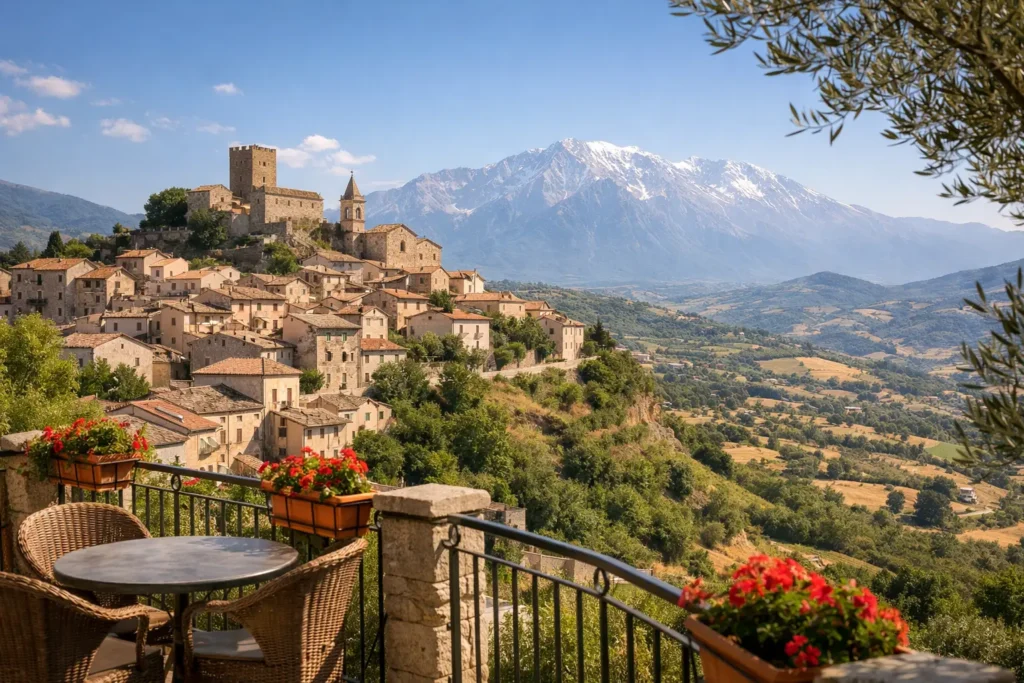
Some villages win you over in five minutes.
A quiet piazza, mountain air, a bar where the same three people are talking with their hands, and suddenly your move to Italy feels very real.
But when you’re trying to choose among the best Abruzzo villages for expats, charm is only part of the story.
The better question is this: where can you actually build a life that feels manageable, connected, and sustainable once the excitement wears off?
That depends on what kind of move you’re making.
Some people want sea access and a more social daily rhythm.
Others want a stone house, a slower pace, and views that make city life feel very far away.
Abruzzo has both, but not every beautiful village works well for every expat.
Worth knowing upfront: all of the towns on this list fall within the population threshold for Italy’s 7% flat tax regime for foreign retirees.
A 2026 legislative update expanded eligibility from towns under 20,000 residents to towns under 30,000, which means more of Abruzzo’s most livable small towns now qualify than did a year ago.
That said, always verify current eligibility for your specific town before making financial decisions based on it.
What Makes the Best Abruzzo Villages for Expats?
For most international movers, the right village sits somewhere between dream and practicality.
You want beauty, yes, but you also want decent road access, basic services nearby, a year-round community, and a realistic path through everyday tasks like getting internet installed, finding tradespeople, or understanding where to go for appointments.
A village can be stunning and still feel isolating if it empties out in winter.
Another can seem less dramatic at first glance but offer something more valuable: daily ease.
That usually means a bakery, pharmacy, coffee bar, weekly market, and a short drive to larger towns when you need bigger shops or administrative help.
If you’re moving without strong Italian, this matters even more.
Smaller places often come with more warmth and community, but also less English spoken.
That’s not a reason to avoid them.
It just means the best fit is often the village where your lifestyle and confidence level match the local reality.
9 Villages Worth Considering when Relocating to Abruzzo
Città Sant’Angelo
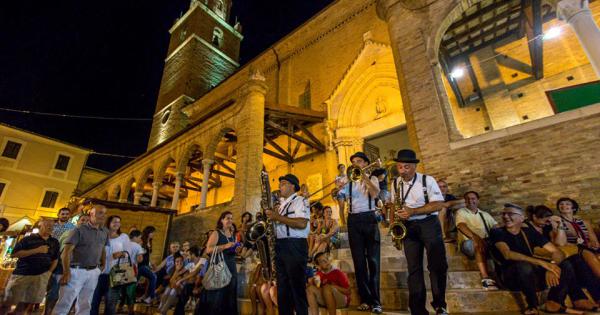
Città Sant’Angelo is one of the easiest places to recommend to expats who want village character without feeling cut off.
The historic centre is lovely, with brick streets and views stretching toward the sea, but the practical advantage is its position.
You’re close to the coast, not far from Pescara, and everyday errands are far simpler here than in more remote inland locations.
A genuinely interesting detail: Città Sant’Angelo was featured in a 2019 Forbes article as one of the top ten places in the world to retire, and it’s officially recognised as one of Italy’s Borghi più belli (“most beautiful villages”).
With a population of around 15,000–17,000, it sits comfortably within the threshold for the 7% flat tax regime.
It’s also genuinely well positioned: Pescara Airport is about 20–30 minutes away, the beach is close, and you can be in the mountains within roughly 45 minutes — a real sea-to-ski draw.
This works especially well for people who want an Italian setting but still need regular access to services, shopping, and transport.
The trade-off is that it can feel less hidden and less remote than the classic hilltop fantasy.
For many expats, that’s exactly why it works.
Guardiagrele
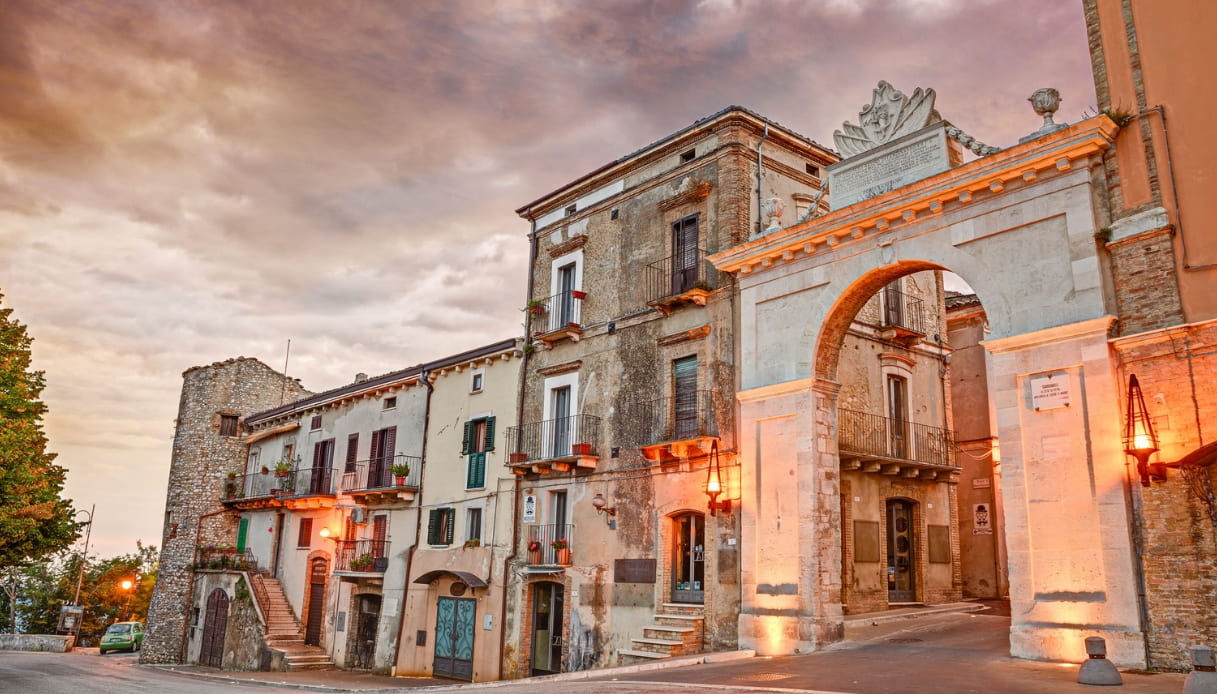
Guardiagrele has a strong identity.
It feels authentically Abruzzese, active enough to live in year-round, and surrounded by the kind of scenery that reminds you why you chose this region in the first place.
It also has a bit more local life than some smaller villages, which can make settling in less intimidating.
A nice detail for craft enthusiasts: Guardiagrele has a long tradition of copper and wrought-iron working, and its historic centre is dotted with active artisan workshops.
A small but genuine point of local pride that gives the town more texture than a typical hill village.
It suits people drawn to mountain views, traditional town life, and a community that still functions beyond tourist season.
Winters can feel quieter and cooler here, and you’ll probably want a car.
Still, for many English- and German-speaking movers, Guardiagrele hits a sweet spot between beauty and livability.
Penne
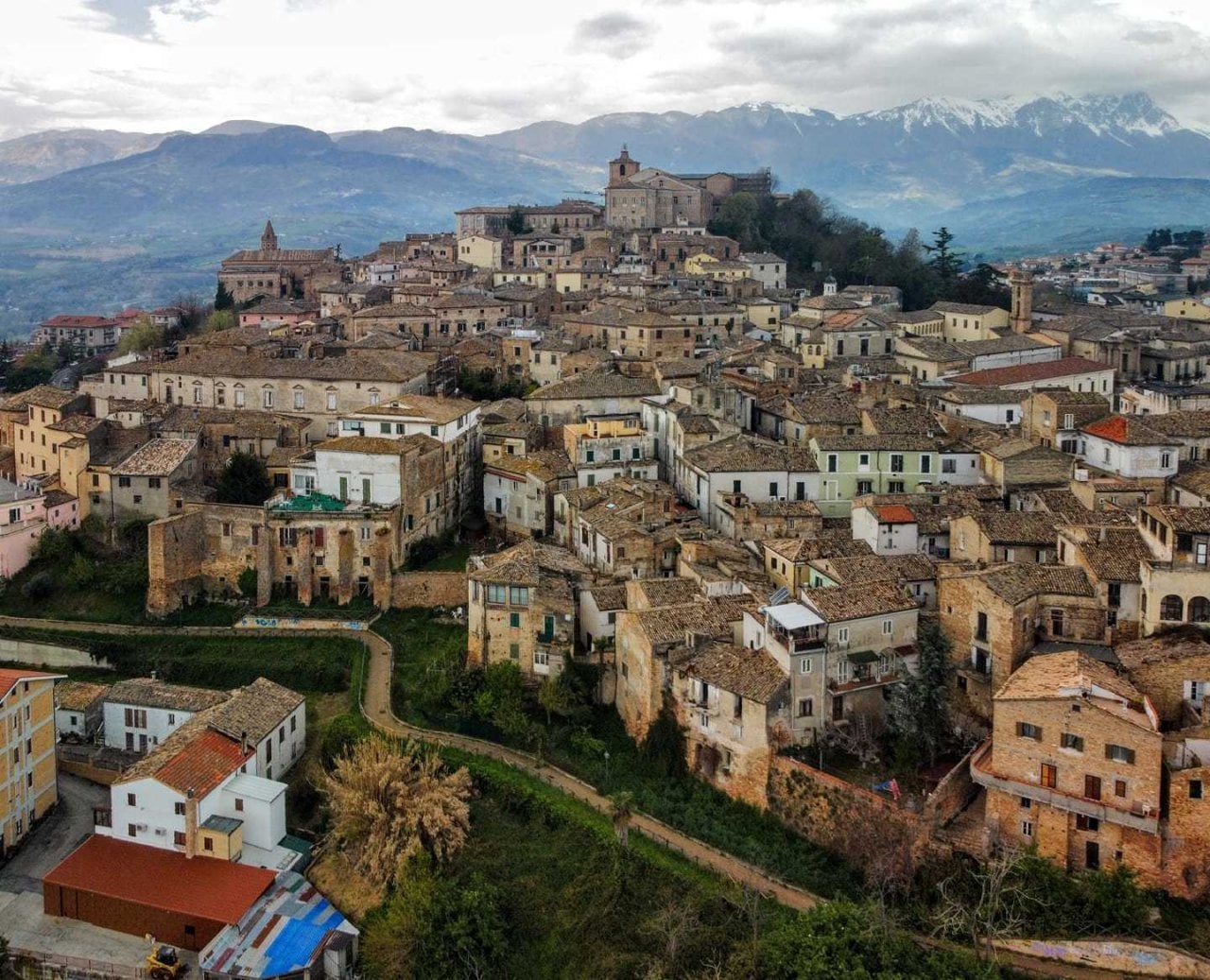
Penne is often overlooked, which is part of its appeal.
It has an elegant old centre, a lived-in atmosphere, and enough substance to support daily life without feeling polished for visitors.
Worth being honest about: with a population of around 11,000, Penne is a town that’s clearly benefited from being included in 7% tax zones precisely because, as one long-term visitor account puts it, the town “needs a lot of TLC (or tender loving care)” — which is part of the point of the incentive in the first place.
Some people find that an opportunity; others prefer somewhere more immediately polished.
For expats, the advantage is balance.
You’re inland, but not dramatically remote.
There is history and charm, but also a practical side to the town.
It may not have the instant name recognition of other destinations, yet that can mean better value and a more grounded experience.
Atri
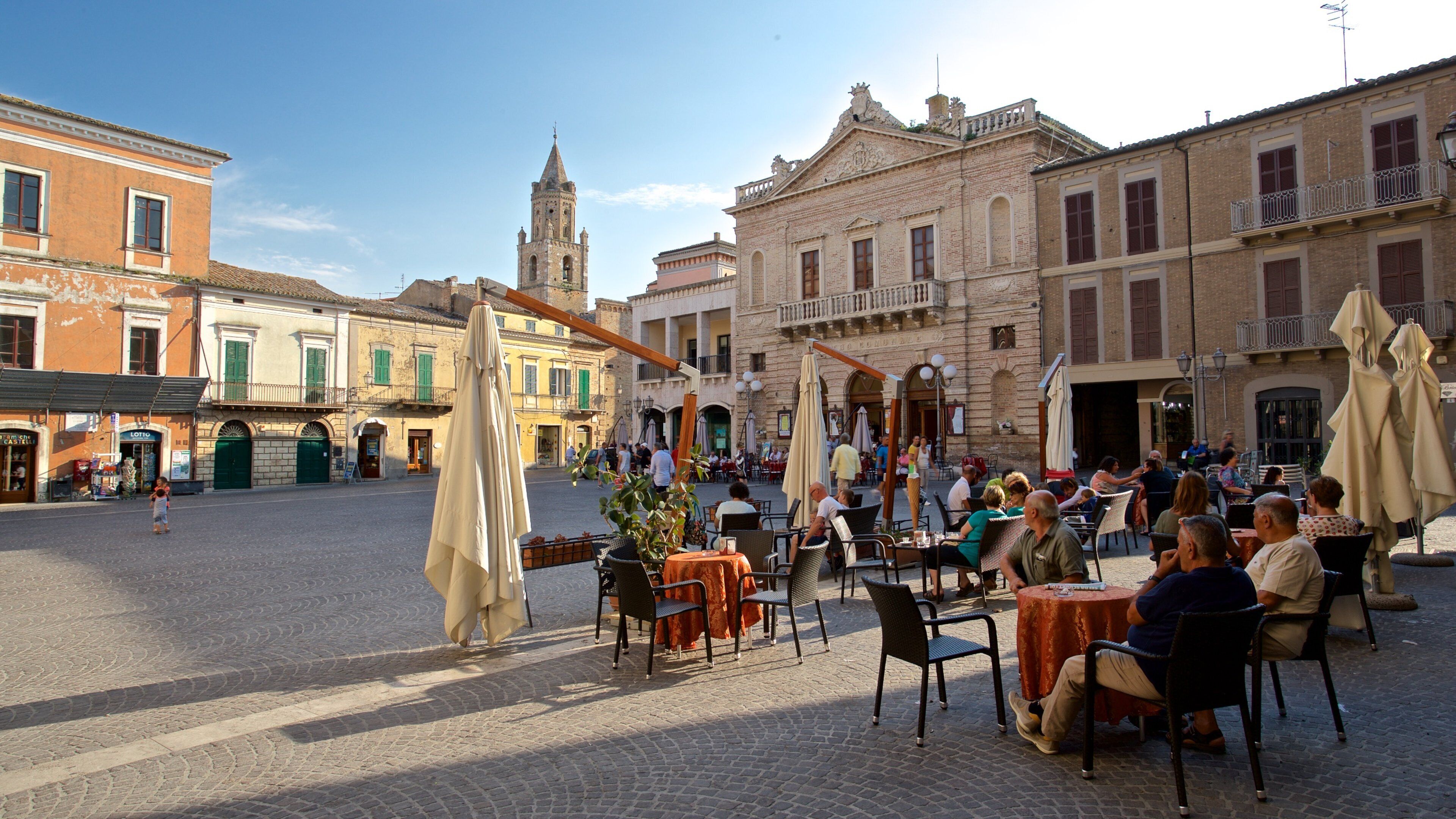
Atri offers culture, architecture, and a stronger town feel while still keeping that classic Abruzzo character.
It is a good option for expats who want more than a tiny village but still prefer historic streets over a modern suburban setting.
There is enough going on here to make day-to-day life feel less fragile.
Atri is also known for a curious natural feature: the Calanchi di Atri, dramatic eroded clay badlands just outside town that look almost lunar — a striking, easy day trip that most newcomers don’t expect to find in Abruzzo.
Another plus is the location.
The coast is reachable, and you are not too far from other useful hubs.
If your ideal move includes regular coffee stops, evening walks, and access to services without living in a city, Atri makes a strong case for itself.
Loreto Aprutino

Loreto Aprutino is attractive to people who picture olive groves, old stone buildings, and a quieter rhythm.
It’s known specifically for its olive oil — among the best regarded in Abruzzo — and the town has its own small museum dedicated to olive oil production, a nice marker of how seriously the local economy and identity revolve around it.
It’s beautiful, well-rooted in local tradition, and feels like a place where you can slow down properly.
For the right person, that’s a gift.
The key question is how much quiet you actually want.
If you work remotely and love peace, this may be a very good fit.
If you need frequent appointments, social variety, or easy, spontaneous errands, you may find yourself driving more than expected.
Castilenti
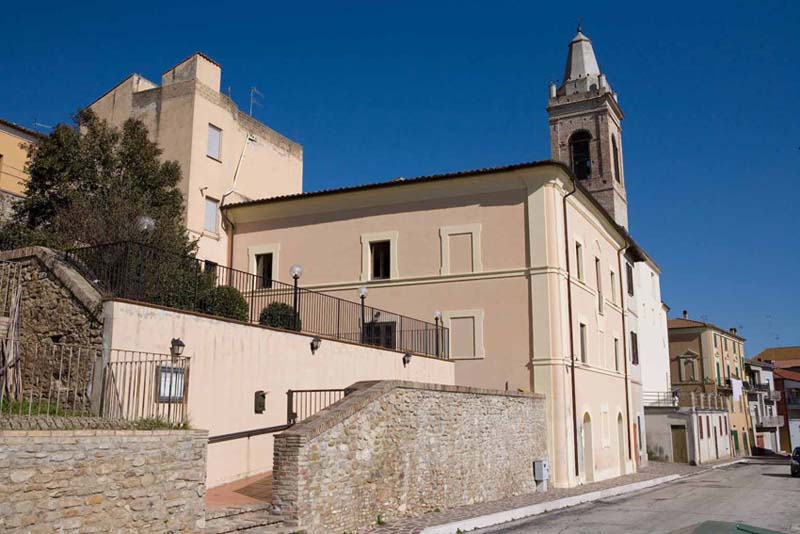
Castilenti is smaller and less obvious, but that’s exactly why some expats fall for it.
It offers a more intimate village experience and can feel easier on the budget than the better-known spots.
If your goal is immersion rather than convenience, this kind of place can be rewarding.
That said, smaller villages ask more of you.
You need patience, flexibility, and a willingness to adapt to local timing.
If you’re expecting everything to work quickly and predictably, it may feel frustrating at first.
If you’re open to a slower way of doing things, Castilenti can feel deeply welcoming.
Santo Stefano di Sessanio

This is one of the most visually striking villages in Abruzzo, and people are often drawn to it immediately.
Perched at 1,251 metres in the Gran Sasso e Monti della Laga National Park, it’s one of Italy’s officially recognised Borghi più belli.
Its current population is only around 115–120 residents — down from a peak, having shrunk to as few as 70 inhabitants before a remarkable restoration project beginning in 1999, when a Swedish-Italian entrepreneur began buying and carefully restoring its medieval stone buildings without modern concrete, eventually creating the Sextantio Albergo Diffuso, a hotel spread across multiple historic houses.
The village is also known for a genuinely unusual product: its own variety of small, prized lentils, celebrated every September at the Sagra delle Lenticchie (Lentil Festival) — considered a symbol of good fortune for the new year in local tradition.
It has extraordinary charm and a rare atmosphere, especially if you want mountain living and a strong sense of heritage.
On looks alone, it is easy to place it among the best Abruzzo villages for expats.
But this is where honesty matters.
With a population this small, Santo Stefano di Sessanio is not the easiest place for everyday life, especially if you need frequent services or a broad social network.
It’s better suited to people seeking a very intentional, quieter lifestyle, perhaps with flexible work and a real appetite for rural living.
Pacentro

Pacentro has the kind of setting that makes visitors stop and stare.
It is dramatic, historic, and full of character, sitting beneath the Maiella massif with a striking medieval castle overlooking the village.
For expats who are deeply motivated by landscape and authenticity, it can feel very special.
It’s also worth knowing as a fun aside: Pacentro has Hollywood family ties — actor Madonna’s father’s family hails from here, and she’s visited the town.
Practical life here depends on your expectations.
It is not the place to choose if you want coastal convenience or quick access to everything.
It is a better fit for people who are comfortable planning ahead, driving regularly, and embracing a more rural pace without needing constant stimulation.
Castel del Monte

Castel del Monte appeals to a similar type of mover: someone who wants mountain scenery, strong local identity, and a village that still feels distinct.
Like its near-neighbour, Santo Stefano di Sessanio, it’s recognised as one of Italy’s Borghi più belli, and the two villages share a similar high-altitude, fortress-like character within the same national park.
There is a seriousness to life in places like this, in a good way.
You feel seasons more.
You feel the distance more, too.
For some expats, that creates the Italian life they were looking for.
For others, it can feel too isolated once the novelty fades.
This is why choosing well matters more than choosing romantically.
How to Choose the Right Village for Your Move
Think About Real Life
Start with your real life, not your vacation instincts.
If you need fast internet, regular healthcare access, train connections, or a manageable drive to a larger town, those points should carry real weight.
The prettiest village is not automatically the right home base.
Think About the Weather
It also helps to think in seasons.
A place that feels magical in spring may feel very different in January.
Ask yourself how much quiet you enjoy when it’s not charming anymore, just normal.
Consider whether you want to be near the sea, closer to the mountains, or somewhere in between.
Think About the Language
Language comfort matters too.
In smaller villages, building a life often depends on relationships and patience.
That can be wonderful, but it’s easier when you know what support you may need around housing, utilities, paperwork, and getting oriented locally.
A property pre-selection and viewing service can be especially useful at this stage — it helps you compare villages realistically rather than falling for the first charming piazza you see.
And once you’ve chosen, residency registration support and utilities setup assistance remove a huge amount of the friction that comes with settling into a smaller, more local community.
Wanderlust Abruzzo often helps expats bridge that exact gap between loving a place and actually managing life there.
One Final Thought on the Best Abruzzo Villages for Expats
The best village is not the one that photographs well.
It’s the one where your mornings feel calm, your errands feel possible, and your new life doesn’t depend on constant guesswork.
Abruzzo gives you plenty of beautiful options — and an increasing number of them now come with a genuine financial incentive attached, too.
The real win is finding the one that feels like home after the honeymoon phase, not just during it.
—
Trying to Choose the Right Village in Abruzzo?
Nine villages, nine very different daily realities.
Figuring out which one actually fits your life — not just your imagination — is exactly the kind of decision that benefits from someone who knows the region from the inside.
At Wanderlust Abruzzo, we help English- and German-speaking expats compare villages and towns, check 7% tax eligibility, and find a home that works for the long term, not just the first viewing.
Get in touch today and let’s talk about finding your village in Abruzzo
—
Frequently Asked Questions
What is the best village in Abruzzo for expats?
There’s no single best answer — it depends on your priorities. Città Sant’Angelo is one of the most practical choices, combining historic charm with easy access to Pescara, the coast, and the mountains. For a quieter, more immersive experience, Guardiagrele, Penne, or Loreto Aprutino offer a strong local identity with a bit more daily ease than the smallest mountain villages. For dramatic scenery and a slower pace, Santo Stefano di Sessanio, Pacentro, and Castel del Monte are extraordinary, but better suited to people genuinely seeking rural quiet.
Which Abruzzo villages qualify for the 7% flat tax for retirees?
Eligibility is based on population size — towns with fewer than 30,000 residents qualify, following a 2026 expansion of the threshold from the previous 20,000-resident cap. All of the villages discussed in this guide, including Città Sant’Angelo, Guardiagrele, Penne, Atri, and the smaller mountain villages, fall well within this limit. Always verify current eligibility for a specific town before making financial decisions, since rules and lists can be updated.
Are smaller Abruzzo villages hard to live in as a foreigner?
They require more adaptation than larger towns, mainly because English (or German) is less commonly spoken and services are more limited. That said, many expats find the trade-off worthwhile: smaller villages tend to offer warmer, faster-forming community connections once you’re a familiar face. The key is being honest about your own tolerance for quiet, distance, and a slower pace of daily logistics.
Should I choose a coastal town or a mountain village in Abruzzo?
It depends on what kind of daily life you want. Coastal and well-connected towns like Città Sant’Angelo or Atri offer easier services, more social activity, and a gentler settling-in process. Mountain villages like Santo Stefano di Sessanio or Pacentro offer extraordinary scenery and a genuinely slower pace, but require more self-sufficiency, more driving, and more comfort with quiet, especially in winter.
How do I know which Abruzzo village is right for my situation?
Visit at different times of year, not just during a summer holiday. Be honest about your internet needs, your comfort with driving, your Italian language level, and how much daily social contact you want. A village that looks perfect in a photo can feel very different once the practicalities of daily life — groceries, appointments, winter heating — are factored in. Speaking with expats already living in a specific town, or getting local property and relocation support, helps close that gap before you commit.


 English
 Deutsch