
Abruzzo White Wines: Trebbiano, Pecorino, and Passerina
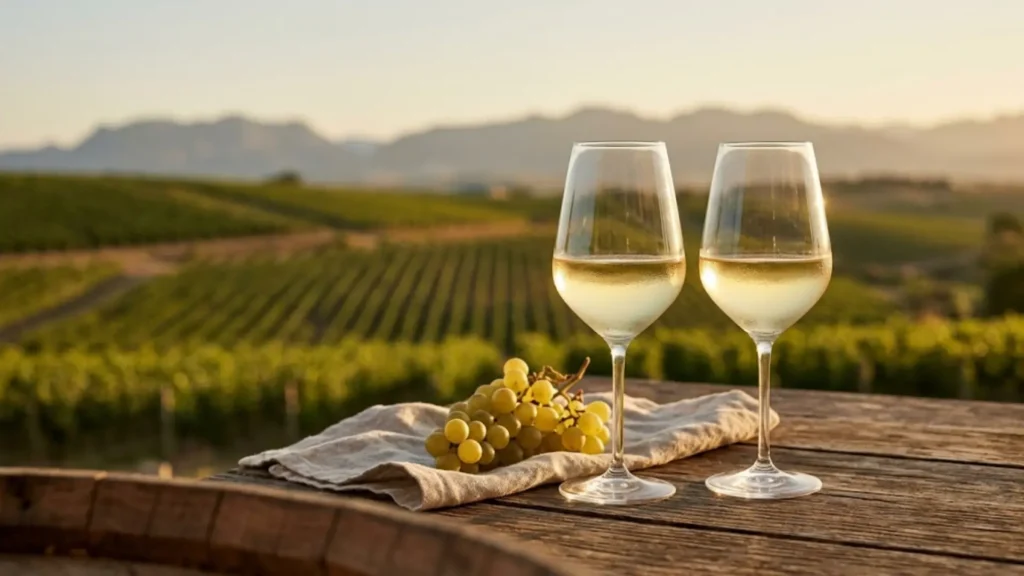
Quick answer: Abruzzo produces three main white wines from native grapes: Trebbiano d’Abruzzo, the region’s traditional and highest-volume white, known for crisp acidity and citrus notes; Pecorino, a once-nearly-extinct grape rediscovered in the 1980s that has since become one of Italy’s fastest-growing and most celebrated white wine success stories; and Passerina, a lighter, more delicate variety with floral and citrus character. All three are grown alongside Abruzzo’s famous red, Montepulciano d’Abruzzo, and are increasingly sought out by wine enthusiasts looking beyond Italy’s more famous regions. Montepulciano d’Abruzzo gets most of the international attention, and understandably so — but Abruzzo’s white wines have their own genuinely compelling stories, including one grape that was thought completely extinct until it was found growing wild decades later. Here’s what’s actually in the glass. Trebbiano d’Abruzzo: The Region’s Traditional White Trebbiano d’Abruzzo is the region’s own DOC dedicated exclusively to white wine — and it’s a genuinely significant one, producing roughly 14 million litres annually. It’s often described as the white counterpart to Montepulciano d’Abruzzo, and the comparison holds: both are named after the region both represent Abruzzo’s most historically established wine styles What’s actually in the bottle The DOC rules require a minimum of 85% Trebbiano Toscano and/or Trebbiano Abruzzese (also sometimes just called Trebbiano d’Abruzzo) and/or Bombino Bianco — a genuinely tangled naming situation, since the exact relationships between these grape varieties remain somewhat disputed among ampelographers. The remaining 15% can include other native white grapes, including Passerina, Cococciola, or white Malvasia. In the glass, Trebbiano d’Abruzzo is typically golden in colour, dry, and fruit-forward, with a delicate bouquet and refreshing, crisp acidity — flavours of lemon, green apple, and almond, with a subtle mineral edge. Most examples are made for straightforward, easy drinking, though a smaller number of quality-focused producers use barrel fermentation or maturation to create more complex, genuinely age-worthy versions. Pecorino: The Grape That Came Back From the Dead This is, without question, the most genuinely remarkable story among Abruzzo’s white wines. Pecorino is a native grape that was considered practically extinct by the mid-20th century — until cuttings were discovered growing wild in the neighbouring Marche region in the 1980s and successfully replanted. Where the name comes from The name comes from pecora, the Italian word for sheep — a reference to the region’s historic transhumance tradition, when shepherds moved flocks along mountain routes. Pecorino grapes ripen earlier than most other local varieties, which meant they were often the only grapes still available on the vine — and therefore edible by sheep — by the time flocks passed through on their seasonal migration. An extraordinary recovery Since its rediscovery, Pecorino’s growth has been genuinely remarkable: the area under cultivation in Abruzzo expanded from just 22 hectares in 2000 to 1,080 hectares by 2015 — reportedly the fastest growth recorded anywhere in the world for a single grape variety over that period. Sommeliers took real notice in the mid-2000s, drawn to its fruit intensity and striking natural acidity, and quality has continued to improve as more producers refine their approach. In the glass, Pecorino is highly aromatic, with citrus and saline notes, naturally high acidity, and real structure. Genuinely vibrant wines that pair beautifully with seafood, and a strong argument for why Abruzzo’s white wine scene deserves more international attention than it currently receives. Passerina: The Delicate, Underrated Third Grape Passerina is the least internationally known of Abruzzo’s three main white grapes, but it has its own quiet appeal. Like Pecorino, it’s an ancient variety historically grown along the border between Abruzzo and Marche, and it was similarly overtaken for decades by the more productive Trebbiano varieties before experiencing its own modern revival. Passerina wines tend to be fresh, light, and lively, with delicate citrus, pear, and floral tones — often made in an easy-drinking, approachable style, though a growing number of producers are working to give it more texture and depth. It’s frequently used as a blending component within Trebbiano d’Abruzzo, but increasingly bottled and celebrated on its own. A Fourth Grape Worth Knowing: Cococciola Less commonly encountered but increasingly appreciated, Cococciola is another native Abruzzo white grape, most often used as a minority blending component in Trebbiano d’Abruzzo, though a small but growing number of producers now bottle it as a standalone wine. If you spend any real time exploring Abruzzo’s smaller, quality-focused wineries, it’s worth asking whether they produce one. Visiting Abruzzo’s Wineries Most of Abruzzo’s wineries are concentrated in the coastal hills and hinterland of Teramo and Chieti provinces, where the majority of the region’s wine production takes place. A typical winery visit with tasting runs roughly 1-2 hours and often costs surprisingly little compared to more famous Italian wine regions — commonly in the €30-35 range, frequently guided by the winemaker themselves rather than a hired host. A few starting points if you’re planning a visit: Winalist’s Abruzzo wine region guide — a good overview of the region’s wine route, with bookable tastings across Teramo and Chieti Winedering’s list of Abruzzo wineries — including estates like Cantina Mazzarosa, offering guided tastings covering both Montepulciano and Pecorino side by side Podere Castorani, in the province of Pescara — frequently cited among visitors as one of the region’s top-rated winery experiences Wine tastings here are often paired with local specialities worth trying alongside the wine itself — arrosticini (grilled lamb skewers), maccheroni alla chitarra, and Abruzzo’s own pecorino cheese, a fitting pairing given the wine grape shares its name and its shepherding history. Why This Matters Beyond the Glass Abruzzo’s wine story — a globally exported red, a rediscovered-from-extinction white, and two further native grapes still finding their audience — is a fairly accurate snapshot of the region as a whole: genuinely excellent historically deep and still relatively undiscovered compared to what it deserves Our post on Montepulciano d’Abruzzo covers the region’s most famous red in the same depth, and our post on
Which Airport Should You Fly Into for Abruzzo, Italy?
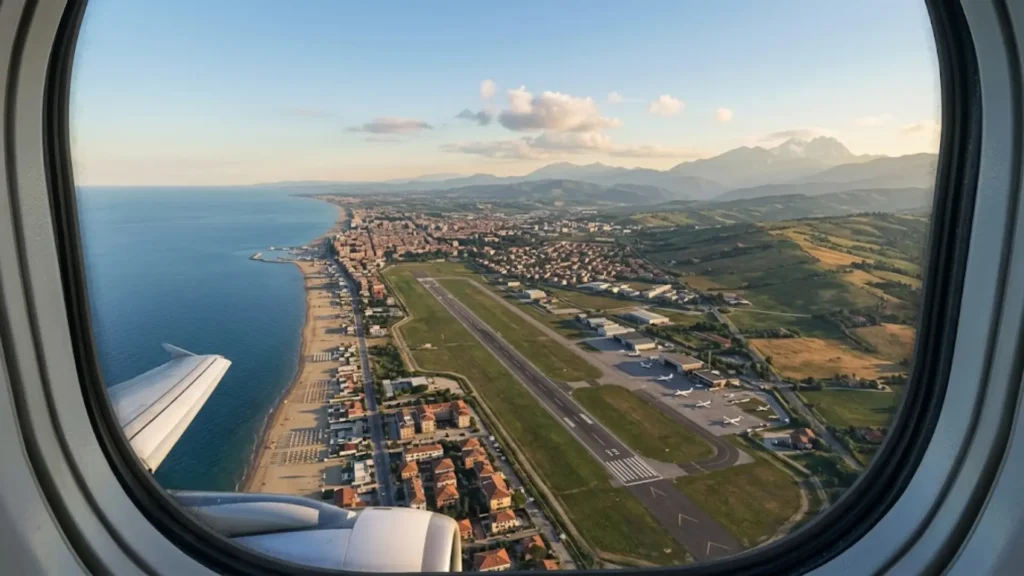
Quick answer: For most travellers, Abruzzo Airport (PSR) in Pescara is the most convenient choice — it’s the region’s only airport, sitting just 4km from the city centre, with direct European connections including London Stansted, Brussels, Milan, Memmingen, Malta, and Turin. If your route isn’t served by Pescara, or you’re flying long-haul from outside Europe, Rome Fiumicino (FCO) is the best alternative, offering intercontinental connections and a roughly 2-hour drive to most of Abruzzo. Rome Ciampino (CIA), served mainly by low-cost carriers, is a workable third option but adds extra transfer time. Getting to Abruzzo is more straightforward than most first-time visitors expect — but choosing the right airport genuinely changes your travel time, and it’s worth deciding deliberately rather than defaulting to whichever flight search engine shows first. Abruzzo Airport (PSR): The Region’s Own Airport Officially named Abruzzo Airport (IATA code: PSR, also referred to as Pescara Airport), this is the region’s only international airport, located just 4km from central Pescara — close enough that a taxi transfer typically takes around 20 minutes. Where does Abruzzo Airport fly to? PSR is a smaller regional airport, but it maintains genuinely useful connections, including routes to London Stansted, Brussels, Milan, and Turin, along with other seasonal European destinations. It won’t offer the sheer route volume of a major hub, but for travellers coming from the UK or other well-connected parts of Europe, it’s often the single fastest way into the region. Landing you within a short drive of the coast, the mountains, and most of Abruzzo’s key towns. Why PSR is usually the best choice when it’s an option The core advantage is simple: no onward transfer. Landing at Fiumicino or Ciampino still means a roughly two-hour drive across the Apennines before you reach most of Abruzzo. Beautiful scenery, but still an extra transfer. Landing at PSR, you’re essentially already there. The airport sits directly on the coast, with good road and rail connections (via the A14 and A25 motorways, and both the Adriatic and Rome–Sulmona–Pescara railway lines) reaching most of the region within an hour or so. Rome Fiumicino (FCO): The Best Long-Haul Option If you’re flying from North America, or anywhere outside Europe more broadly, Rome Fiumicino (Leonardo da Vinci International Airport) is almost certainly your entry point. It’s Italy’s largest airport by a significant margin and the primary hub for intercontinental arrivals. Getting from Fiumicino to Abruzzo The drive from Fiumicino to Abruzzo takes approximately 2 to 2.5 hours, depending on your specific destination within the region, via the A24/A25 motorway across the Apennines. This is a well-maintained route with minimal traffic outside peak holiday periods, and it’s a genuinely scenic drive. You’ll cross directly through the mountains that define much of Abruzzo’s landscape. Alternatively, a train connection into central Rome (roughly 30 minutes from Fiumicino) followed by a direct rail or bus service toward Abruzzo is a workable option for travellers without a rental car. Rome Ciampino (CIA): The Low-Cost Carrier Option Rome’s secondary airport, Ciampino, serves primarily budget and charter airlines, including a significant base for Ryanair. If you’re flying from a European city with strong low-cost connections, Ciampino can sometimes offer the cheapest fare into the wider Rome area. The trade-off is added transfer time: Ciampino sits roughly 11 miles from central Rome, adding both distance and, often, more complex onward travel logistics compared to Fiumicino’s more direct motorway access toward Abruzzo. For most travellers prioritising simplicity over the absolute cheapest fare, Fiumicino remains the more practical Rome-based choice specifically for reaching Abruzzo. Comparing the Three Airports Airport Distance to Abruzzo Best for Abruzzo Airport (PSR) 4km from Pescara centre Direct European routes (UK, Brussels, Milan, Turin) — the fastest option when available Rome Fiumicino (FCO) ~2–2.5 hour drive (plus transfer from central Rome) Long-haul and intercontinental flights, widest overall route selection Rome Ciampino (CIA) ~2.5+ hour drive (plus transfer from central Rome) Budget European carriers, if the fare savings outweigh the added transfer time Which One Should You Actually Choose? The decision is genuinely simple in most cases: check Abruzzo Airport first. If your route is served, it will almost always be the faster, more direct option, since it puts you in the region immediately rather than adding a cross-country drive. If you’re flying long-haul or your specific route isn’t available from PSR, Fiumicino is the reliable default — well-connected, with a manageable and genuinely scenic drive into Abruzzo. Ciampino is worth considering primarily when a specific low-cost route offers meaningful savings that justify the extra transfer time — otherwise, it rarely beats Fiumicino for convenience, specifically when Abruzzo is your final destination. Planning to Visit Abruzzo More Than Once? If you’re weighing a visit that might turn into something longer — research trips, property viewings, or simply getting to know the region properly — Abruzzo Airport’s direct connections become genuinely valuable, since they remove the two-hour buffer on both ends of every trip. This is one of the practical reasons Abruzzo has become increasingly popular with people exploring a longer-term move to the region, not just a holiday. Our post on travelling between Abruzzo and Rome covers train and driving routes in more detail if Fiumicino ends up being your entry point. — Planning More Than a Visit to Abruzzo? Whether you’re flying in for a scouting trip or planning a longer-term move, knowing your travel routes in and out of the region matters more than most people expect. At Wanderlust Abruzzo, we help English- and German-speaking expats relocate to, and settle into life in Abruzzo. Personal, bilingual, and on the ground. Get in touch today and let’s talk about your move to Abruzzo. — Frequently Asked Questions What is the closest airport to Abruzzo, Italy? Abruzzo Airport (PSR), located in Pescara, is the region’s own airport and by far the closest — just 4km from the city centre. It’s the best choice whenever your specific route is
Abruzzo Wine: Montepulciano d’Abruzzo Explained
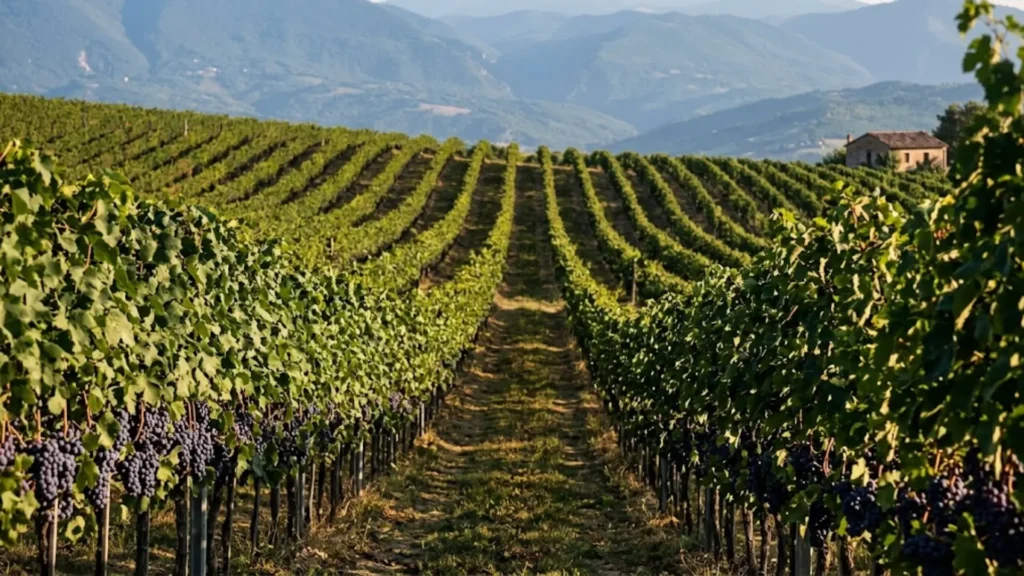
Quick answer: Montepulciano d’Abruzzo is a full-bodied red wine made from the Montepulciano grape, grown across all four provinces of Abruzzo. It’s one of Italy’s most widely exported indigenous wines, produced under DOC status since 1968, with a smaller, higher-quality DOCG subzone (Colline Teramane) established in Teramo province in 2003. Despite the name, it has no connection to the Tuscan wine Vino Nobile di Montepulciano, which is made from an entirely different grape (Sangiovese) in a different region. The two are frequently confused, but they share only a name. If you’ve ever seen “Montepulciano” on two completely different Italian wine labels and wondered whether they’re related, you’re not alone. This is genuinely one of the most common points of confusion in Italian wine. Here’s the clear answer, plus what actually makes Abruzzo’s version of this wine distinctive. What Is Montepulciano d’Abruzzo? Montepulciano d’Abruzzo is a red wine made primarily from the Montepulciano grape. A thick-skinned, deeply coloured variety that thrives across Abruzzo’s varied terrain, from coastal plains to hillside vineyards in the Apennine foothills. It’s a medium-to-full-bodied wine, typically showing notes of red plum, sour cherry, boysenberry, oregano, and tobacco, with firm tannins and naturally high acidity. The wine received DOC status (Denominazione di Origine Controllata) in 1968, and today it’s produced across all four Abruzzo provinces — Teramo, Pescara, Chieti, and L’Aquila — covering nearly 10,000 hectares of vineyard and accounting for roughly 80% of the region’s total DOC wine production. Is Montepulciano d’Abruzzo the Same as Tuscany’s Montepulciano? No — and this is worth clarifying clearly, because the confusion is genuinely common. Vino Nobile di Montepulciano is a completely different wine, made in the Tuscan town of Montepulciano from the Sangiovese grape (locally called Prugnolo Gentile). It has no connection to Abruzzo’s Montepulciano grape at all — the shared name is essentially a historical coincidence, not a shared origin. To make it even more confusing: the Montepulciano grape used in Abruzzo isn’t actually native to the Tuscan town of Montepulciano either. The grape is believed to have originated in central Italy, with the first documented historical reference dating to 1793, and it found its true home in Abruzzo’s hills and valleys — particularly the Valle Peligna — rather than in Tuscany at all. If you remember one rule: Montepulciano d’Abruzzo = Montepulciano grape, made in Abruzzo Vino Nobile di Montepulciano = Sangiovese grape, made in Tuscany Same word in the name, entirely different wines. Colline Teramane: Abruzzo’s Only DOCG Wine Within the broader Montepulciano d’Abruzzo DOC sits a smaller, stricter subzone: Colline Teramane (“the Teramo hills”), located in the northern province of Teramo. First established as its own DOC in 1995, it was promoted to DOCG status in 2003 — Denominazione di Origine Controllata e Garantita, Italy’s highest wine classification, and currently the only DOCG designation in the entire Abruzzo region. Colline Teramane wines must contain a minimum of 90% Montepulciano grapes (compared to 85% for standard DOC), come from just 30 specific communes within Teramo province. In addition to that, they undergo considerably longer minimum ageing — at least one year, extending to three years (including one in oak) for a Riserva designation. The northern provinces of Teramo and Pescara are generally considered to produce the region’s most prestigious, quality-focused expressions, thanks to less fertile, mineral-rich soils and higher elevations where the Apennines draw closer to the coast. Cerasuolo d’Abruzzo: The Rosé Made From the Same Grape One more wine worth knowing: Cerasuolo d’Abruzzo, a distinctive cherry-red rosé also made from the Montepulciano grape, using shorter skin contact during fermentation. It became its own separate DOC designation in 2010, having previously been produced as a style within the main Montepulciano d’Abruzzo classification. Cerasuolo tends to be medium-bodied and notably hearty for a rosé, with characteristic notes of orange peel, cinnamon, strawberry, and dried cherry. A genuinely distinctive style compared to the lighter, more delicate rosés found elsewhere in Italy. Where the Best Montepulciano d’Abruzzo Comes From While all four provinces produce Montepulciano in significant volume, quality and character vary meaningfully by area: Teramo — home to the Colline Teramane DOCG, generally considered the region’s finest and most age-worthy expressions, with naturally high acidity, firm tannin, and elevated alcohol from the cooler hillside terroir Pescara — also among the most favoured provinces for quality-driven producers, sharing similar mineral-rich, higher-elevation growing conditions Chieti — produces the largest overall volume of DOC wine, spanning a wide range of styles from everyday drinking wines to more serious bottlings L’Aquila — the smallest producing province by volume, with vineyards concentrated in valleys including the Valle Peligna, historically significant as one of the grape’s original homes Tasting It for Yourself Most of Abruzzo’s Montepulciano producers are concentrated in the coastal hills and hinterland of Teramo and Chieti provinces, and visiting one is far more accessible — and often far less expensive — than a comparable experience in Tuscany or Piedmont. A typical guided tour and tasting runs roughly €30-35, frequently hosted by the winemaker themselves. A few starting points if you’re planning a visit: Winalist’s Abruzzo wine guide — a good overview of the region’s wine route, with bookable tastings across Teramo and Chieti Winedering’s list of Abruzzo wineries — including estates like Cantina Mazzarosa, which pairs Montepulciano tastings with the region’s white wines side by side Podere Castorani, in the province of Pescara — frequently cited among visitors as one of the region’s top-rated winery experiences If you’re curious about what else is in the glass beyond the region’s famous red, our post on Abruzzo’s white wines — including the remarkable story of a grape once thought extinct — covers the rest of the region’s wine identity. Why This Matters Beyond the Wine Itself Abruzzo’s wine industry is a genuine reflection of the region’s broader character: quietly excellent historically deep-rooted and considerably less internationally hyped than its output deserves Montepulciano d’Abruzzo is one of Italy’s most widely exported indigenous
Majella National Park Abruzzo: Caves, Wolves and Hermitages
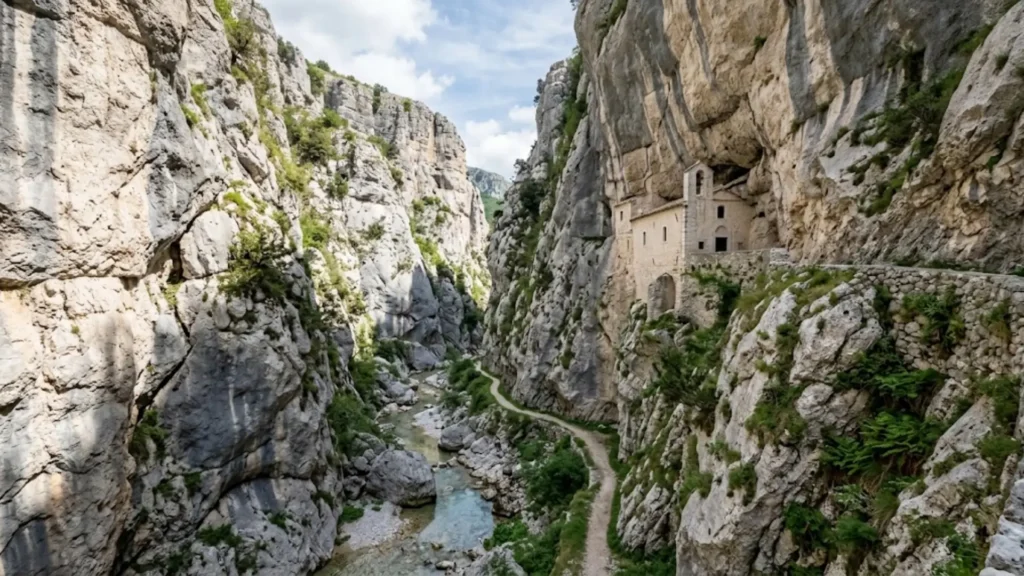
Quick answer: Majella National Park is Abruzzo’s third and wildest national park — a rugged limestone massif rising to Monte Amaro (2,793m), the second-highest peak in the Apennines after Corno Grande. It’s home to one of the largest wolf populations in the world (roughly 70-80 Apennine wolves across about 10 packs), over 100 documented caves, and dozens of centuries-old hermitages carved directly into its cliffs. Recognised as a UNESCO Global Geopark since 2021, it’s the least-visited and most remote-feeling of Abruzzo’s three national parks. If Abruzzo National Park is famous for its bears and Gran Sasso for its scale, Majella is famous for its wildness — and, genuinely, its wolves. This is the least internationally known of Abruzzo’s three national parks, and for many visitors, that’s exactly the appeal. What Is Majella National Park? Majella National Park (Parco Nazionale della Majella) protects roughly 74,000 hectares across the provinces of Chieti, Pescara, and L’Aquila. Unlike the alpine grasslands of Gran Sasso or the beech forests of PNALM, Majella is defined above all by its limestone geology — a landscape shaped over millennia by water erosion into deep gorges, karst plateaus, and an extraordinary network of caves. Pliny the Elder reportedly called the massif Padre dei Monti (“Father of the Mountains”), while local Abruzzesi have long referred to it as Montagna Madre (“Mother Mountain”). A rare case of the same peak carrying both a paternal and maternal title in local tradition, reflecting just how central this mountain is to regional identity. Monte Amaro: The Apennines’ Second-Highest Peak The park’s highest point is Monte Amaro, at 2,793 metres — the second-highest peak in the entire Apennine range, just behind Gran Sasso’s Corno Grande. More than half of the park’s total territory sits above 2,000 metres, making Majella one of the most consistently high-altitude protected areas in Italy. One of the World’s Largest Wolf Populations This is genuinely one of the most remarkable facts about the park, and one that surprises most first-time visitors. Majella is home to an estimated 70-80 Apennine wolves, organised into roughly 10 distinct packs. A concentration that ranks among the largest wolf populations anywhere in the world relative to the park’s size. The wolf is such a defining symbol of the park that it appears directly on the park’s official logo. Alongside wolves, the park supports Apennine chamois, golden eagles, peregrine falcons, and — increasingly, as populations expand from neighbouring PNALM — occasional sightings of the Marsican brown bear. Over 100 Caves — and the Story Beneath the Mountain Majella’s limestone terrain is riddled with caves — more than 100 have been documented, ranging from small formations to genuinely extraordinary karst systems. Grotta del Cavallone The park’s most celebrated cave is the Grotta del Cavallone, in the Taranta gorge — a 1.3km karst system rich with stalactites and stalagmites, open to visitors and considered one of Italy’s most impressive show caves. Grotta Nera Far more restricted, the Grotta Nera (“Black Cave”) near Pennapiedimonte is accessible only to a small number of experts for conservation reasons. It contains an unusually large formation of “mountain milk” — a soft, water-soaked mineral deposit that creates distinctive whitish, tray-like formations found nowhere else in Italy at this scale. The Hermitages: A Mountain Shaped by Spirituality Majella’s caves haven’t only sheltered animals. For centuries, monks and hermits carved dwellings and small sanctuaries directly into the mountain’s cliffs, seeking genuine isolation. Around twenty rock hermitages survive across the park today, several of them genuinely spectacular feats of construction. The most striking include San Bartolomeo in Legio near Roccamorice, built into the rock and reached through a tunnel carved directly into the mountainside, and the Hermitage of Sant’Onofrio di Serramonacesca, perched on a ridge beneath an enormous overhanging boulder. This spiritual layer gives Majella a genuinely different character from Abruzzo’s other two parks — as much a place of quiet human history as of wilderness. A Geological and Botanical “Hot Spot” Majella’s biodiversity is exceptional even by Abruzzo’s already high standards. The park is reported to house over 78% of all mammal species found in Abruzzo, and more than 2,100 documented plant species — over 65% of the region’s total flora, roughly 30% of all Italian flora, and around 17% of European flora, all within a single protected area. This concentration of botanical diversity, alongside its cave systems and geological richness, is a key reason UNESCO designated Majella a Global Geopark in 2021. Visiting Majella National Park The town of Caramanico Terme is one of the most popular bases for exploring the park, with hiking trails, thermal springs nearby, and good access to the park’s most visited gorges. The park offers roughly 500km of hiking trails in total, ranging from gentle family-friendly routes to serious high-altitude climbs. A few things worth knowing before visiting: The Fara San Martino gorges and the Orfento Valley are among the most spectacular and accessible canyon walks in the park The historic narrow-gauge railway crossing part of the park is sometimes nicknamed “Italy’s Trans-Siberian Railway” for its dramatic mountain scenery Roads to some of the more remote villages and trailheads can be genuinely winding and slow — this is the least developed of Abruzzo’s three parks, and that’s precisely why it feels more remote Guided access is required for restricted sites like Grotta Nera, and generally recommended for wolf territory hiking given the park’s genuinely wild character Part of Abruzzo’s Three National Parks Majella is one of three national parks within the Abruzzo region — alongside the wildlife-focused Abruzzo National Park (PNALM), home to the Marsican brown bear, and the dramatic high-altitude landscape of Gran Sasso e Monti della Laga, including the Apennines’ highest peak. Together, these three parks protect roughly a third of Abruzzo’s total territory — a genuinely rare concentration of wilderness for a single Italian region, and part of what gives Abruzzo its reputation as one of the country’s greenest. — Considering
Gran Sasso National Park: Abruzzo’s “Little Tibet”
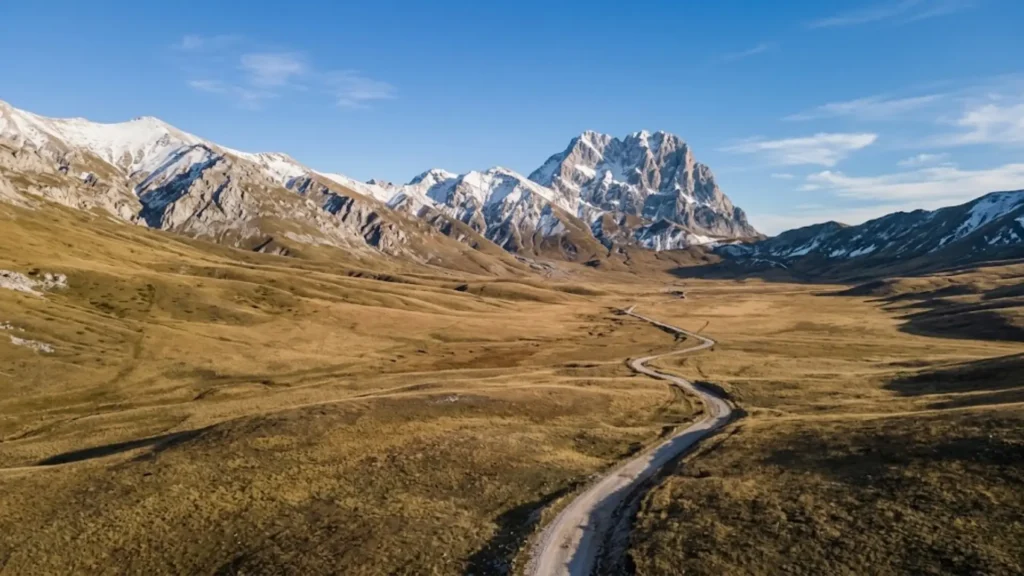
Quick answer: Gran Sasso e Monti della Laga National Park is Abruzzo’s second national park, centred on Corno Grande (2,912m) — the highest peak in the entire Apennine mountain range. It’s home to the Calderone, considered Europe’s southernmost glacier, and to Campo Imperatore, a vast high-altitude plateau nicknamed “Little Tibet” for its stark, otherworldly scale. Established in 1991, it’s the third-largest national park in Italy, spanning roughly 140,000 hectares across Abruzzo, Lazio, and Marche — though its heart, and most of its territory, sits firmly within Abruzzo. If Abruzzo National Park is famous for its bears, Gran Sasso is famous for its scale. This is where the Apennines reach their highest point, where you’ll find one of the strangest and most photographed landscapes in Italy, and where a slice of genuinely dramatic 20th-century history happened to unfold at nearly 2,000 metres above sea level. What Is Gran Sasso e Monti della Laga National Park? Established in 1991, the park covers approximately 140,000 hectares (some sources cite the core protected area at 1,413 km²), making it the third-largest national park in Italy, behind only Cilento, Vallo di Diano e Alburni, and Pollino. It spans three regions — Abruzzo, Lazio, and Marche — though its geographic and cultural centre of gravity sits firmly in Abruzzo, particularly around the province of L’Aquila. The park is genuinely two landscapes in one: The Gran Sasso massif forms the dramatic, rocky, high-altitude core — Italy’s most vertical mountain scenery outside the Alps. The Monti della Laga range to the north is entirely different in character: heavily forested, softer in profile, with rivers, waterfalls, and a noticeably wetter, greener feel than the stark Gran Sasso peaks. Corno Grande: The Highest Peak in the Apennines The park’s undisputed centrepiece is Corno Grande, standing at 2,912 metres — the highest point in the entire Apennine range, and one of the most recognisable mountain silhouettes in central Italy. The peak has multiple named summits, with the western summit (Vetta Occidentale) marking the true highest point. Beneath Corno Grande’s northern face lies the Calderone, widely considered Europe’s southernmost glacier. Though, like glaciers across the continent, it has retreated significantly in recent decades and is now more accurately described as a glacial remnant. Its continued existence at this latitude remains a genuine geographic curiosity. Campo Imperatore: Italy’s “Little Tibet” If one single place defines this park in photographs, it’s Campo Imperatore. A vast, basin-shaped alpine plateau stretching roughly 27km long and 8km wide, sitting between 1,500 and 1,900 metres in elevation. Its scale, emptiness, and stark rolling grassland have earned it the enduring nickname “Little Tibet” among Italians — a comparison that, once you see photographs of the place, makes immediate sense. A surprising piece of history Campo Imperatore isn’t just scenically dramatic. It’s also the site of one of the more remarkable episodes in modern Italian history. The historic Hotel Campo Imperatore (also known as Albergo di Campo Imperatore) served as Benito Mussolini’s prison from August 28 to September 12, 1943, following his removal from power. He was famously extracted in a daring German glider-and-paratrooper rescue operation. A story that still draws historically curious visitors to the site today, alongside the hikers and photographers who come for the landscape alone. Wildlife and Landscape Diversity The park’s dramatic range of altitudes and geology creates genuine ecological diversity within a relatively compact area. At the highest elevations, where summits reach nearly 3,000 metres, the terrain preserves rare glacial relict environments and endemic alpine flora and fauna found almost nowhere else in Italy. Lower down, the landscape shifts dramatically — almond trees, vineyards, and olive groves appear in the valleys well before you’ve left the park’s official boundaries. The park is also home to the Tirino river, frequently cited as having some of the clearest water in Europe, and to Lake Campotosto on the northern side of the Monti della Laga range, an important seasonal stopover point for thousands of migratory birds. Visiting Gran Sasso and Campo Imperatore Most visitors start at Campo Imperatore itself, which is the starting point for the majority of the park’s well-marked hiking trails, including the main route up Corno Grande. The plateau is accessible by road and, seasonally, by cable car from the nearby town of Assergi. A few practical notes worth knowing before visiting: Best seasons: late spring and early autumn generally offer the most comfortable hiking conditions and the best wildflower or foliage displays Avoid August for serious climbing on Corno Grande specifically — the combination of crowds and elevated rockfall risk makes this a less ideal period for the more technical routes Mountain weather changes quickly at this altitude, even in summer — proper layers and a genuine respect for changing conditions matter here more than at lower-altitude Abruzzo destinations The winding access roads up to Campo Imperatore involve sharp curves and can see slow-moving traffic including large vehicles — a straightforward drive, but one that rewards a bit of patience rather than rushing Part of Abruzzo’s Three National Parks Gran Sasso e Monti della Laga is one of three national parks within the Abruzzo region. Alongside the wildlife-focused Abruzzo National Park (PNALM), home to the Marsican brown bear, and the more rugged, less-visited Parco Nazionale della Majella, covered in our dedicated Majella guide. Together, these three parks protect roughly a third of Abruzzo’s total territory. A genuinely rare concentration of wilderness for a single Italian region, and part of what gives Abruzzo its reputation as one of the country’s greenest. — Considering Life Close to Mountains Like These? Living within reach of genuine high-altitude wilderness — not a scenic backdrop, but a real, accessible mountain range — is one of the most distinctive things Abruzzo offers compared to almost anywhere else in Italy. At Wanderlust Abruzzo, we help English- and German-speaking expats relocate to, and settle into life in Abruzzo. Personal, bilingual, and on the ground. Get in touch today and
Abruzzo National Park: Wolves, Bears, and What to Know
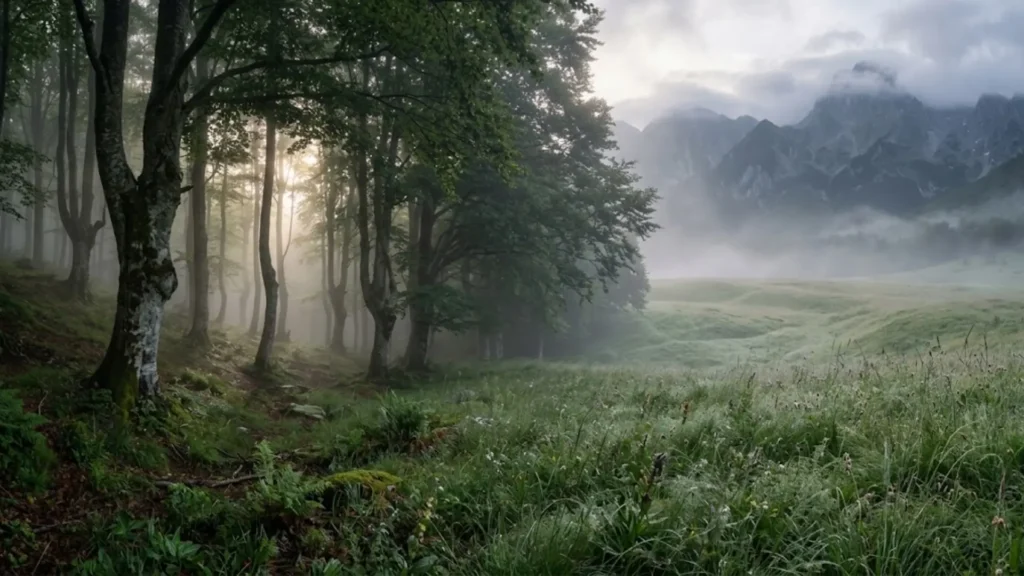
Quick answer: Abruzzo National Park (officially Parco Nazionale d’Abruzzo, Lazio e Molise) is Italy’s oldest national park, founded in 1921 specifically to save the Marsican brown bear from extinction. As of a 2026 estimate, the population has grown to 81 bears — up from just 50 in 2014, a genuine conservation success story. The park is also home to the Apennine wolf, the endemic Apennine chamois, golden eagles, and over 60 mammal species across roughly 50,000 hectares of protected core territory, with an additional 80,000-hectare buffer zone. It’s also one of three national parks within the Abruzzo region. If you’ve searched for wolves or bears in Abruzzo, you’ve likely landed here for a reason: this region is home to one of Europe’s genuinely rarest and most remarkable wildlife conservation stories. Abruzzo National Park isn’t just a scenic protected area. It’s the reason the Marsican brown bear still exists at all, and it’s the most famous of the region’s three national parks. What Is Abruzzo National Park? Its official name is Parco Nazionale d’Abruzzo, Lazio e Molise (PNALM), reflecting that its protected territory now spans across all three neighbouring regions, though its historic and administrative heart remains firmly in Abruzzo. It is Italy’s oldest national park, and one of the oldest in Europe. How the park began The park’s origins trace back to the late 19th century, when only a handful of Marsican brown bears and Apennine chamois survived in these mountains, hunted to the brink of extinction. King Victor Emmanuel II first established a royal hunting reserve to halt the slaughter, though it was later closed due to maintenance costs. The real turning point came on October 2, 1921, when a federation from Bologna leased land in the Camosciara area from the municipality of Opi, forming the park’s original core. By November 25, 1921, the autonomous body of the Abruzzo National Park was formally established, with the park’s boundaries expanding steadily over the following century to its current size. Today, the park covers roughly 50,000 hectares of core protected territory, with an additional 80,000-hectare buffer zone — making it not only Italy’s oldest national park, but also its richest in biodiversity. Abruzzo’s Three National Parks Parco Nazionale d’Abruzzo, Lazio e Molise (PNALM) is Abruzzo’s oldest and most internationally famous protected area, but it’s actually one of 3 national parks within the region. A genuinely rare concentration that gives Abruzzo its reputation as one of Italy’s greenest regions. Parco Nazionale d’Abruzzo, Lazio e Molise (PNALM) — covered in this post, home to the Marsican brown bear and the region’s founding conservation story. Parco Nazionale del Gran Sasso e Monti della Laga — centred on the highest peak in the Apennines, including the striking high-altitude plateau of Campo Imperatore. We cover this park in detail in our dedicated Gran Sasso guide. Parco Nazionale della Majella — a wilder, less-visited park known for its dramatic gorges, extensive cave systems, and its own resident wolf population. Also covered in our dedicated Majella guide. Together, these three parks — alongside several smaller regional reserves — mean roughly a third of Abruzzo’s total territory sits under some form of environmental protection. That’s part of what gives the region its distinctive character: real, functioning wilderness within a short drive of coastal towns, historic hill villages, and everyday services. Our post on what Abruzzo is known for covers this broader identity in more depth. The Marsican Brown Bear: Europe’s Rarest Bear The park’s most famous resident — and the entire reason it was founded — is the Marsican brown bear (Ursus arctos marsicanus), a genetically distinct population isolated in these mountains for an estimated 3,000–4,000 years. How many bears live in Abruzzo? This is one of the most searched questions about the park, and the honest answer has genuinely improved in recent years. A July 2026 population estimate reports 81 Marsican brown bears in the central Apennines (43 females, 38 males) — up meaningfully from around 50 individuals in 2014. This makes the Marsican bear one of the very few large European carnivore populations showing genuine, measurable recovery, though it remains classified as Critically Endangered by the IUCN due to its extremely low genetic diversity and small overall numbers. What makes this bear different from other brown bears The Marsican brown bear is smaller than its Alpine and northern European cousins. Males can weigh up to around 200kg, females up to roughly 140kg. It has developed distinct behavioural traits from its long isolation, including notably solitary, quiet habits. It primarily inhabits elevations between 800 and 1,700 metres, favouring beech forest, though it also forages in lower-altitude oak woods, orchards, and open grasslands. Bears feed almost entirely on what the forest provides: fruits, berries, grasses, insects, honey, roots, and occasionally other animals. Sightings require genuine patience. The best chances tend to be spring (April–May, when bears emerge from hibernation actively foraging), and early morning or dusk during summer months. The Apennine Wolf Alongside the bear, the park is home to the Apennine wolf (Canis lupus italicus) — a subspecies that came dangerously close to extinction by the early 1980s, surviving only in isolated pockets including the protected valleys of this park and the Sila mountains further south. Sustained conservation work over the following decades has allowed the wolf population to recover significantly, and Apennine wolves have since expanded well beyond the park’s boundaries into much of peninsular Italy. Unlike the bear, wolves are considerably more elusive and far less frequently sighted by visitors. Their recovery is measured more through tracking, howling surveys, and camera trap data than casual observation. What Else Lives in the Park? Beyond its two most famous residents, the park supports an extraordinary range of wildlife for a relatively compact protected area: The endemic Apennine chamois (Rupicapra pyrenaica ornata), a mountain goat species found almost nowhere else on Earth Golden eagles, alongside black kites and peregrine falcons Red deer, roe deer, and
Abruzzo vs Molise, Marche, Umbria & Puglia Compared
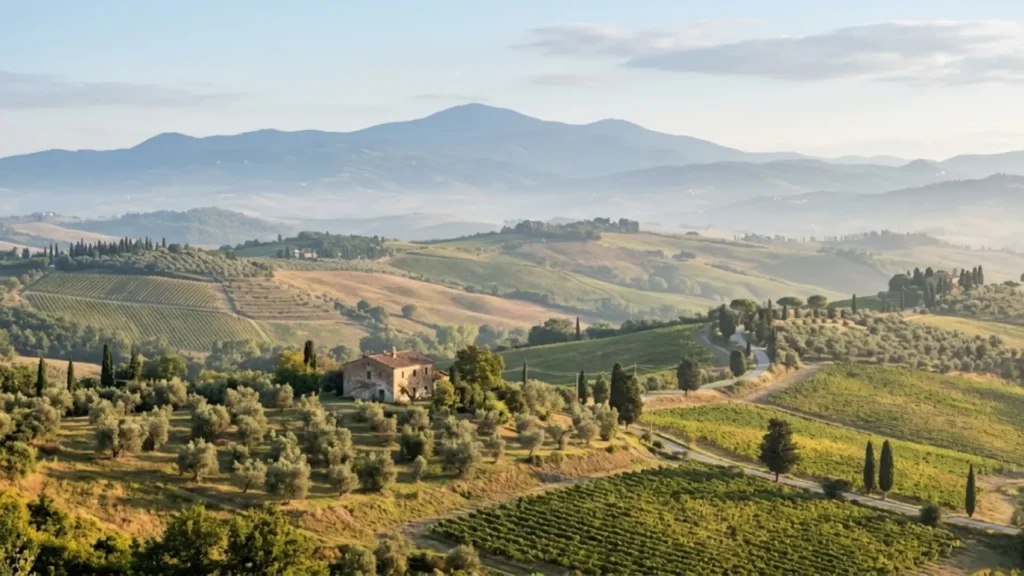
Quick answer: Abruzzo sits between four regions with genuinely different characters: Molise to the south is Italy’s smallest and most affordable mainland region, with property prices even lower than Abruzzo’s. Marche to the north offers a similar mountains-and-coast combination at comparable value. Umbria to the west shares Tuscany’s hill-town scenery at a fraction of Tuscany’s cost, but without Abruzzo’s coastline. Puglia to the south is Italy’s most internationally popular southern destination, with higher prices and more tourism than Abruzzo. Among all of them, Abruzzo remains the only region combining a real Adriatic coastline, genuine high mountains, and Italy’s largest concentration of protected wilderness — at prices still well below the national average. If you’re comparing Italian regions for a visit, a property purchase, or a longer-term move, you’ve probably noticed Abruzzo keeps coming up alongside a handful of others — Molise, Marche, Umbria, and Puglia. They get grouped together often, and for good reason. They’re all central-to-southern regions offering a more affordable, less crowded alternative to Tuscany. But they’re genuinely different from each other, and the differences matter more than the surface-level similarities suggest. Abruzzo vs Molise Molise sits directly south of Abruzzo, and the two were actually a single region — Abruzzi e Molise — until they formally split in 1963. Today they remain Italy’s two smallest mainland regions, and Molise carries a running joke in Italy itself: “Il Molise non esiste” (“Molise doesn’t exist”), a self-deprecating meme reflecting how little-known and overlooked the region is, even within Italy. Where they differ Molise takes Abruzzo’s low profile even further. It’s genuinely one of Italy’s cheapest regions to buy property — full 185m² homes averaging around €175,000, with smaller family apartments starting from roughly €60,000. Abruzzo, while still affordable by Italian standards, sits noticeably above that. Molise also has considerably less infrastructure: fewer English-speaking communities a smaller international presence and more limited services outside its handful of larger towns Abruzzo’s advantage is scale and choice: four provinces, and 305 municipalities an established (if still modest) international community a functioning airport and considerably more variety in both coastal and mountain living If Molise is Abruzzo’s even-quieter, even-cheaper neighbour, Abruzzo is the version of that same authenticity with meaningfully more infrastructure behind it. Abruzzo vs Marche Marche sits directly north of Abruzzo along the Adriatic coast, and the comparison here is the closest of the four — both regions genuinely combine mountains and sea in a way most of Italy can’t. Where they differ Marche is often described as one of Italy’s most underrated regions for exactly this reason: accessible mountains (the Sibillini range) long sandy beaches and well-preserved medieval hill towns like Urbino and Ascoli Piceno All at property prices among the lowest of any Italian region offering both coast and mountains. It shares excellent connectivity too, since Ancona and Pescara airports both serve the wider area. The practical difference tends to come down to scale of the expat community and the specific tax incentive landscape. Abruzzo’s 7% flat tax for foreign retirees applies to a large number of qualifying towns and has driven more international relocation activity in Abruzzo specifically over the past few years. Marche remains excellent value, but Abruzzo currently has the more established foreign resident infrastructure (though still modest by Tuscany standards). Abruzzo vs Umbria Umbria, often called “the green heart of Italy”, sits inland and shares Tuscany’s rolling-hills, hill-town aesthetic — at a considerably lower cost of entry than Tuscany itself. Where they differ The single biggest difference is straightforward: Umbria has no coastline. It’s entirely landlocked, bordered by Tuscany, Lazio, and Marche. If sea access is part of your vision, this rules Umbria out immediately regardless of anything else. Where Umbria excels is its concentration of well-known hill towns: Perugia Spoleto Assisi Orvieto Each with real historic weight and an established (if still relatively small) international presence. Property here can be found for €100,000–150,000 in many areas, broadly comparable to inland Abruzzo. The core trade-off: Umbria offers the “Tuscany look” without Tuscany’s price tag, but Abruzzo offers that same affordability plus the coast, plus genuinely higher mountains, plus more protected wilderness. Abruzzo vs Puglia Puglia, also known as the “heel” of Italy’s boot, is probably the most internationally recognisable of the four regions compared here, largely thanks to its distinctive whitewashed trulli architecture, its extensive coastline, and a wave of international attention over the past decade. Where they differ This comparison has the widest gap. Puglia has become considerably more internationally known and, in its most popular areas (particularly the Valle d’Itria and the Salento peninsula), meaningfully more expensive and more tourist-dense than Abruzzo. Recent property portal data shows Abruzzo now ranks second nationally for foreign buyer interest, ahead of both Umbria and Puglia. A genuinely notable shift, suggesting international buyers are increasingly discovering Abruzzo as the “next Puglia” before prices catch up. Puglia’s climate is also considerably hotter and drier in summer than Abruzzo’s, which — combined with its flatter landscape — makes it a fundamentally different lifestyle proposition. If you specifically want the option of mountain air and a cooler summer retreat alongside coastal living, Abruzzo offers that combination in a way Puglia simply doesn’t. The Bigger Picture: What Actually Sets Abruzzo Apart Across all 4 comparisons, a consistent pattern emerges. Abruzzo isn’t necessarily: the cheapest option (Molise wins that) the best-known hill-town region (Umbria and Tuscany win that) or the most fashionable coastal destination (Puglia currently wins that) What it offers instead is a genuine combination: a real Adriatic coastline the highest peaks in the Apennines outside the Alps 3 national parks covering roughly a third of the region’s territory and property prices still well below the national average A combination most comparable Italian regions simply can’t match. The honest trade-off is: infrastructure and international familiarity Tuscany, Umbria, and increasingly Puglia have deeper, more established expat and tourism ecosystems: more
Abruzzo or Abruzzi? Name, History, and How to Pronounce It
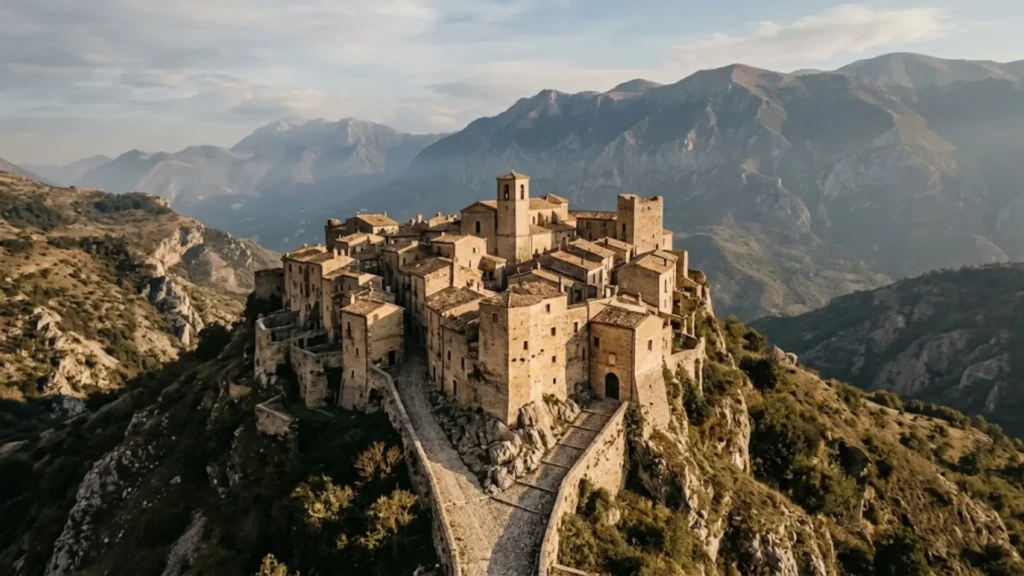
Quick answer: “Abruzzo” (singular) is the correct, official modern name. “Abruzzi” (plural) is the older historical name, used when the region was administratively divided into three separate territories collectively called “the Abruzzos”. The name persisted in English — especially in the US — largely because Italian emigrants who left for America in the late 19th and early 20th centuries carried the older plural form with them, and it stuck in diaspora communities even after Italy officially standardised on “Abruzzo.” The name is pronounced as ah-BROOT-so, with a hard, doubled “z” sound. If you’ve spent any time researching this region, you’ve probably noticed both names (Abruzzo or Abruzzi) floating around. Often used interchangeably, sometimes even in the same sentence. So which one is actually correct, and why does the confusion exist at all? The short answer is straightforward. The history behind it is genuinely interesting. Is it Abruzzo or Abruzzi? Abruzzo (singular) is the correct, current, official name of the region — used in all modern Italian government documents, maps, travel guides, and everyday conversation in Italy today. Abruzzi (plural) is the older historical name. It’s not incorrect exactly, but it’s outdated. A name from a period when the region was still administratively fragmented into multiple separate territories. If you see “Abruzzi” used today, it’s usually in one of three contexts: older texts and maps place names that have preserved the historical form or English-language communities — particularly Italian-American ones — where the older name simply never fully updated Why Was It Ever Called “Abruzzi” in the First Place? This is where the naming history gets genuinely interesting, and it explains the plural form perfectly. The region used to be three separate territories During the era of the Kingdom of Naples, what is now the single region of Abruzzo was divided into three distinct administrative territories: Abruzzo Citeriore (“nearer Abruzzo,” closer to Naples), Abruzzo Ulteriore I and Abruzzo Ulteriore II (“farther Abruzzo,” further from Naples) Later, under Napoleonic-era administration in 1807, these were reorganised with Teramo and L’Aquila as capitals of the two “Ulteriore” provinces, while Chieti remained the capital of the “Citeriore” territory. The plural is just basic Italian grammar If you know a little Italian, this part makes immediate sense: the plural of a word ending in “-o” typically ends in “-i”. Since there were three separate Abruzzo territories, Italians referred to them collectively as Abruzzi — literally “the Abruzzos”. It wasn’t a different name; it was the grammatically correct plural for three regions that all shared the same root name. 1963: Abruzzo and Molise formally split When Italy unified in 1860, these territories were combined with the area that is now Molise, and the whole combined territory was known for over a century as Abruzzi e Molise. It wasn’t until 1963 that the Italian government formally separated Abruzzi e Molise into the two distinct modern regions we know today: Abruzzo and Molise, when Molise officially became Italy’s 20th region. At that point, the now-single, unified region adopted the singular form “Abruzzo” as its official name — matching its new status as one unified territory rather than a collection of several. Why Do So Many English Speakers Still Say “Abruzzi”? This is the part that surprises most people: The persistence of “Abruzzi” in English has almost nothing to do with confusion today, and almost everything to do with history. Between the late 19th and early 20th centuries, large numbers of people emigrated from the Abruzzo region to the United States and other countries, during the exact period when the plural “Abruzzi” was still the commonly used name. These emigrants carried the name with them, and it was preserved — often for generations — within Italian-American communities, family histories, and cultural references, even as the name officially changed to “Abruzzo” back in Italy itself. This is also why you’ll still find towns with names like Roseto degli Abruzzi and Anversa degli Abruzzi. The plural form is baked directly into certain place names, a linguistic fossil from the era before the 1963 split, even though the towns themselves sit firmly within the modern, singular region of Abruzzo. What About “Abruzzy” or “Abruzzos”? If you’ve come across these spellings, they’re not historical variants. They’re simply anglicised mispronunciations or typos that have drifted into occasional use, particularly online. Neither has any official standing. If you want to be precise, “Abruzzo” is the only form you’ll find in current maps, official documents, or modern travel content. How Do You Pronounce “Abruzzo”? The correct Italian pronunciation is ah-BROOT-so (IPA: /aˈbruttso/), with emphasis on the second syllable and a hard, doubled “z” sound — similar to the “ts” in the English word “cats”, but firmer. One quirk worth knowing: many locals in the region itself pronounce it with a slightly emphasised double “b” — closer to “Abbruzzo“. This isn’t grammatically standard Italian, but it’s a genuine regional speech pattern (Abruzzesi tend to lean into doubled consonants generally – you’ll hear the same tendency in local pronunciations of names like Roberto or cugino). It’s not wrong to hear it that way locally; it’s simply not the textbook spelling or pronunciation. Where Does the Name “Abruzzo” Actually Come From? Beyond the singular-vs-plural history, the deeper etymology of the root name itself is genuinely debated among linguists, with a few competing theories: The most widely accepted theory traces “Abruzzo” to the Latin Aprutium, itself derived from the name of the Praetutii — a pre-Roman Sabellian tribe that lived in what is now the northern part of the region, around modern-day Teramo (historically known as Interamnia). A second theory connects the name to the Latin aper (wild boar), suggesting Abruzzo may once have meant something like “the region of wild boars” — a name that would make sense given the region’s dense forests and abundant wildlife, both historically and today. A third theory points to the Latin abruptum (steep, rugged), referencing the region’s dramatic mountainous terrain —
What Is Abruzzo, Italy? Region, Location & Facts
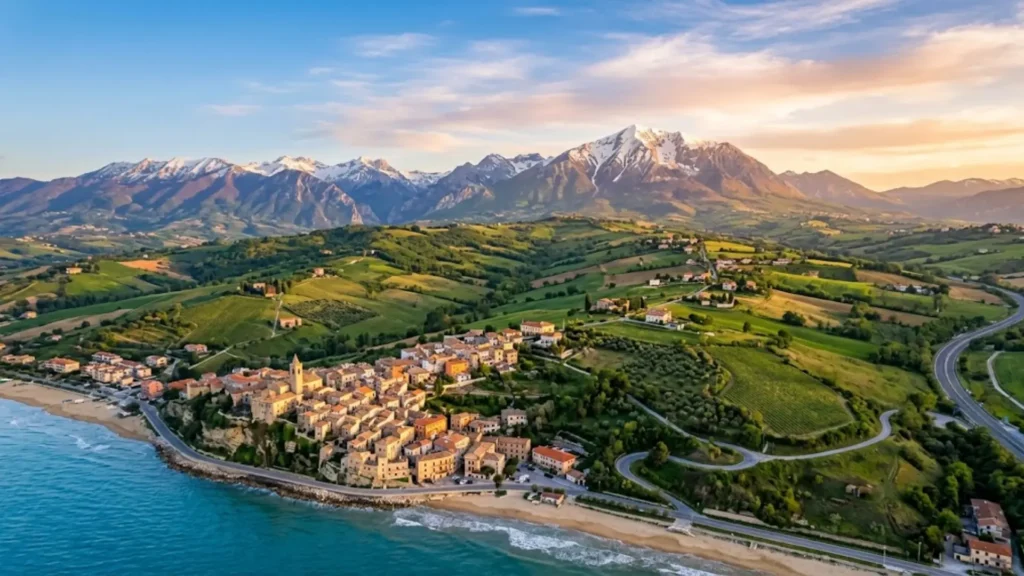
Quick answer: Abruzzo is one of Italy’s 20 official regions, located on the central Adriatic coast, roughly 90 minutes east of Rome. It has a population of approximately 1.27 million people spread across four provinces (L’Aquila, Teramo, Pescara, and Chieti) and 305 municipalities, covering about 10,832 km². Its official capital is L’Aquila, though Pescara is its largest and most populous city. Geographically, it sits at the boundary between central and southern Italy — administratively classified as southern Italy, though its landscape and character often feel closer to central Italy. If you’ve been searching for “what is Abruzzo” online, you’ve probably noticed the questions get surprisingly basic fast: Is it a region or a province? A city or a country? North or south? This confusion is genuinely common. Abruzzo isn’t as globally recognised as Tuscany or Sicily, even though it’s one of Italy’s most striking and least-crowded regions. Here’s the clear picture. Is Abruzzo a Region, a Province, or a City? Abruzzo is a region — one of Italy’s 20 official administrative regions, alongside better-known names like Tuscany, Puglia, Umbria, and Sicily. It is not a city, and it’s not a single province. The 4 provinces of Abruzzo Within the region, Abruzzo is divided into four provinces: L’Aquila — the largest and most mountainous province, comprising roughly half of Abruzzo’s total landmass, with a 2026 population of approximately 286,765 across 108 municipalities Teramo — the northernmost province, home to the “seven sisters” coastline and some of Italy’s highest-density Blue Flag beaches, with a population of approximately 299,835 across 47 municipalities Pescara — the smallest province by area but the most densely populated, with roughly 311,563 residents across 46 municipalities Chieti — the largest province by population, with approximately 369,059 residents across 104 municipalities Together, these four provinces contain 305 municipalities (comuni) — the individual towns and villages that make up daily life in the region, ranging from Pescara’s roughly 120,000 residents down to tiny mountain villages with fewer than 200 people. Where Is Abruzzo Located in Italy? Abruzzo sits on the central-eastern coast of Italy, facing the Adriatic Sea, roughly 90 minutes to two hours east of Rome by car or train. It borders Marche to the north, Lazio to the west, Molise to the south, and the Adriatic Sea to the east. Is Abruzzo in northern, central, or southern Italy? This is one of the most searched questions about the region, and the honest answer is: it depends who’s asking, and why. Administratively and statistically, Italy’s national institute (ISTAT) classifies Abruzzo as part of southern Italy, largely for historical and economic-classification reasons dating back to unification-era regional groupings. Geographically and culturally, however, Abruzzo sits at a genuine crossroads — its landscape, cuisine, and pace of life often feel closer to central Italy than to the deep south. Many Italians themselves describe it as a transitional region rather than firmly one or the other. How Big Is Abruzzo, and How Many People Live There? The Abruzzo region covers approximately 10,832 km² (4,182 sq mi) — making it a mid-sized Italian region, larger than Molise or Liguria but considerably smaller than Tuscany or Sicily. Its total population as of 2026 is approximately 1.27 million people, giving it a population density of roughly 117 people per km². Noticeably less dense than most of central and northern Italy, which is part of what gives the region its spacious, uncrowded feel even in its coastal towns. What Is the Capital of Abruzzo? The official regional capital is L’Aquila, a historic university city in the mountainous interior, sitting at over 700 metres elevation. L’Aquila also serves as Italy’s Capital of Culture for 2026, bringing renewed national attention and investment to the city following its long recovery from the devastating 2009 earthquake. However, Pescara is Abruzzo’s largest city, and functions as the region’s practical commercial and transport hub. Home to the region’s main airport, its busiest train connections, and the largest concentration of both Italian and international residents. Many newcomers are surprised to learn the capital and the largest city aren’t the same place. This is actually fairly common in Italy (Sicily’s capital is Palermo, but Catania is nearly as large; similarly, Abruzzo splits its “official capital” and “practical hub” roles between two different cities). What Does the Name “Abruzzo” Mean? The exact etymology is debated among linguists, with several competing theories tracing the name to Latin or pre-Roman roots. The region was historically also known as Abruzzi (plural form), a name still occasionally used in older texts and by some English speakers today. Though “Abruzzo” (singular) has been the standard official form for decades. We cover this naming history in more detail in our dedicated post on Abruzzo vs Abruzzi. What Makes Abruzzo Different From Other Italian Regions? A few things consistently surprise first-time visitors and researchers: The mountains-to-sea distance is remarkably short. You can genuinely swim in the Adriatic in the morning and be skiing in the Apennines by early afternoon — a combination very few Italian regions can offer. It’s one of Italy’s greenest regions, with roughly a third of its territory under some form of environmental protection, including three national parks. It’s still relatively undiscovered by international tourism compared to Tuscany, Puglia, or Sicily — which is exactly why property prices and cost of living remain considerably lower here than in Italy’s more famous regions. What Is Abruzzo Known For? Beyond the basics of geography and administration, Abruzzo has built a real identity around a few specific things: its wildlife-rich national parks (home to the Marsican brown bear and Apennine wolf) its mountain-to-sea landscape its distinctive regional cuisine and — for the growing number of foreign residents discovering it — a genuinely more affordable, less touristy alternative to Italy’s headline destinations Our dedicated post on what Abruzzo is known for goes deeper into each of these. — Thinking About Visiting or Moving to Abruzzo? Now that you know where it is,
Is It Worth Coming to Abruzzo? What Expats Actually Think
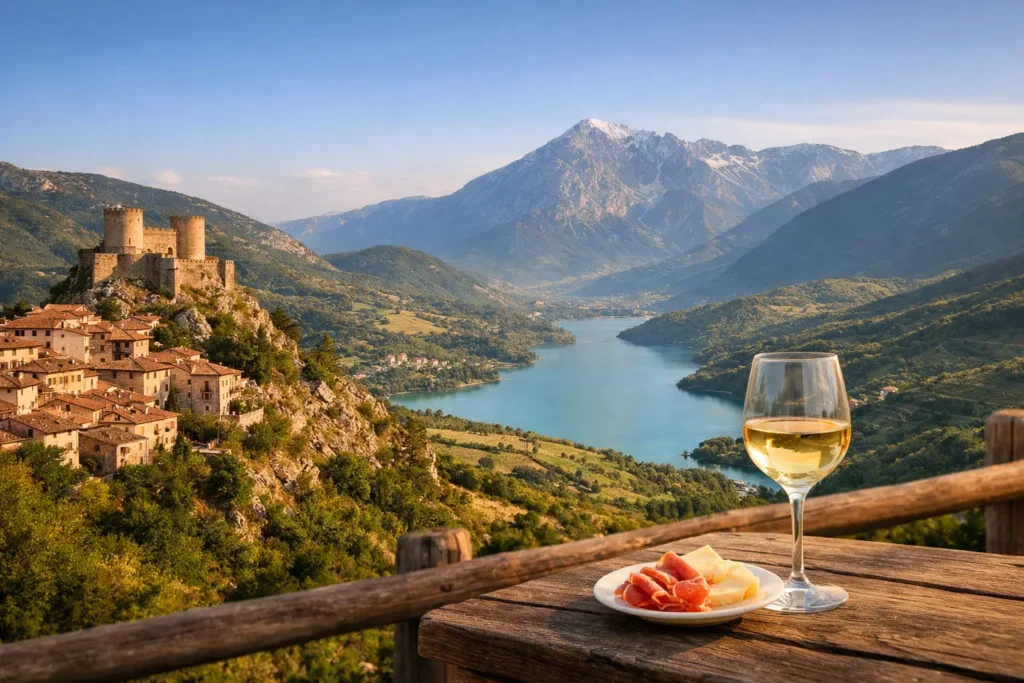
Is it worth coming to Abruzzo? For many expats, yes – if you want space, slower living, and real Italy, with a few trade-offs to plan for.
 English
 Deutsch