L’Aquila Capital of Culture 2026: Why You Should Move to Abruzzo

Capital of Culture 2026, L'Aquila Abruzzo

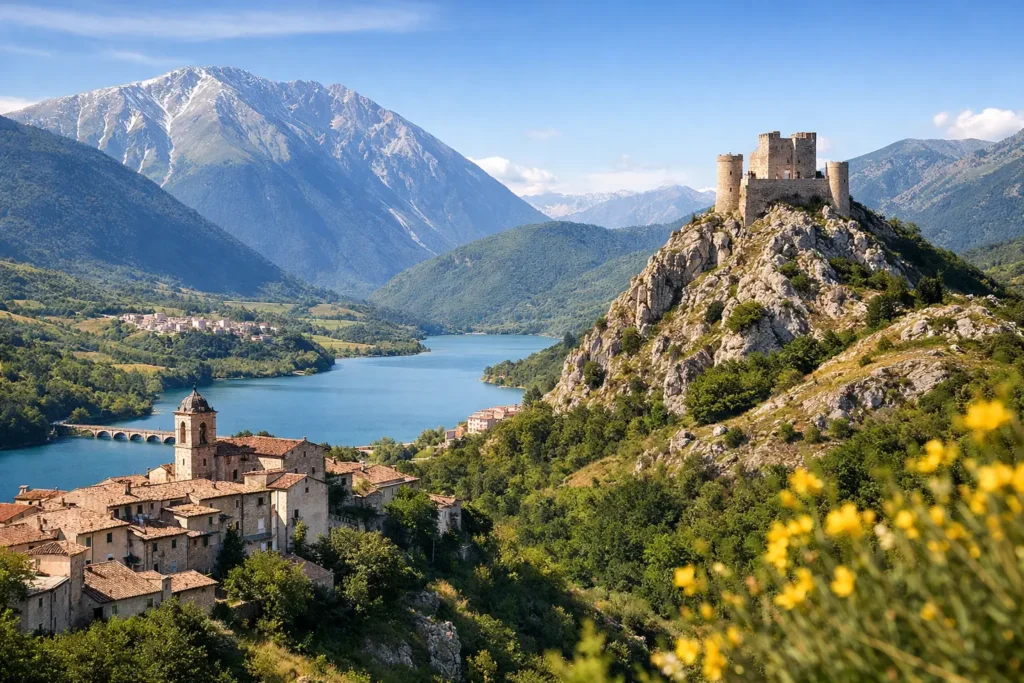
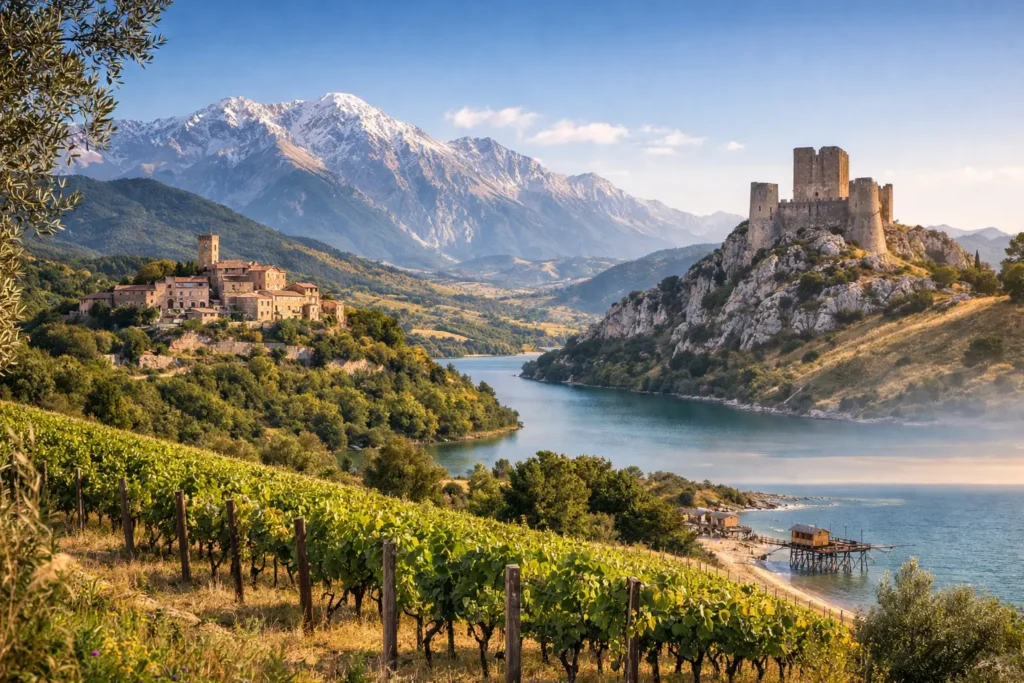
If you’ve been watching Abruzzo from afar, waiting for the “right time” to make your move, 2026 just handed you a deadline. L’Aquila has been named the Italian Capital of Culture for 2026. This isn’t just about a few concerts and art exhibits. For savvy future residents and expats, this title is a high-level signal of infrastructure investment, urban regeneration, and a surge in property demand. L’Aquila’s journey from earthquake recovery to national cultural protagonist is the ultimate proof of the region’s resilience — and its potential. Wondering if you should move to L’Aquila, in Abruzzo, as part of your Dolce Vita dream? Here you have some more info for you to consider why it might be the right choice. The Renaissance of the Mountain Capital L’Aquila is currently the site of one of the most ambitious architectural restorations in Europe. The city center has been reborn as a “smart city” that blends medieval and Baroque heritage with state-of-the-art seismic safety. Being the Capital of Culture 2026 has accelerated this. Millions in state funding are currently being poured into transport links, digital connectivity (High-Speed Fiber), and the reopening of historic venues that have been closed for years. You aren’t just moving to a mountain city; you are moving to a city that is being “polished” for the world stage. Why This Matters for Your Wallet In early 2026, we are seeing a distinct shift in the local market. Property Value: While Abruzzo remains one of the most affordable regions in Italy, L’Aquila is seeing a steady appreciation. Buying now in the L’Aquila province is a strategic “buy low” opportunity before the global spotlight of 2026 drives prices higher. Infrastructure & Services: As a resident, you benefit from the upgrades meant for tourists. This includes better-maintained roads, improved rail connections to Rome (which is just 90 minutes away), and revitalized public parks and piazzas. Rental Demand: If you are looking to invest, the demand for high-quality rentals in the city is peaking, driven by cultural professionals and digital nomads drawn to the 2026 events.   A Year of Unprecedented Access The “Multiverse City” theme of 2026 means culture is being brought into the streets. For residents, this offers a lifestyle you simply cannot find elsewhere: Open Palaces (Palazzi Aperti): One Sunday a month, private historic mansions and noble courtyards that are usually closed to the public are opening their doors to residents. MAXXI L’Aquila: The National Museum of 21st Century Art is hosting world-class exhibitions (including the major Ai Weiwei “Aftershock” show) right in the heart of the city. The “Halo Effect”: The funding isn’t just for the city center. Nearby villages like Santo Stefano di Sessanio and Rocca Calascio are part of the “network”, meaning better services and more events in the rural areas expats love.   Navigating the 2026 “Rush” While the cultural vibrancy is a plus, the administrative side of 2026 will be busy. As more people are drawn to the region, local Comuni (town halls) and the Questura (police headquarters for immigration) will face a higher volume of applications. If you plan to move to Abruzzo in 2026, you cannot afford to “wing it”. You need to secure your residency and housing before the peak of the festival season (Spring/Summer 2026). The “Sequence of Success” is more critical than ever: securing your Codice Fiscale, finding a registered rental, and filing for residency before the summer crowds arrive. — Don’t Wait for the Crowd. The 2026 title is putting L’Aquila on the map for thousands of international buyers. If you want to secure your piece of the Abruzzo dream while prices are still grounded and bureaucracy is still navigable, you need a plan. From property scouting in the Aterno Valley to handling your residency in the heart of the city, we ensure your move is as smooth as the local wine. Start Your Move to Abruzzo Roadmap: Book a Free Strategy Call with us — FAQs   Q: Is L’Aquila safe to live in after the 2009 earthquake? A: Yes. L’Aquila is now one of the most seismically monitored and safely rebuilt cities in the world. Modern reconstruction has focused on “seismic isolation,” meaning historic buildings are now arguably safer than many unrenovated homes in other parts of Italy. Q: How far is L’Aquila from Rome? It’s perfectly positioned — roughly 90 minutes from Rome via the A24 motorway and about 1 hour and 15 minutes from the Adriatic coast. Q: Will the cost of living rise in 2026? A: While short-term rentals and dining may see a temporary bump, the overall cost of living remains much lower than in northern Italy. However, property prices are expected to appreciate. Q: Do I need a car in the L’Aquila province? A: In the city center, walking is easy. However, to enjoy the surrounding national parks and 2026 cultural events in nearby villages, a car is essential. Q: Is internet access good in the city? A: Actually, it’s excellent. Because of the modern reconstruction, much of L’Aquila’s historic center is fitted with brand-new high-speed fiber optics, making it a premier destination for remote workers in 2026.

Living in the Italian Countryside: The Beauty and Reality of it

Hero Image-Living on the Countryside

Quick answer: Living in the Italian countryside is genuinely beautiful — and genuinely more complicated than Instagram suggests. Expect unreliable internet in many rural areas, occasional power cuts and water interruptions, a car as a non-negotiable, and a pace of life that rewards patience. For the right person, with realistic expectations, it’s one of the most rewarding lifestyle changes you can make. For someone who needs everything to work seamlessly, it can become exhausting fast.   Moving to the Italian countryside sounds like a dream. Rolling hills, olive groves, the smell of wood smoke on a cold morning, church bells at seven. And it really is all of that. But rural life in Italy can be a little more complicated than the photos suggest — and the things that surprise people most are rarely the dramatic ones. They’re the small, daily realities that don’t make it into the highlight reel. The frozen video call. The tap that produces nothing at nine in the morning. The twenty-minute drive for a loaf of bread. This is not a post to put you off. It’s a post to help you go in with open eyes — because the people who love countryside life in Italy are almost always the ones who knew what they were signing up for.     The Internet Situation Is Real Yes, you’ll have more space, fresh air, and fewer neighbours. What you may not have — at least not reliably — is a decent internet connection. If you work remotely, this is the first thing to investigate, and not just with the provider’s coverage map. As The Local’s guide to rural Italian life puts it bluntly: cable coverage is poor in many rural areas, and you often only find out once it’s too late. Contracts can start before the connection works, and cancelling early means fines. Nobody warns you that the infrastructure in your area won’t be upgraded because there aren’t enough clients to justify it. Fibre is available in some towns and expanding — Italy has been investing in rural digital infrastructure — but in many smaller villages, connectivity is still a patchwork. Options include: Fibre optic — available in some comuni, not all; check your specific address, not just the town Internet via radio frequency (FWA) — this is the option many rural residents end up using, and in a lot of areas, it works surprisingly well Mobile data as a backup — coverage from providers like TIM, Vodafone, and WindTre is decent in many rural areas, though not universal in very remote spots   The practical advice: before you sign a lease or put in an offer, test the actual connection at the specific property. Ask the current or previous occupants what they use and whether it’s reliable. Don’t assume — verify.     Power Cuts and Water Interruptions Are Part of the Rhythm Another reality that surprises newcomers: occasional planned interruptions to the electricity and water supply. The upside is that municipalities usually announce these in advance — a notice posted in the village a day or two before, listing the date and approximate timeframe of the disservizio (service interruption). Twice a year or so, you may spend part of a day without electricity. Repairs, maintenance, storms, and sometimes no explanation at all. Water is the same. Turn on the tap at nine in the morning, and nothing comes out. It might stay that way for six hours. In high summer, water pressure in some areas drops noticeably as usage increases. This isn’t a crisis — it’s a manageable feature of rural life. But it does require a mindset shift. You learn to fill a pot of water before bed when you suspect an interruption might be coming. You keep a phone battery topped up. You learn to laugh about it rather than fight it, because fighting it doesn’t help. For remote workers specifically, having a backup plan matters: a fully charged laptop, a mobile hotspot, and ideally a coworking space or café in a nearby town you can head to when things go down.   Distances and Transport: A Car Is Not Optional Need a larger supermarket, a hospital, the post office, or an office appointment? In most rural areas, it’s a drive away. Public transport exists in some villages — a bus stop, a timetable — but as Italian Property Kit’s research confirms, public transport in rural Italy ranges from adequate to virtually nonexistent depending on your location. In Abruzzo specifically, this varies significantly between areas. Coastal and better-connected towns have more transport options. Many inland and mountain villages effectively require a car for daily life — not just for occasional trips, but for grocery runs, medical appointments, school, and work. This is worth accepting early rather than discovering gradually. A car is a real cost: fuel, insurance, maintenance, and, in some areas, parking fees. Factor it into your budget from the start. The good news is that driving in rural Abruzzo often means roads with almost no traffic, mountain views that genuinely make you pull over, and a sense of freedom that’s hard to replicate in a city. The drive becomes part of life, not just an inconvenience.   The Community Is Close — in Every Sense One thing that often surprises people about small Italian communities is how visible you become. As Idealista’s guide to Italian village life notes, settling into village life is like joining a large, slightly chaotic family — people genuinely look out for each other, and your business becomes, well, public knowledge. That’s not as alarming as it sounds. In practice, it means the neighbour who notices your car hasn’t moved for two days might knock to check you’re alright. It means the woman at the bread shop remembers what you usually buy. It means someone will tell you, unprompted, that the butcher on the main road is better than the one near the car park. Trust builds through repetition, not introductions. Show up at the