

You don’t feel the reality of a move on the day the boxes arrive. You feel it on day four, when the WiFi still isn’t working, you’re not sure which office handles your paperwork, and even buying the right trash bags suddenly feels harder than it should.
That’s exactly why a first month in Abruzzo checklist helps.
It gives shape to a time that can otherwise feel scattered, emotional, and full of small but exhausting decisions.
Die gute Nachricht? your first month doesn’t need to be perfect.
It needs to be practical.
Abruzzo can be a wonderful place to build a life, but settling in works best when you focus on the right tasks in the right order.
Some things are urgent, some can wait, and some depend entirely on whether you’re renting short-term, moving permanently, or still figuring out where you want to land.
—
Your First Month in Abruzzo: A Practical Checklist
This checklist is organised by week, not by how much stress each task generates.
Some weeks feel heavier than others — that’s normal.
What matters is the sequence.
| Wenn | Task | Notes |
|---|---|---|
| Day 1–3 | Confirm housing and test everything | Hot water, heating, stove, washing machine, internet. Don’t assume anything works until you’ve checked it personally. |
| Day 1–3 | Clarify utilities status | Whose name are they in? Are they active? If not, start the setup process immediately — delays here compound quickly. |
| Day 1–3 | Get a local SIM card | You need a local number for appointments, deliveries, and account setup. Providers: Iliad, ho.Mobile, WindTre (~€7–15/month). Bring your passport and codice fiscale. |
| Day 1–5 | Apply for your Codice Fiscale (if not done) | First administrative step. Required for everything else. Apply in person at the Agenzia delle Entrate with your passport. Processed within a few days. Full guide here. |
| Week 1 | Organise your documents folder | Passport, housing documents, codice fiscale, ID, any move-related paperwork — printed and digital. Keep receipts of everything from day one. |
| Week 1 | Register residency at the Comune (EU citizens) | Bring passport, codice fiscale, registered lease. Provisional registration is immediate in person. Home verification visit follows within 45 days — make sure you’re reachable at the address. Full guide here. |
| Week 1 | Apply for Permesso di Soggiorno (non-EU only) | Must be done within 8 days of arrival. Pick up the kit at any Poste Italiane with a Sportello Amico desk. Keep the postal receipt — it’s your legal proof of status while you wait. |
| Week 2 | Set up internet and connectivity | Check what’s actually available at your specific address — fibre, FWA (radio frequency), or mobile data. Don’t rely on national coverage maps. Setup guide here. |
| Week 2–3 | Eröffne ein italienisches Bankkonto | Needed for rent, utilities, and deposits. Bring codice fiscale, passport, and proof of address. Digital banks (N26, Revolut, Wise) are faster; traditional banks (Intesa, UniCredit) take 1–3 weeks. Full guide here. |
| Week 2–3 | Register with the local ASL and choose a GP | Go to your local ASL’s Scelta e Revoca desk with codice fiscale, passport, and residency certificate. Choose your medico di base. You’ll receive a temporary paper certificate immediately. Full guide here. |
| Week 2–3 | Register for TARI (waste tax) | Required for all residents. Done at your local Comune. Also the moment to collect your differentiated waste bins and learn collection schedules. Support available here. |
| Week 3 | Learn your local rhythm | Shop opening hours, market days, recycling schedule, best supermarkets, where to park. These small things reduce stress every week. |
| Week 3–4 | Foreign car registration (if applicable) | Must be done within 60 days of establishing residency. Involves re-plating the vehicle with Italian plates. Can take weeks — start early. Support available here. |
| Week 3–4 | Register pets (if applicable) | Microchip registration at your local ASL veterinary service. Required for dogs; strongly recommended for cats. Support available here. |
| Month 1–2 | Apply for CIE (Italian identity card) | Apply at your Comune Anagrafe office once residency is confirmed. The CIE doubles as your digital identity credential for all online public services — more practical than SPID going forward. |
| Month 1+ | Build your local network | Introduce yourself to neighbours, find your regular café, join a local group or expat community. Connection happens gradually — but starting early makes the first months feel less lonely. |
—
Why the Order Matters More Than the Speed
The checklist above follows a specific sequence for a reason.
Many of these steps depend on each other:
- Du brauchst your Italian Tax Code (codice fiscale) before you can rent or buy a house, open a bank account, sign utilities contracts, or register with the health service
- Du brauchst a confirmed address (a registered lease or a property deed) before you can Residenz anzumelden at the town hall (Comune (Rathaus))
- Du brauchst residency registered before you can access the full health service via the ASL
- Du brauchst your residency certificate before most traditional banks will open an account for you
This is why doing things out of order — or trying to do everything at once — often creates unnecessary delays.
The week-by-week structure isn’t arbitrary.
It reflects how the dependencies actually work.
Your First Few Days: Make Life Workable
In the first few days, your main job is not to “do everything”.
It’s to make daily life functional.
That means:
- confirming your housing setup
- getting your phone and internet sorted
- and getting your bearings in your immediate area
Wenn your housing is temporary, treat it as a base camp rather than a finished solution.
Learn the neighbourhood first.
Notice where people shop, where parking is easy or impossible, how noisy the street gets at night, and how long ordinary errands actually take.
This is also the moment to check every practical detail inside the home: test the hot water, heat, stove, washing machine, and internet connection.
In Italy — especially in smaller towns — there can be a gap between what’s technically available and what’s currently functioning.
Wenn utilities are not yet active, start the process immediately.
Paperwork in Week One: Don’t Leave It Vague
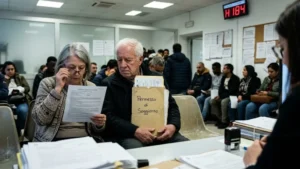
Bureaucracy is often the part expats worry about most — and with good reason.
The stressful part is not only the paperwork itself.
It’s the uncertainty around where to go, what to bring, and whether you’re being told the same thing by different offices.
Your first week is the right time to gather every document into one organised folder, both printed and digital.
Keep your passport, housing documents, codice fiscale, and any move-related paperwork together.
Even when an appointment seems simple, you may be asked for one more document than expected.
Keep a paper trail from day one. In Abruzzo, as in much of Italy, receipts, appointment confirmations, copies, and stamped papers matter.
Save everything.
Take photos of documents, note names and dates, and keep a record of what was requested and what was submitted.
It sounds tedious, but it prevents a lot of backtracking.
Wie Idealista’s 2026 moving to Italy guide confirms, administrative sequencing matters more than most newcomers expect — housing contracts, identity records, and utility documents should all use consistent personal details.
Discrepancies between how your name appears on different documents are one of the most common causes of avoidable delay.
Services That Make a Place Feel Like Home
Once the first housing and paperwork questions are moving forward, focus on the services you’ll rely on every day.
Internet
The WiFI is usually near the top of the list, especially if you work remotely.
Don’t assume the speed or reliability will match what you were used to before.
In some parts of Abruzzo, the connection is excellent.
In others, it’s adequate for basic use but inconsistent for heavy video calls.
Check what’s actually available at your specific address rather than choosing based on a national advertisement.
Bankgeschäfte
Bankkonto eröffnen can also become urgent sooner than expected, particularly if you need local payment options for rent, bills, or deposits.
Wie MondoExpat’s bank account guide explains, digital banks like N26, Revolut, and Wise are significantly faster to set up than traditional banks and give you an Italian IBAN for SEPA transfers and direct debits — very useful as a bridge while waiting for a traditional account to activate.
You’ll still need einen Codice Fiscale, for any Italian bank, digital or otherwise.
Learning the Rhythm of Daily Life
This part gets underestimated.
People prepare for forms and appointments but not for the slower, more local rhythm of ordinary life.
In your first month, learn how your town actually works.
- When are shops open?
- Which days is the market on?
- Where do people go for household basics?
Waste collection in particular varies by municipality, and the rules can be surprisingly specific.
If you miss the system early, it becomes a repeated source of confusion.
The same applies to parking, recycling, and local store hours.
These things aren’t glamorous, but they shape your stress level every single week.
Don’t judge your area too quickly
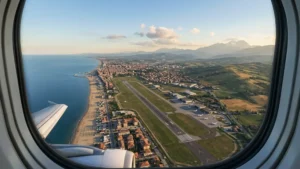
Abruzzo has real variety.
Coastal towns, hill towns, and more rural areas all feel different — and even neighbouring places can have completely different energy.
If your first few days feel quiet, inconvenient, or unfamiliar, that doesn’t necessarily mean you chose wrong.
It may simply mean you haven’t yet found your routines.
What Can Wait — and Why That Permission Matters
One mistake many expats make is treating every task as equally urgent.
Some things need immediate attention because they affect housing, identity, communication, or access to services.
Other things can wait without causing real problems.
It may be more important to confirm your documents, utilities, and daily transport than to furnish the entire home in the first two weeks.
It may be smarter to spend time understanding your neighbourhood than rushing into long-term decisions before you’ve seen how the area feels on an ordinary Tuesday.
For many newcomers, the smoothest relocation is not the one where everything gets done fastest.
It’s the one where the right things get done in the right order, with fewer expensive mistakes and less emotional burnout.
A new life in Abruzzo doesn’t click into place all at once.
It becomes yours gradually — one working utility, one completed appointment, one familiar street at a time.
—
Settling Into Abruzzo and Want Help Getting Through the First Month?
The checklist above covers what needs to happen.
If you’d rather have someone beside you who knows the local offices, speaks the language, and can handle the calls and appointments — that’s exactly what we do.
Bei Wanderlust Abruzzo, we support English- and German-speaking expats through every practical step of the first month: from utilities and residency, to banking, healthcare, and everything in between.
Persönlich, zweisprachig und direkt vor Ort.
Nimm noch heute Kontakt mit uns auf und lass uns über deinen Umzug nach Abruzzo sprechen
—
Häufig gestellte Fragen (FAQs)
What should I do in my first week in Abruzzo?
Your first week priorities: confirm housing and test all utilities, apply for your Italian Tax Code – codice fiscale – (if not done before arrival), get a local SIM card, and start organising your documents folder. EU citizens should also book or initiate their residency registration at the town hall (Comune (Rathaus)). Non-EU citizens must begin their residency permit (permesso di soggiorno) application within 8 days of arrival.
What is the right order for Italian bureaucracy in Abruzzo?
The sequence that avoids most delays: codice fiscale → address confirmation and registered lease → residency registration at the Comune → ASL registration and GP selection → bank account → TARI registration → CIE application. Each step depends on the one before it, which is why order matters more than speed.
Wie lange dauert es, bis man sich in Abruzzo eingelebt hat?
Most expats describe the practical side — utilities, registration, basic routines — as taking around four to eight weeks to stabilise. Feeling genuinely settled emotionally and socially typically takes longer: three to six months is common. The first month is about making life functional. Feeling at home usually comes gradually after that.
What are the most common first-month mistakes in Abruzzo?
The most common: trying to do everything at once rather than in sequence; not confirming utilities immediately; missing the home verification visit for residency registration; not keeping copies of every submitted document; and choosing housing based on holiday impressions rather than everyday practicality. Most of these are avoidable with realistic expectations and the right local guidance.
Do I need a local bank account from day one in Abruzzo?
Not from day one, but sooner than most people expect. A local bank account (or, at minimum, a Revolut/N26/Wise account with an Italian IBAN) becomes necessary for rent payments, utility direct debits, and many administrative deposits. Digital banks are significantly faster to set up than traditional ones — useful as a bridge while your traditional account is being processed.

 English
 Deutsch