
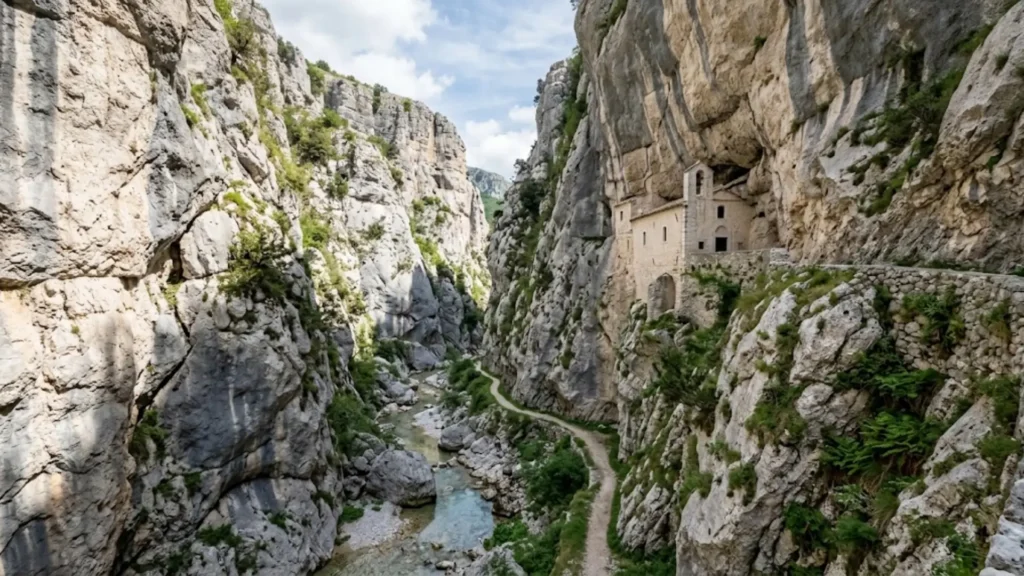
Wenn Abruzzo National Park is famous for its bears and Gran Sasso for its scale, Majella is famous for its wildness — and, genuinely, its wolves.
This is the least internationally known of Abruzzo’s three national parks, and for many visitors, that’s exactly the appeal.
What Is Majella National Park?
Majella National Park (Parco Nazionale della Majella) protects roughly 74,000 hectares across the provinces of Chieti, Pescara, and L’Aquila.
Unlike the alpine grasslands of Gran Sasso or the beech forests of PNALM, Majella is defined above all by its limestone geology — a landscape shaped over millennia by water erosion into deep gorges, karst plateaus, and an extraordinary network of caves.
Pliny the Elder reportedly called the massif Padre dei Monti (“Father of the Mountains”), while local Abruzzesi have long referred to it as Montagna Madre (“Mother Mountain”).
A rare case of the same peak carrying both a paternal and maternal title in local tradition, reflecting just how central this mountain is to regional identity.
Monte Amaro: The Apennines’ Second-Highest Peak
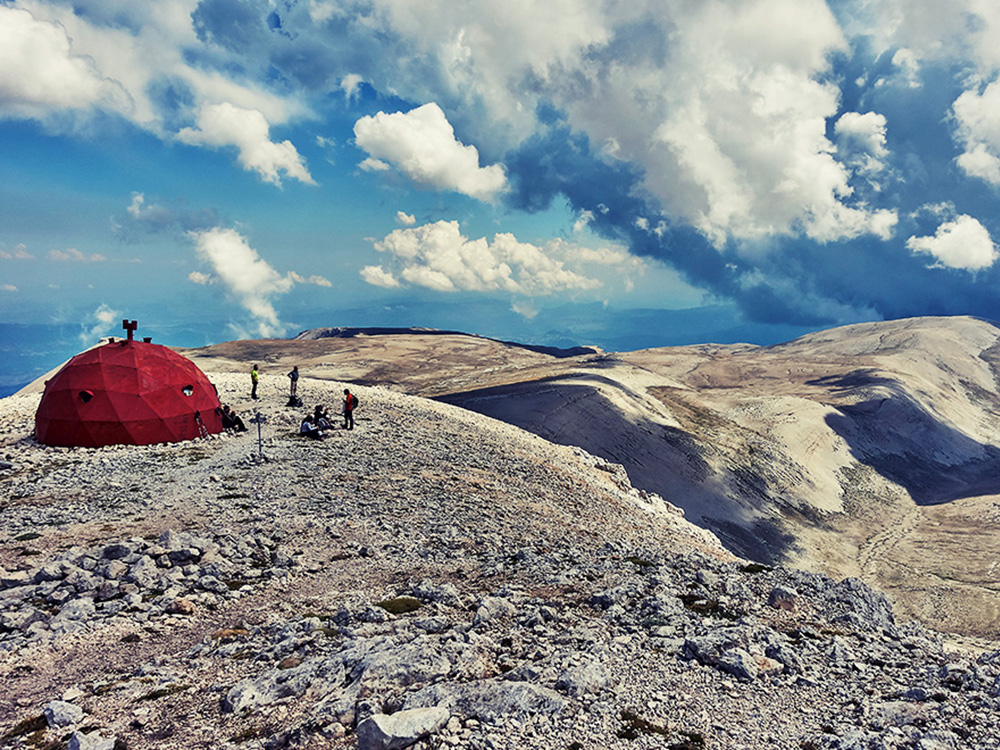
The park’s highest point is Monte Amaro, at 2,793 metres — the second-highest peak in the entire Apennine range, just behind Gran Sasso’s Corno Grande.
More than half of the park’s total territory sits above 2,000 metres, making Majella one of the most consistently high-altitude protected areas in Italy.
One of the World’s Largest Wolf Populations
This is genuinely one of the most remarkable facts about the park, and one that surprises most first-time visitors.
Majella is home to an estimated 70-80 Apennine wolves, organised into roughly 10 distinct packs.
A concentration that ranks among the largest wolf populations anywhere in the world relative to the park’s size.
The wolf is such a defining symbol of the park that it appears directly on the park’s official logo.
Alongside wolves, the park supports Apennine chamois, golden eagles, peregrine falcons, and — increasingly, as populations expand from neighbouring PNALM — occasional sightings of the Marsican brown bear.
Over 100 Caves — and the Story Beneath the Mountain
Majella’s limestone terrain is riddled with caves — more than 100 have been documented, ranging from small formations to genuinely extraordinary karst systems.
Grotta del Cavallone
The park’s most celebrated cave is the Grotta del Cavallone, in the Taranta gorge — a 1.3km karst system rich with stalactites and stalagmites, open to visitors and considered one of Italy’s most impressive show caves.
Grotta Nera
Far more restricted, the Grotta Nera (“Black Cave”) near Pennapiedimonte is accessible only to a small number of experts for conservation reasons.
It contains an unusually large formation of “mountain milk” — a soft, water-soaked mineral deposit that creates distinctive whitish, tray-like formations found nowhere else in Italy at this scale.
The Hermitages: A Mountain Shaped by Spirituality
Majella’s caves haven’t only sheltered animals.
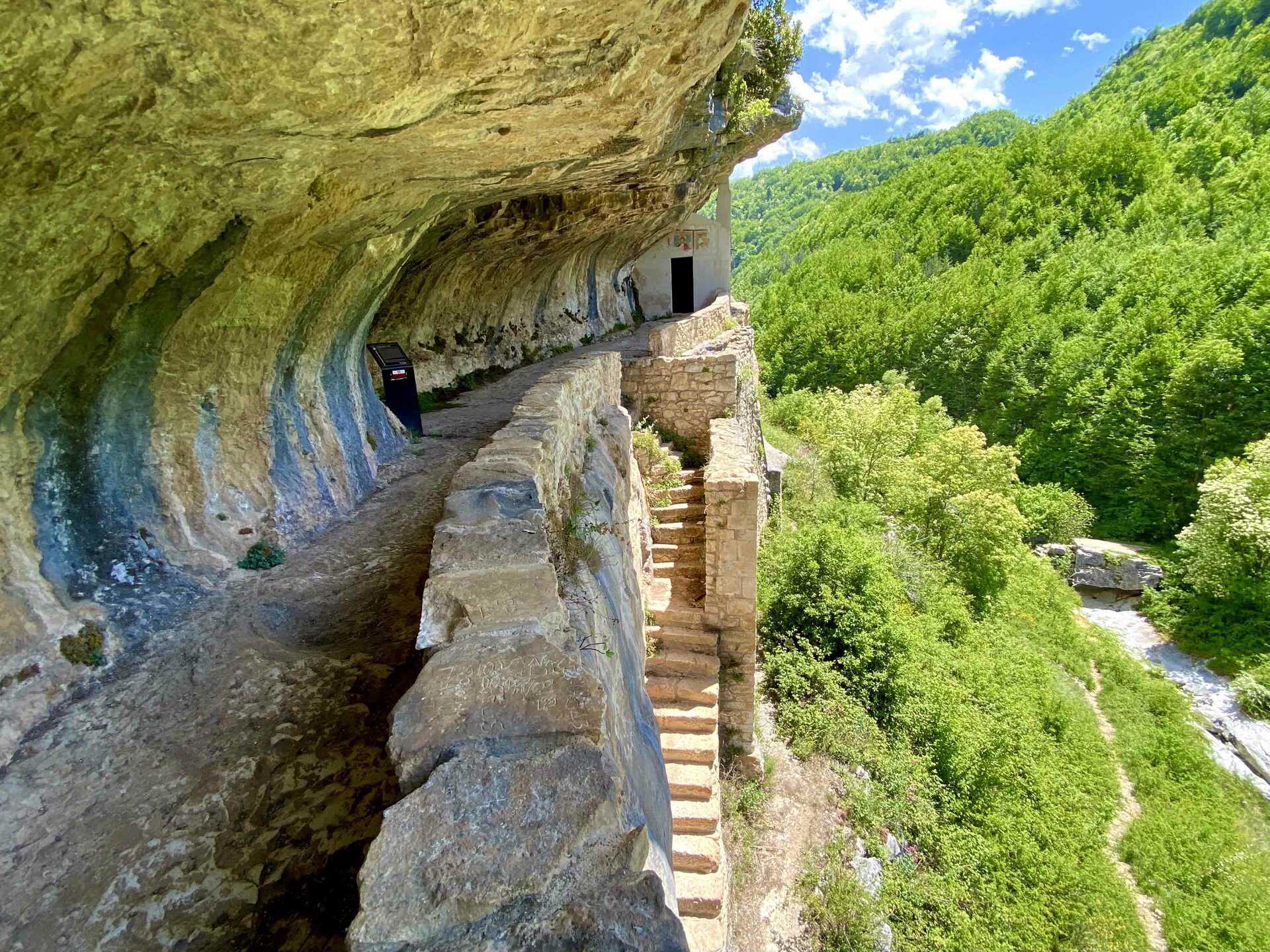
For centuries, monks and hermits carved dwellings and small sanctuaries directly into the mountain’s cliffs, seeking genuine isolation.
Around twenty rock hermitages survive across the park today, several of them genuinely spectacular feats of construction.
The most striking include San Bartolomeo in Legio near Roccamorice, built into the rock and reached through a tunnel carved directly into the mountainside, and the Hermitage of Sant’Onofrio di Serramonacesca, perched on a ridge beneath an enormous overhanging boulder.
This spiritual layer gives Majella a genuinely different character from Abruzzo’s other two parks — as much a place of quiet human history as of wilderness.
A Geological and Botanical “Hot Spot”
Majella’s biodiversity is exceptional even by Abruzzo’s already high standards.
The park is reported to house over 78% of all mammal species found in Abruzzo, and more than 2,100 documented plant species — over 65% of the region’s total flora, roughly 30% of all Italian flora, and around 17% of European flora, all within a single protected area.
This concentration of botanical diversity, alongside its cave systems and geological richness, is a key reason UNESCO designated Majella a Global Geopark in 2021.
Visiting Majella National Park
The town of Caramanico Terme is one of the most popular bases for exploring the park, with hiking trails, thermal springs nearby, and good access to the park’s most visited gorges.
The park offers roughly 500km of hiking trails in total, ranging from gentle family-friendly routes to serious high-altitude climbs.
A few things worth knowing before visiting:
- The Fara San Martino gorges und dem Orfento Valley are among the most spectacular and accessible canyon walks in the park
- The historic narrow-gauge railway crossing part of the park is sometimes nicknamed “Italy’s Trans-Siberian Railway” for its dramatic mountain scenery
- Roads to some of the more remote villages and trailheads can be genuinely winding and slow — this is the least developed of Abruzzo’s three parks, and that’s precisely why it feels more remote
- Guided access is required for restricted sites like Grotta Nera, and generally recommended for wolf territory hiking given the park’s genuinely wild character
Part of Abruzzo’s Three National Parks
Majella is one of three national parks within the Abruzzo region — alongside the wildlife-focused Abruzzo National Park (PNALM), home to the Marsican brown bear, and the dramatic high-altitude landscape of Gran Sasso e Monti della Laga, including the Apennines’ highest peak.
Together, these three parks protect roughly a third of Abruzzo’s total territory — a genuinely rare concentration of wilderness for a single Italian region, and part of what gives Abruzzo its reputation as one of the country’s greenest.
—
Considering Life Near Abruzzo’s Wildest Landscapes?
Living within reach of genuine, largely untouched wilderness — not a curated nature reserve, but real mountain wild — is one of the things that consistently surprises people who move to Abruzzo.
Bei Wanderlust Abruzzo, we help English- and German-speaking expats relocate to, and settle into life in Abruzzo.
Persönlich, zweisprachig und direkt vor Ort.
Kontaktiere uns noch heute und lass uns über deinen Umzug nach Abruzzo sprechen.
—
Häufig gestellte Fragen (FAQs)
How many wolves live in Majella National Park?
An estimated 70-80 Apennine wolves, organised into roughly 10 packs — one of the largest wolf populations in the world relative to the size of the protected area. The wolf is so closely associated with the park that it appears on the official park logo.
What is the highest peak in Majella National Park?
Monte Amaro, at 2,793 metres, is the park’s highest point and the second-highest peak in the entire Apennine range, after Corno Grande in the nearby Gran Sasso National Park.
Can you visit the caves in Majella National Park?
Some, yes. The Grotta del Cavallone, a 1.3km karst cave system with extensive stalactite and stalagmite formations, is open to visitors and is the park’s most celebrated show cave. Other caves, including the ecologically sensitive Grotta Nera, are restricted to a small number of experts to protect their unique formations.
Why does Majella have so many hermitages?
For centuries, monks and hermits were drawn to Majella’s remote caves and cliffs specifically because of their isolation, carving roughly twenty small sanctuaries and dwellings directly into the rock. Several, including San Bartolomeo in Legio, remain accessible today and are considered remarkable examples of hermit architecture built into natural rock formations.
Is Majella National Park a UNESCO site?
Ja. Majella was designated a UNESCO Global Geopark in 2021, recognising its exceptional geological diversity, its extensive cave systems, and its outstanding botanical richness, alongside its cultural and historical significance.



 English
 Deutsch