

You can research Abruzzo for months from another country and still reach the moment when one unanswered Italian phone call stops everything.
That’s the real question behind remote relocation or in-person support in Italy: not which option sounds more convenient, but which one will move your plans forward without leaving you stressed, guessing, or stranded between systems.
For many people, the best answer isn’t strictly one or the other.
Moving to Italy happens in stages.
Remote help can bring clarity before you commit to a trip.
Local, in-person assistance can be invaluable when appointments, viewings, paperwork, keys, and practical decisions all need attention at once.
Remote Relocation or In-Person Support in Italy: What Is the Difference?
Neither is automatically better.
The right choice depends on:
- where you are in your move
- how comfortable you are with Italian
- how much time you have
- and whether the task can realistically be handled from afar
What remote support actually looks like
Remote relocation support means having a bilingual local person help from a distance.
You might need someone to:
- contact real estate agents
- clarify what documents are being requested
- arrange viewings
- explain local areas
- or make calls that would be difficult if you don’t speak Italian
You remain at home, perhaps still working or preparing your move, while someone on the ground helps turn vague research into real next steps.
What in-person support actually looks like
In-person support means having someone beside you in Abruzzo (Italy) when you need to be physically present.
This can include:
- attending town hall appointments
- visiting a property together
- meeting a service provider
- collecting the information needed for a utility setup
- or simply finding your way through the first demanding days after arrival
When Remote Support Makes the Most Sense
Remote support is especially useful before your move has a fixed date.
At this stage, you may be:
- comparing towns
- trying to understand property listings
- or wondering whether an appealing house is actually close to the services you need
A beautiful listing can tell you very little about the road access, the neighbourhood in winter, the distance to a train station, or whether the local area feels right for your lifestyle.
When agents and landlords are hard to reach
Sie kann auch when agents or landlords are difficult to reach.
In smaller Italian towns, communication is often informal and fast-moving.
A listing may be shared on a local website, a viewing may be offered with little notice, and a phone conversation may reveal details that never appear in writing.
Having local bilingual support can prevent promising opportunities from disappearing simply because a call was missed or a message was misunderstood.
When frequent travel isn’t realistic
Remote help is a practical choice if you can’t travel frequently.
Perhaps you’re managing a home sale, wrapping up a job, caring for family, or waiting for the right time to make one focused scouting trip.
Instead of trying to solve every question alone from thousands of kilometers or miles away, you can get grounded information and make better decisions before booking a flight.
What remote support handles well — and where it stops
Tasks that often suit remote support include:
- initial property area orientation
- communication with agents and landlords
- arranging property viewings
- checking what information is needed for upcoming appointments
- and talking through the order in which to handle your move
It’s also useful when you need a calm second opinion.
Relocating to Abruzzo can make every decision feel urgent.
From choosing between Pescara and a quieter hill town to deciding whether a property is worth pursuing.
There are limits, of course.
Some decisions are too personal to make entirely through photos, videos, or someone else’s observations.
You may need to feel the noise level on a street, see the light in a living room, or walk from the apartment to the nearest café yourself.
Remote support can reduce uncertainty, but it can’t replace your own experience of a place you may call home.
When In-Person Help Is Worth It
Once you arrive, the pace can change quickly.
A week that looked open on your calendar can fill with viewings, appointments, document requests, installation windows, and unexpected follow-up visits.
Das ist when in-person help often brings the greatest relief.
Why Italian administration feels harder in person than it should
Italian administration isn’t always difficult because the individual steps are complicated.
It can be difficult because:
- instructions vary
- the process is unfamiliar
- and one small missing detail can mean another trip back
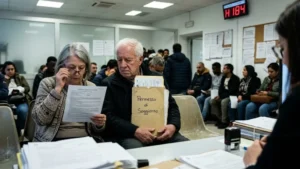
When you’re new to the country, trying to translate forms while waiting at a counter can make a straightforward task feel much bigger than it is.
Having someone accompany you can help you:
- understand what’s happening in real time
- ask practical questions
- and leave knowing what comes next
That matters for:
- Anmeldung des Wohnsitzes
- local appointments
- die Registrierung deines ausländischen Autos
- und utility or WiFi setup
It also matters when a provider says they’ll call later, gives a time range instead of a precise appointment, or needs to speak with someone in Italian.
In-person support is about more than translation
Translation is useful, but local support is also about context.
A person familiar with Abruzzo can explain:
- how an appointment usually works
- welche Dokumente mitzubringen sind
- where to park
- which office you actually need
- and when patience is the most effective strategy
Those small details are rarely found in a checklist.
Dennoch they can save hours and lower the emotional temperature of a very full day.
In-person assistance can be particularly valuable during property viewings.
You may want help noticing practical points while you focus on whether the home feels right:
- access
- surrounding activity
- utility arrangements
- local amenities
- and questions to raise with the agent or landlord
If you’re viewing several properties in a short visit, that extra clarity helps you compare them more confidently afterward.
A Hybrid Approach Is Often the Smartest Choice
For many movers, the strongest plan combines both kinds of support.
Start remotely while you’re still abroad.
Narrow down areas, establish contact with agents, prepare questions, and organise a realistic scouting trip.
Then use in-person support for the days when your presence is required, and decisions carry more weight.
This staged approach mirrors broader research on international relocation.
A substantial share of expats report the emotional and logistical stress of moving abroad was greater than expected, yet the same research finds most people describe the outcome as ultimately worthwhile.
The difference often comes down to how well the practical foundations were handled at each stage, rather than any single decision.
This approach isn’t about paying for help with every part of your move.
Es geht darum, using support where it removes the most friction.
- You might be perfectly comfortable researching towns and browsing listings on your own, but need help communicating with landlords.
- Or you may manage daily Italian conversation well enough, yet want someone beside you for an important town hall appointment because you don’t want to miss a detail.
A flexible plan also allows you to adapt.
- Perhaps a remote property viewing confirms that a home isn’t right, saving you a long drive.
- Perhaps an in-person appointment reveals that one more document is needed, and follow-up support can then happen remotely.
Relocation rarely follows a perfect script, so it helps to choose support that can adjust with you.
Questions to Ask Yourself Before You Decide
About your current stage
- Are you still exploring, or have you already found a property?
- Can you understand phone calls in Italian, especially when people speak quickly?
- Do you have time to return for an extra appointment if something changes?
- Are you moving alone, with children, or with pets?
The practical answer may be different for each situation.
About the task itself
It also helps to separate tasks by what they require.
- If the task needs local knowledge, Italian communication, or someone physically present, support may save you substantial time and worry.
- If it’s mainly personal preference, such as deciding whether a town feels like home, it may be worth experiencing that part yourself.
Wanderlust Abruzzo can tailor support around the stage you’re actually in, rather than forcing your move into a fixed package.
Some people need a few hours of focused help before they arrive.
Others need a steady local presence during their first days in Italy.
Both are valid ways to build a calmer start.
Want to do everything by yourself, but need some guidance?
If you’d like to map out your own stages before deciding what kind of support fits where, Unser Gesamt-Leitfaden für den Umzug nach Abruzzo walks through the entire sequence.
Deciding, planning, arrival, and settling in.
So you can see clearly which parts you’re comfortable handling yourself and which ones would benefit from local support, remote or in-person.
Give Yourself Permission to Ask for Help
Moving abroad asks a lot of you at once.
You’re making practical choices while adjusting to a new language, new routines, and a new version of everyday life.
Choosing support is not a sign that you’re unprepared.
Es ist a way to protect your energy for the parts of the move only you can decide.
Whether you begin remotely or need someone beside you in Abruzzo, the goal is the same:
- fewer avoidable obstacles
- clearer next steps
- and enough breathing room to notice why you wanted this new life in Italy in the first place
—
Not Sure Whether You Need Remote or In-Person Support?
We can tell you honestly which parts of your move would benefit from each — and adjust as your situation changes.
Bei Wanderlust Abruzzobegleiten wir deutsch- und englischsprachige Expats durch alle praktischen Phasen der Auswanderung nach Abruzzo.
Persönlich, zweisprachig und direkt vor Ort.
Nimm noch heute Kontakt mit uns auf und lass uns über deinen Umzug nach Abruzzo sprechen
—
Häufig gestellte Fragen (FAQs)
Should I book remote or in-person support first when planning a move to Italy?
Usually remote first, if you’re still comparing towns or haven’t visited yet. Remote support helps you narrow decisions — location, property type, general budget — before you commit to travel. In-person support becomes more valuable once you have a specific property, appointment, or task that requires someone physically present in Abruzzo.
Can I switch between remote and in-person support as my move progresses?
Yes, and this is exactly how most successful relocations work. A common pattern is: remote support during research and property search, in-person support for the scouting trip and viewings, then remote support again for follow-up questions once you’re back home finalising details, before returning for in-person support during the actual move and settling-in phase.
Is in-person support necessary if I already speak Italian?
Not always, but it can still help. Speaking Italian removes the language barrier, but it doesn’t remove the local knowledge gap — knowing which office handles what, what an appointment actually requires, or how a specific town hall’s procedure works. Many Italian-speaking expats still find in-person support valuable for high-stakes appointments or unfamiliar procedures.
What tasks are best handled remotely versus in person?
Remote support suits research, area comparison, initial agent and landlord contact, and reviewing documents or video walkthroughs. In-person support is generally necessary for property viewings you want to experience yourself, town hall appointments, utility installation visits, and any situation requiring a signature, physical presence, or real-time problem-solving on-site.
How do I know which type of support my move actually needs?
Separate your tasks into two categories: those requiring local knowledge, Italian communication, or physical presence (where support typically saves the most time and stress), and those that are mainly personal preference, like how a neighbourhood feels to you. The first category usually benefits from support, remote or in-person depending on timing; the second is often worth experiencing yourself.


 English
 Deutsch