
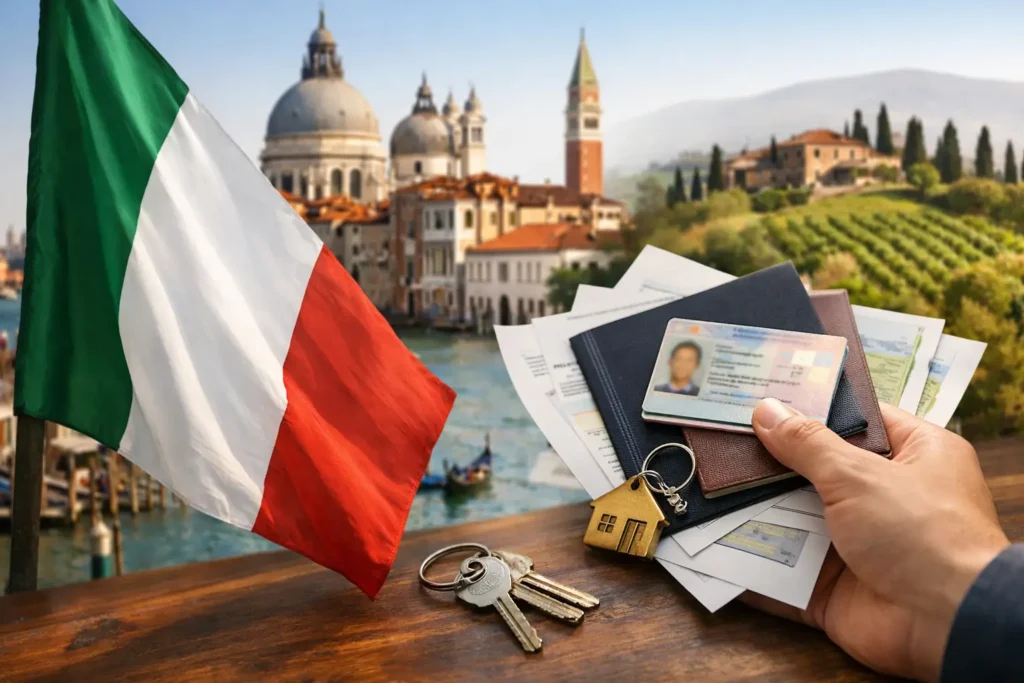
You can fall in love with Italy long before Italy recognizes that you live here. That gap catches many expats off guard. You find a rental, learn where to buy decent produce, and manage your first conversation at the pharmacy — and then the paperwork begins. If you are trying to sort out residency in Italy for expats, the hardest part is usually not one single rule.
It is the mix of timing, documents, local offices, and language barriers that make simple steps feel much bigger than they should.
The good news is that residency is manageable when you understand what it is, what it is not, and where the process tends to slow down.
What Residency in Italy for Expats Actually Means
In everyday conversation, people use terms like visa, permit, registration, and residency as if they are interchangeable. They are not.
Residency in Italy usually refers to being officially registered as living in a specific Italian comune.
This is often called residenza anagrafica.
It is different from having the right to enter Italy (a Visa), and it is also different from a residence permit (Permesso di Soggiorno) for non-EU citizens. Depending on your nationality, you may need several layers of legal status before your residency registration can be completed.
- For EU citizens: The path is more straightforward. You do not need a visa, but you must register your residence if you plan to stay long term (over 90 days).
- For Non-EU citizens: The process is layered. You first need the correct visa, then you must apply for a permesso di soggiorno, and only then can you finalize your local residency registration.
> The Common Pitfall: Many people assume that renting a home means they have residency. In Italy, these are connected, but they are separate legal steps.
Why People Want Italian Residency in the First Place
Some expats begin the process because they simply want to do things properly.
Others realize very quickly that daily life becomes significantly harder without it.
Residency affects:
- Healthcare: Accessing a family doctor through the national health system.
- Practical Admin: Buying and insuring a car, or opening certain types of bank accounts.
- Lower Bills: Accessing “Resident” utility rates, which are much cheaper than “Non-resident” rates.
- Schooling: Enrolling children in the local school system.
The Basic Process (Without the Sugarcoating)
If you are planning residency in Italy, expect a process that is logical on paper and inconsistent in real life.
Most people need:
- A registered address (a lease or deed).
- A set of identity documents.
- Proof of legal stay (Visa/Permit).
- Proof of financial means and health coverage.
Usually, the process starts with gathering your documents carefully.
After submission at the Ufficio Anagrafe, there will be a police check — the Vigile — who will physically visit your home to verify you actually live there.
Until that check is complete, your life might feel “on pause”.
This is normal. Annoying, but normal.
The Documents That Matter Most
While every comune is different, these categories come up again and again:
- Valid Passport: Or national ID for EU citizens.
- Codice Fiscale: Your Italian tax code. Learn what the codice fiscale is and how to get yours here.
- Proof of Address: A registered lease or property deed.
- Civil Status Documents: Birth or marriage certificates (often translated and legalized).
> Note: A document may be technically correct but still rejected if the office wants a newer date (usually issued within the last 6 months) or a specific type of formal translation.
Where Expats Get Stuck Most Often
If the process stalls, it’s usually because of one of these three “friction points”:
- The Address Trap: Many expats arrive in short-term Airbnbs. Most comuni will not allow you to register residency at a holiday rental. You need a long-term, registered contract.
- Timing: Non-EU citizens often have to juggle visa deadlines and residence permit appointments. If one step runs late, the entire chain breaks.
- Communication: Bureaucracy feels heavier when you are facing legal terminology in a language you are still learning.
Residency is Local, Not Just National
This is the most important takeaway: Italy has national laws, but your experience depends on your local town hall.
This matters immensely in Abruzzo.
Relocating here offers a high quality of life, but smaller towns may have fewer English speakers and more relationship-based communication.
Whether you are settling in Pescara, Chieti, or a hill town in L’Aquila, knowing how the local office operates is the key to a fast approval.
How to Make the Process Smoother
To survive the process with your sanity intact, follow these rules:
- Start Early: Securing housing contracts and translated records takes longer than you think.
- The Folder Method: Keep every document in both digital and printed form. Bring more than you think you need.
- Don’t Assume: Be careful with advice from online forums. Local rules change, and what worked in Tuscany might not work in Abruzzo.
When Getting Help Makes Sense
There is no prize for doing Italian bureaucracy the hard way.
If your move is time-sensitive, or if your Italian is limited, getting local support is a practical business decision.
A good relocation service doesn’t just translate words; it understands the sequence.
For those moving to the Abruzzo region, Wanderlust Abruzzo offers on-the-ground personal relocation support to avoid the classic traps of “almost right” documentation.
—
Stop Guessing. Start Settling.
Book Your Free Relocation to Abruzzo Strategy Call: Let’s Get Your Paperwork Right
—
Frequently Asked Questions (FAQs)
How long does the residency process take?
Once you submit your application, the comune has 45 days to complete the address verification check.
Can I apply for residency with an Airbnb or hotel address?
Usually, no. You need a stable, registered housing contract. Some Comuni are more flexible with “hospitality declarations”, but for a standard residency application, a long-term lease is the gold standard.
Can I buy a car before I have residency?
You can buy a car, but you generally cannot register it with Italian plates or get a standard insurance policy until you have your residency certificate.
Do I need to be present for the police check?
Yes. The Vigile needs to verify that you are actually living in the property. If they miss you multiple times, your application can be rejected.
Is my residency permanent?
As long as you continue to live in the comune, your residency remains active. If you move to a different town, you must transfer your residency to the new location.



 English
 Deutsch