

You can do a lot of things “wrong” in Italy and still be forgiven. Most Italians are incredibly patient with newcomers who are still tripping over verb conjugations or getting lost in the winding streets of an Abruzzo hill town.
But if you are moving here for the long term, knowing what is considered impolite in Italy can save you from those cringeworthy moments that linger.
Italian etiquette isn’t about being stiff or formal; it’s about showing respect for people, for the time you spend together, and for the social rituals that act as the “glue” of the community.
Everyday Life: The “Invisibility” Trap
The biggest surprise for many expats from the US, UK, or Germany is that politeness in Italy is relational, not just rule-based.
In Northern Europe, “staying out of someone’s way” is seen as respectful.
In Italy, that can be seen as cold or even rude.
The Power of the Greeting
Walking into a small shop, a local bar, or a doctor’s waiting room without saying anything is a major false step.
A simple Buongiorno (morning) or Buonasera (afternoon/evening) acknowledges the human being in front of you.
The same goes for leaving — saying Arrivederci is a small gesture that people in your neighborhood will notice and remember.
Volume and Space
Speaking loudly on your phone in public or using speakerphone on the bus is widely considered rude (even though some Italians sometimes do it too).
Italians are animated and expressive, yes, but there is a high expectation that you respect the “shared atmosphere”.
In apartment buildings, heavy stomping or loud late-night chores will annoy your neighbors faster than anything else.
Social Tone: Titles and “Tu” vs. “Lei”
Using overly casual language too quickly can be a subtle mistake.
Italian has formal (Lei) and informal (tu) ways of addressing people.
- When in doubt, use the formal: If someone is older, in an official role, or you are meeting them for the first time, stick to the formal.
- Respect the Titles: Don’t be surprised if your neighbor is addressed as Dottore (Doctor), Architetto (Architect), or Avvocato (Lawyer). In professional or bureaucratic settings, using these titles shows you respect the structure of the interaction.
Dining Etiquette: The Sacred Rituals
If you want to know what is considered impolite in Italy, look at the table.
Food here is identity.
- The “Cappuccino Rule”: Ordering a milk-heavy coffee after a large lunch or dinner marks you as a “tourist”. Italians believe milk interferes with digestion. Stick to an espresso (un caffè) after 11:00 AM.
- No Cheese on Seafood: Putting Parmigiano on seafood pasta is a well-known misstep that will make a traditional chef wince.
- Don’t Rush the Meal: Pushing for the bill or checking your phone constantly at the table signals that you value your time more than your company. A meal is meant to unfold.
- Touching the Produce: At local markets in Abruzzo, do not touch the fruit and vegetables yourself. Wait for the vendor to select the best pieces for you. It’s about hygiene and the vendor’s pride in their stock.
Public Behavior and Church Respect
Italy’s churches are living religious spaces, not just museums.
Walking in with beachwear, talking loudly, or treating a chapel like a photo backdrop is deeply disrespectful.
Similarly, “line culture” can feel chaotic.
In a deli or a bar, the queue might not be a straight line, but there is an invisible order.
If you aren’t paying attention and don’t “claim your turn” politely, you might be seen as both confused and rude.
Now, many Italians are experts at jumping the queue, so don’t hesitate to let them know it is actually your turn, but always be polite when doing it.
Bureaucracy: Persistence vs. Confrontation
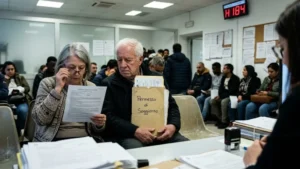
This is where your patience will be tested.
When you are stressed about setting up utilities or handling residency paperwork, it is easy to let your frustration show.
However, being blunt or aggressive with public staff usually backfires.
In Italy, courtesy acts as a lubricant for the “gears” of bureaucracy.
Greeting first, asking for help rather than demanding a result, and staying measured will get you much further than a confrontation.
This is why many choose our expat relocation support.
When a local guide handles the interaction, they navigate the “unspoken rules” of the office so you don’t have to worry about the social tone.
The Bigger Picture: Respect Over Perfection
Italians don’t expect you to be perfect.
They expect you to be observant.
What is actually considered impolite is behaving as if local habits are silly or unnecessary.
Mocking the slower pace of life, dismissing traditions, or acting entitled will create more distance than any coffee mistake ever could.
If you stay curious, greet your neighbors warmly, and ask when you’re unsure, you will be met with incredible patience.
That is the real secret to life in Abruzzo: it runs on relationships first.
Frequently Asked Questions
Is it rude to arrive early at an Italian home?
Yes. Arriving exactly on time or a few minutes early can be stressful for the host. Aim for 10–15 minutes after the stated time (il quarto d’ora accademico).
Should I bring a gift when invited to dinner?
Absolutely. A bottle of wine, a tray of local pastries (paste), or flowers are the standard. Avoid bringing extremely expensive gifts, as it can make the host feel uncomfortable.
Is it impolite to ask for a “doggy bag” in Italy?
It used to be rare, but it is becoming more common (la vaschetta). In casual trattorias, it is perfectly fine to ask to take home leftovers, though it might still feel out of place in very high-end fine dining.
Why do people stare in small Italian villages?
In rural areas of Abruzzo, “staring” is often just curiosity. New faces are noticed. A simple “Buongiorno” will usually turn a stare into a smile and a conversation.
Is it rude to tip in Italy?
Tipping is not mandatory and not expected in the same way as in the US. However, leaving a few Euros or rounding up the bill (il resto) is a kind gesture of appreciation for good service. It is never considered “rude” to tip, but don’t feel pressured to do it.


 English
 Deutsch