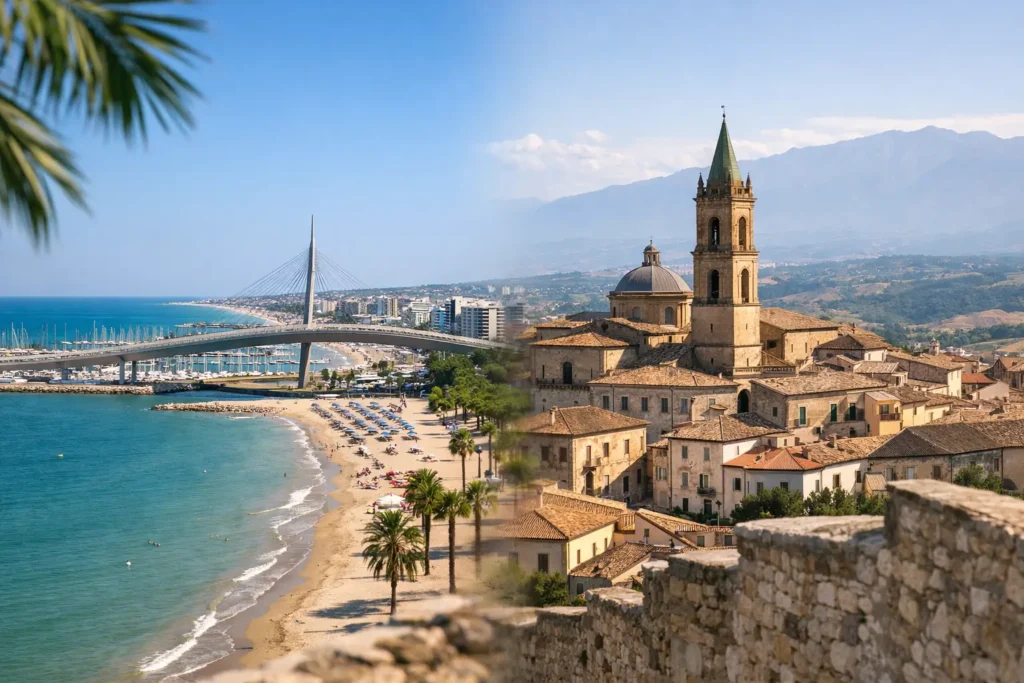
Relocating to Abruzzo, Italy: 5 Realities the Guides Won’t Tell You

Relocating to Abruzzo, Italy? Learn what to expect with housing, visas, residency, costs, and daily life so your move feels calmer and clearer.

Abruzzo Cost of Living: What Expats Actually Pay

Quick answer: A couple can live comfortably in Abruzzo for €1,100–1,500/month covering rent, groceries, utilities, and everyday expenses — significantly less than most of northern Europe and far below comparable quality of life in Tuscany or the Amalfi Coast. The biggest variables are location (coastal vs. inland adds €200–400/month to rent), energy efficiency (older Class F/G homes can cost €250+/month to heat in winter), and transport (a car is essential in most areas outside central Pescara). Plan for these three factors before you move and the numbers become very manageable. When people consider moving to Italy, the same question always comes up: “Is Abruzzo really that affordable?” The short answer is yes. The honest answer is that it depends on three things: where you live, how energy-efficient your home is, and whether you’ve budgeted for the costs that don’t show up on rental listings. This guide gives you a realistic, up-to-date breakdown of what life in Abruzzo actually costs — not the optimistic version, and not the inflated expat version either. Just the practical numbers, with the caveats that actually matter. The Abruzzo Cost of Living at a Glance Category Single person/month Couple/month Rent (inland town) €400–600 €450–700 Rent (coastal/Pescara) €600–900 €700–1,000 Utilities (mild season) €80–120 €100–180 Utilities (winter peak) €150–250 €180–300 Groceries €200–280 €300–400 Dining out (2x/week) €80–120 €150–200 Transport (car) €150–250 €150–250 Healthcare (SSN + private) €50–150 €80–200 Comfortable total estimate €800–1,200 €1,100–1,500 Figures based on 2025–2026 market data. Does not include annual costs like TARI, vehicle insurance, or one-off setup costs during your first year. Step 1: Choose Your Geography — It’s Your Biggest Monthly Decision Your biggest monthly expense is rent, and in Abruzzo, where you live is the ultimate price-setter. The inland lifestyle In towns like Sulmona, Penne, Guardiagrele, or Loreto Aprutino, a well-kept one-bedroom apartment typically runs €400–600/month. Two-bedroom properties with space and character can be found under €700. This is where the “slow life bargain” people talk about actually exists — but it comes with the trade-offs of car dependency, limited services in smaller towns, and quieter winters. We cover the city versus village life tradeoff in detail separately. The coastal reality If you want the Adriatic Sea as your backdrop in Pescara, Francavilla al Mare, or Vasto, expect to pay more. Long-term rentals in these areas typically run €600–900/month for a one-bedroom, and €800–1,200/month for something larger or better positioned. Pescara specifically has seen consistent price increases — the city centre now averages €2,756/m² to buy, and rental prices rose 3.89% year-on-year as of early 2026. More on this in our Pescara housing guide. The seasonal trap Be careful with coastal rentals. The long-term rental market in Abruzzo has tightened significantly as more landlords convert to short-term summer lets. Without a proper long-term contract (typically a 4+4 or 3+2), your “affordable” coastal apartment may not be available year-round, or may cost significantly more outside a formal agreement. We cover this in detail in our guide to renting in Abruzzo. Step 2: Decode the Energy Class of Your Home One of the most common budget mistakes expats make is focusing only on the rent and ignoring the APE (Attestato di Prestazione Energetica — the Italian energy performance certificate). Most older Abruzzo homes are rated Class F or G. They have thick stone walls with charm — and minimal insulation. In practice, this means your heating bill can jump to €250+ per month during the coldest months (December through March), especially in inland and higher-altitude areas. The APE rating is legally required in every rental listing and must be provided before signing — always ask for it and factor it into your total monthly budget. A slightly more expensive, well-insulated modern apartment often saves you significantly over a full winter compared to a charming older property that’s cheap to rent but expensive to heat. This is one of the details our viewing support service specifically checks on your behalf. Step 3: Budget for Life Essentials Food and daily life are where Abruzzo genuinely shines for your wallet. Groceries: Shopping at the local market (mercato) makes a real difference. Fresh bread, local produce, and wine from the region are significantly cheaper than in northern Europe or the US. Budget €300–400/month for a couple eating well and locally. Eating out: A quality espresso still costs around €1.10. A wood-fired pizza runs €8–12. A full dinner with wine at a local trattoria typically costs €15–30 per person — not €8, as some older guides suggest, since prices have risen post-pandemic. Healthcare: Once you’re registered with the Italian Healthcare System – Servizio Sanitario Nazionale (SSN) –, primary care costs are minimal. Many expats also budget €80–150/month for occasional private specialist visits to avoid NHS wait times, or €800–1,500/year for supplemental private insurance. Full details in our health card registration guide and our dedicated post on healthcare costs in Italy. Step 4: Don’t Forget the Invisible Costs To budget properly, you have to account for costs that don’t show up on rental listings or travel blogs: The car: Unless you’re in central Pescara or parts of Chieti Scalo, a car is not optional — it’s infrastructure. Factor in fuel, insurance (which can be higher for new Italian residents in their first year), annual road tax (bollo), and maintenance. Budget €150–250/month in total. If you’re bringing a foreign vehicle, Italian re-registration must happen within 60 days of establishing residency. TARI (waste tax): This is an annual municipal tax based on your home’s floor area, typically €100–300/year. It’s not a major cost, but it surprises people who didn’t know it existed. Condominium fees (spese condominiali): If you live in an apartment building, shared maintenance, cleaning, and sometimes heating or lift costs can add €30–200/month on top of your rent. Always ask the landlord for the current condominium fees before signing. First-year setup costs: From your Italian Fiscal Code (codice fiscale) to residency registration stamps, utility deposits, and
5 Costly Mistakes Expats Make Buying Property in Abruzzo

Quick answer: The five most costly mistakes expats make when buying property in Abruzzo are: sending emails in English instead of calling in Italian, viewing a property without checking its legal and paperwork status first, focusing on the view rather than the technical details during the visit, arriving without an Italian tax code (codice fiscale) ready, and assuming the estate agent is representing your interests. All five are avoidable with the right local support in place before you book your flight. You’ve found it — the stone cottage with the olive grove on Idealista. You’ve already mentally placed your furniture. But before you book your flight, you need to know that the Italian property market operates very differently from what you’re used to at home. Without local support, the most common mistakes when buying property in Abruzzo can start before you even step off the plane. At Wanderlust Abruzzo, we see these hurdles every week. Here is how to avoid the most common traps and ensure your house-hunting trip is time and money well spent. 1. The “Email Void” Mistake The most consistent frustration for expats searching for property in Abruzzo is simple: nobody replies to emails. Many people send dozens of messages in English — sometimes through the portal, sometimes directly — and hear nothing back. Listings that look active disappear. Agents seem unresponsive or disorganised. Here’s what’s actually happening: in Abruzzo, real estate is personal and fast-paced. Local agents prefer phone calls in Italian, deal primarily with local buyers who communicate that way, and often don’t prioritise international email enquiries — especially in English. A listing that looks active may already be under offer. An agent who appears unresponsive online may be perfectly reachable with a direct call in Italian. This isn’t bad service. It’s a different communication culture — and it puts international buyers at a real disadvantage unless they have someone local making those calls on their behalf. The solution: We act as your direct line to local agents. Our landlord and real estate intermediation service handles calls, verifies listings are genuinely available, confirms interest, and books viewings — so you stop losing properties to the communication gap. More on how the search process works in our practical guide to finding housing in Abruzzo. 2. Not Verifying the Paperwork Status Before You Travel In Italy, a property can be actively listed for sale even when it legally cannot be sold yet. Common reasons include: Floor plans that don’t match the current layout (unregistered renovations) An inheritance that hasn’t been formally settled between family members Missing habitability certificates (agibilità) Unclear cadastral records or discrepancies between the land registry and the actual property Any of these can delay a notary appointment by months — or block a sale entirely until resolved. Discovering this after you’ve flown 1,000 miles and spent two days on viewings is a genuinely expensive disappointment. The solution: Before you travel, we ask the right questions in Italian — directly to the agent and, where relevant, to the seller — to surface these issues before they cost you time and money. That said, even with good pre-screening, surprises can emerge later in the process. This is why we always recommend commissioning an independent survey from a qualified surveyor (geometra) before proceeding with a formal offer. We can connect you with our vetted surveying partner. Full guidance on what to check before and during a viewing is in our property viewing support guide. 3. Ignoring the Technical Details During the Visit When you walk through a property you love, your attention naturally goes to the light, the view, the ceiling beams, the stone walls. That’s completely understandable — and it’s exactly when the technical details get missed. The things that are easy to overlook in the excitement of a viewing are often the most expensive to fix: Dampness and water infiltration — common in older stone properties, often visible only as slight discolouration or smell in lower floors or cellars Heating systems — how is the property heated? Gas central heating, pellet stove, electric? What are winter running costs likely to be? Many older properties have APE energy ratings of Class F or G, meaning heating bills of €250+/month in winter Internet connectivity — not every address has fibre available. In some areas, only radio-frequency (FWA) internet is possible — adequate for browsing but inconsistent for heavy video work. Check actual availability at the specific address, not just the general area. Our WiFi setup guide covers this in detail Roof and structural condition — particularly relevant for older rural properties and any building in higher seismic risk zones The solution: Our on-site viewing accompaniment service means you have a bilingual local alongside you who is specifically looking at these details while you’re absorbing the atmosphere. We translate the agent’s technical explanations, flag potential issues, and give you an honest read on whether what you’re seeing matches the listing. Where deeper investigation is needed, we can refer you to our geometra partner for a full structural and technical survey. 4. Travelling Without a Codice Fiscale This is a small thing that can cost you a property. When you find the right place and want to move to an offer, the agent will ask for your Italian tax identification code (codice fiscale) to draft the purchase proposal (proposta d’acquisto). Without it, the paperwork cannot proceed. And in a market where local buyers can move quickly, that delay — even of a few days — can mean losing the property to someone faster. The codice fiscale is free and not difficult to obtain, but it requires an in-person application or a delegation process that takes some lead time. Don’t leave it until you’re on the ground and already in love with a property. The solution: Sort your codice fiscale before your viewing trip. Our codice fiscale application support service allows us to organize the appointment and accompany you to the Agenzia
Moving to Abruzzo: Why Doing It Alone Costs More Than You Think

Quick answer: The real cost of a DIY move to Abruzzo includes wasted flights to view ghost listings, utility contracts with hidden add-ons you didn’t understand, delays from arriving without a codice fiscale, TARI fines from unregistered waste tax, and months of extra temporary accommodation while paperwork stalls. None of these are dramatic disasters — they’re ordinary, avoidable mistakes that compound quickly. Bilingual local support doesn’t add cost to your move; it removes the cost of getting these things wrong. You’ve spent months on Idealista and Immobiliare.it, mapped out villages near Pescara, considered the hills of Chieti province, and read every expat forum thread about life in Abruzzo. You’ve told yourself: “I can handle the move myself — how hard can it be to sign a lease and get the lights turned on?” It’s a very common thought. And it’s where the “Inexperience Tax” starts. In Italy, what you don’t know costs money — not just in stress, but in hard currency. Here’s an honest look at what the solo approach actually costs, versus what working with local, bilingual support looks like in practice. The Wasted Trip: Ghost Listings and Silent Agents The solo approach You find ten properties online and book flights to Abruzzo for a week. You email agents in English. Two reply. When you arrive: one property is already sold one looks nothing like the photos and the remaining viewings are scheduled in inconvenient locations without a car you’ve properly accounted for You’ve spent €1,200–1,800 on flights, accommodation, and car rental for zero usable results. This isn’t bad luck — it’s a structural feature of how the Abruzzo property market works. Local agents prioritise phone calls in Italian with buyers who can move quickly. International email enquiries, especially in English, often go unanswered simply because they require more effort and less certainty of result. As we explain in our guide to finding housing in Abruzzo, many of the best properties never even make it onto portals. They’re handled through local calls and relationships. The supported approach We make the calls in Italian before you book anything. Our digital property finder service pre-screens listings against your actual criteria. Not just price and size, but heating systems, internet availability, APE energy rating, and practical daily-life fit. Where useful, we can conduct a live video walkthrough before you travel. When you do fly, you’re seeing a shortlist of realistic options, not chasing listings that were already gone. The Utility Confusion and the Contract You Didn’t Fully Understand The solo approach You manage to reach a utility provider — eventually. The call is in rapid Italian and you catch about 60% of it. You agree to what sounds like a reasonable deal. Six months later, you realise you’re paying for a maintenance add-on you never wanted, or an insurance product that was bundled in during a conversation you couldn’t fully follow. Or the introductory rate you signed up for has risen significantly because the contract term you agreed to was different from what you assumed. This is one of the most common hidden costs of a solo move. Not a scam, just a communication gap that has financial consequences. The supported approach We don’t sign contracts on your behalf — you remain the decision-maker. But we stand with you through every call and appointment, translate the fine print, flag unusual clauses, and help you choose providers with straightforward terms. Our utilities setup support service covers electricity, gas, water, and internet — the four things that determine whether your first weeks in Abruzzo feel manageable or chaotic. More on what to expect in our Italy utility setup guide. The Codice Fiscale Catch-22 The solo approach You arrive in Abruzzo ready to start your life. You go to buy a SIM card. They ask for your codice fiscale. You head to the Agenzia delle Entrate, wait in a queue, discover you don’t have the right form completed in advance, and spend the rest of the day sorting it out. Meanwhile, the rental contract you wanted to sign is on hold, and the agent is starting to look at other requests. This happens regularly — and it’s entirely avoidable. Without the codice fiscale, you cannot: sign a lease or buy a property open a bank account set up utilities or register with the health service It sits at the front of a chain, and delays there ripple into everything that follows. The supported approach We assist you with our codice fiscale support service, either by: setting the appointment and accompanying you to the Agenzia delle Entrate in Abruzzo during a pre-move visit or redirecting you to our authorised delegation partner Italy Law Firms (ILF), if you’re still abroad You arrive on day one with your tax code already in hand and can move immediately on housing, utilities, and banking. Full details in our step-by-step codice fiscale guide. The Paperwork That Nobody Warned You About The solo approach A few months after arrival, a notice arrives from the Comune. The TARI (waste tax) for your property hasn’t been registered. There’s a fine. You also discover your lease wasn’t formally registered at the Agenzia delle Entrate — which means it can’t be used as proof of address for residency registration, and your residency application has stalled. The 45-day home verification window passed while you were travelling and the Local Police (Polizia Municipale) couldn’t reach you. You need to restart. None of these are dramatic failures — they’re the ordinary costs of navigating an unfamiliar system without someone to explain the sequence. The supported approach We walk you through the correct order: codice fiscale → registered lease → residency registration → utilities → bank → health service. We assist you with the TARI registration, accompany you to the town hall (Comune) for residency registration, and make sure the home verification visit happens smoothly — including ensuring your name is