

A guide to Italian tax code appointments may sound like a small administrative detail, but this fiscal code often sits between you and the practical parts of starting life in Italy.
You may be ready to view homes, sign a lease, arrange utilities, or begin your residency registration, only to discover that someone needs your Italian fiscal code first.
The good news is that getting one is usually straightforward once you know which route fits your situation, what documents to carry, and when an appointment is actually necessary.
Your Italian tax code (codice fiscale) is a personal identification code used across everyday Italian administration.
Not a bill, and not a sign you’ve done something wrong.
It’s commonly requested by:
- landlords
- Versorgungsunternehmen
- public offices
- banks
- health services
- and many other organisations
For English- and German-speakers moving to Abruzzo, arranging it early removes one very predictable source of delay.
The 4 Ways to Get Your Italian Tax Code
Before getting into documents and appointments, it’s worth understanding your options, because the right one depends heavily on your timing and where you currently are.
1. Through your local Italian consulate, before you move
This used to be the default route for people still abroad.
Wie Impatria’s 2026 guide to obtaining the Italian tax code from abroad confirms, this remains a legitimate and free route where available.
But the honest caveat is that many consulates, particularly across Europe, have scaled back or entirely stopped offering this service in recent years, redirecting applicants to apply once they’re in Italy or to use a local delegate instead.
Always check your specific consulate’s current procedure before assuming this option is available to you.
2. Through an authorised online partner
If you’re still abroad and your consulate doesn’t offer the service (or you’d rather not wait on postal processing), a delegation service can apply on your behalf at an Agenzia delle Entrate office in Italy.
This is the route we recommend most often for clients who need the code before arrival — it’s reliable and doesn’t depend on your specific consulate’s current policy.
Be aware that fees apply, and they depend on how urgent the request is.
You can do it through the official website of ILF Law Firm.
3. In person, on your own, once you’re in Italy
This is the most direct route if you’re already here or planning a scouting trip before your full move.
The application is free, as if you were doing it with your Italian consulate at home, but you need to handle the appointment and language hassle on your own.
Our step-by-step Italian fiscal code application example und die explainer on what the Italian tax code is both cover the details if you want the fuller picture before proceeding.
4. In person, with our assistance
We set the appointment, help fill out the form, and accompany clients to their Italian Tax Agency (Agenzia delle Entrate) appointment.
This service is available as stündliche Hilfe oder im Rahmen a broader relocation package — handling the form, the queue, and any questions that come up on the day.
The application for the fiscal code is free of charge; you would only pay for us standing by your side at every step of the process.
Das ist perfect for expats who are already here or planning a scouting trip before the full move, but need some practical and emotional support while doing it.
How to Book Your Appointment at the Italian Tax Agency (Agenzia delle Entrate)
If you’re applying in person in Italy, most Agenzia delle Entrate offices now use a booking system called CUP, though some smaller offices still accept walk-ins during set hours.
This varies by office, so it’s worth checking directly rather than assuming.
Either way, once you book the appointment, a confirmation email or SMS typically arrives a few days before your appointment with the time, location, and a link to cancel if needed.
Here’s how you can book your appointment:
Online
Through the official appointment booking page.
You’ll need to select the office, the service (look for assistenza fiscale > identificativi fiscali / taxpayer identification, which covers tax code requests), and an available date and time slot.
By phone
You can set an appointment over the phone by calling the freephone number 800.90.96.96 (from a landline, only reachable within Italy), or +39 0645470468 (from abroad), or 06 97617689 (from mobile, within Italy).
The service is available 24 hours a day.
Follow the voice prompts for “prenotare un appuntamento presso un ufficio” (book an appointment at an office).
Via the AgenziaEntrate app
You can download the Agenzia delle Entrate App, which offers the same booking and check-in functions as the website.
What You Need to Bring
The central document is your valid passport.
If you’re an EU citizen, a national identity card may also be accepted, but a passport is often the clearest option for an international move.
Bring the original, plus a photocopy if you can — having a copy ready is a small courtesy that can save time at an office with limited copying facilities.
You’ll complete Formular AA4/8 — the official application used to request or update an Italian tax code.
It’s available in English:
What details does the Italian Fiscal Code Form request?
The form asks for familiar details:
- your full name
- date and place of birth
- nationality
- and address
It can be completed in Italian or English.
Italian forms can feel intimidating when you’re still learning the language, but this isn’t a test of fluency — the key is that every name and date matches your identification exactly.
It’s sensible to bring any document that explains why you need the code, even if it isn’t formally requested, such as:
- an email about a property rental
- an upcoming property purchase
- or correspondence from a service provider
It may not be necessary, but it gives context if the clerk asks about your request.
Again, if you need further details about an Italian Fiscal Code application example, check this blog post.
If someone is going to act on your behalf, the office may require a signed authorisation and copies of both parties’ identification.
Don’t assume a spouse, friend, or helpful neighbour can automatically collect the code for you.
Check the local office’s requirements in advance, since representation rules can be specific.
Check the details before you leave home
The Italian tax code is generated from your personal information, including your name, date of birth, and place of birth.
A misspelling or mismatch can create trouble later when a landlord, town hall, or utility company compares documents.
Check the spelling and order of your names against your passport, including middle names if they appear there.
If your name has changed through marriage or for another reason, bring the supporting document where relevant.
The goal isn’t to arrive with a folder full of paperwork.
Es ist to avoid being sent away because two official documents appear to describe two different people.
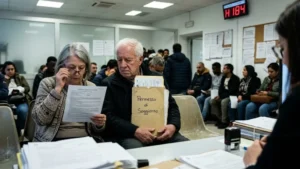
A Few Honest Tips for the Day of the Appointment at the Agenzia delle Entrate
- Geduldig sein. Italian public offices can be orderly but not always predictable. A short wait doesn’t necessarily mean there’s a problem.
- Don’t expect English to be widely spoken, especially outside major cities. In Abruzzo specifically, staff at smaller offices may have limited English. If you don’t speak Italian confidently, having your request written down — along with your address and phone number — makes communication considerably easier.
- Fill out as much of the form as possible before you arrive. Offices are often busy, and completing the form on-site under time (and language) pressure increases the chance of an error that sends you back another day.
- Bring everything twice. Originals plus copies, for you and anyone you’re applying on behalf of.
Keep your request simple: you’re applying for an Italian fiscal code (codice fiscale).
Once the application is accepted, you’ll typically receive a paper certificate showing your code the same day.
Keep it carefully and take a clear photo or scan for your records.
The physical plastic card some people associate with the code isn’t always issued immediately (at least not before you are physically resident in Italy), and the certificate is commonly enough for the next steps.
What matters is that the code and your personal details are correct.
Common Problems That Slow Things Down When Getting an Italian Fiscal Code
Most delays come from:
- incomplete documents
- inconsistent personal details
- or trying to use a code generated informally online (just don’t do this). A tax code calculator can show what a code may look like, but it’s not a substitute for an official assignment.
If an organisation needs your official Italian tax code, make sure you’ve received it through the proper channel.
Another common misunderstanding is assuming the code alone completes your wider relocation paperwork.
Das tun sie nicht.
An Italian tax code can be needed before arranging a lease, a purchase, or utilities, but it’s separate from Anmeldung des Wohnsitzes and other administrative steps.
The order can feel circular when you’re new: one office wants an address, another wants a code, and a provider wants both.
This is exactly why it helps to map out your next few steps rather than handling each request in isolation.
Our Abruzzo Bureaucracy Survival Kit walks through the full sequence, so you know what comes next before you’re standing at the counter.
If you’re moving with a partner or children, each person may need their own Italian tax code.
Don’t leave this until the day a school, doctor’s office, or housing provider asks for it.
Families often find that handling everyone’s paperwork together, where possible, makes the first weeks much easier.
When Local Support Makes a Difference
There’s nothing mysterious about applying for an Italian fiscal code, but doing it while you’re managing viewings, temporary accommodation, translation, travel, and a new country can make a simple errand feel much bigger.
Local support can help you understand the timing, prepare the right documents, communicate with the office, and coordinate the code with the steps that follow.
Bei Wanderlust Abruzzo, the Italian Fiscal Code appointment assistance service is about more than standing beside you at a counter.
Es geht darum, helping you arrive prepared and leave knowing what happens next, whether that’s speaking to a landlord, arranging a utility connection, or moving forward with residency registration.
For newcomers who are still finding their footing, that reassurance matters.
Your Italian tax code is one of the first small pieces of Italian life that becomes yours.
Put it in place early, keep the certificate safe, and let that first completed task give you a little more breathing room for everything ahead.
—
Need Help Getting Your Italian Tax Code Sorted?
Whether you’re still abroad or already in Abruzzo, we help you choose the right route and get it done without wasted trips.
Bei Wanderlust Abruzzobegleiten wir deutsch- und englischsprachige Expats durch alle praktischen Phasen der Auswanderung nach Abruzzo.
Persönlich, zweisprachig und direkt vor Ort.
Nimm noch heute Kontakt mit uns auf und lass uns über deinen Umzug nach Abruzzo sprechen
—
Häufig gestellte Fragen (FAQs)
Can I get my Italian tax code from my home country’s Italian consulate?
Usually, but not always — this depends entirely on your specific consulate, and many, particularly across Europe, have stopped offering this service in recent years. Always check directly with your consulate first. If it’s unavailable, a delegation service or applying in person once you’re in Italy are both reliable alternatives.
Do I need an appointment to get an Italian tax code in Italy?
Mostly yes, but it depends on the office. Many now require booking through the CUP system, either online or by phone. Some smaller offices still accept walk-ins during set hours. Check your specific office’s current policy before travelling there, since arriving without an appointment when one is required means a wasted trip.
Is the AA4/8 form available in English?
Ja. The official editable AA4/8 form und the official English instructions are both published by the Agenzia delle Entrate. You can complete and submit the form in either English or Italian.
Does getting an Italian tax code cost money?
No, the code itself is completely free, whether applied for through a consulate or an Agenzia delle Entrate office in Italy. If you use a paid delegation service to apply on your behalf while you’re still abroad, that service charges its own fee — but the tax code application itself carries no government fee.
What should I do if English or German isn’t spoken at my local Agenzia delle Entrate office?
Expect this to be common, especially outside major cities and in smaller Abruzzo towns. Prepare a short written note in Italian stating your request, your name, address, and phone number. If you anticipate needing more support than a note allows, bringing a bilingual friend or arranging a local accompaniment service (such as Wanderlust Abruzzo) removes the pressure of the conversation happening entirely in real time.


 English
 Deutsch