

You can fall in love with Abruzzo in a weekend.
Snowy mountains in the distance, quiet hill towns, long beaches, lower living costs, and a pace that feels more human.
But deciding to move to Abruzzo is the easy part.
The harder part is handling the paperwork, the housing search, the appointments, the language gap, and all the small practical details that suddenly become very big when you’re doing them from another country.
That gap between dream and daily reality is where many relocations start to feel stressful.
Not because Abruzzo is the wrong choice, but because moving anywhere in Italy asks for patience, flexibility, and local knowledge.
As Feather’s 2026 guide to moving to Italy puts it plainly, never wire money before signing an official contract, and never pay deposits for apartments you haven’t personally visited — advice that exists precisely because so many newcomers learn it the hard way.
If you’re considering the move, it helps to know what life here can offer and what usually catches people off guard — including some real stories from people who’ve made this exact move.
Why People Move to Abruzzo
Most people who choose Abruzzo are not chasing big-city status.
They want breathing room.
They want a life with:
- more nature
- more community
- and fewer financial pressures
Abruzzo appeals to people who love authentic Italy but don’t want the cost or intensity of Rome, Milan, or Florence.
That doesn’t mean every part of the region feels the same:
- Coastal areas can suit people who want easier access to services, flatter terrain, and a more active year-round routine.
- Hill towns often offer charm, views, and quieter living, but they may feel more isolated if you don’t speak Italian yet or need frequent access to offices, shops, or public transport.
The right fit depends on how you actually want to live, not just what looks beautiful in photos.
For many English- and German-speaking newcomers, Abruzzo hits a rare balance: scenic and grounded, affordable in many areas but still connected, traditional but not frozen in time.
That balance is exactly why so many people are drawn here — and why good planning matters.
What Surprises People After the Move: Two Real Stories
The biggest surprise is usually not cultural.
It’s logistical — and it tends to show up as a slow accumulation of small frustrations rather than one big crisis.
The car registration that took two months
One person we know of went through exactly this: registering a foreign car in Italy, expecting it to be a fairly routine administrative task.
Instead, it became a two-month ordeal — €1,200 in unexpected costs, no licence plates for weeks, and a commercialista who quoted €1,500 for VAT registration and 1 year accounting services, and still took over a month to deliver it.
None of these individual steps was impossible.
The accumulation of delays, costs, and unclear timelines is what made it genuinely stressful.
The house purchase delayed by paperwork
Another common story involves the purchase process itself: a notary appointment pushed back repeatedly because of issues with the property’s paperwork registration, combined with a seller who was difficult to reach for clarification.
This is a well-documented risk in Italian property transactions — Idealista’s 2025 buyer guide specifically recommends hiring an independent bilingual lawyer rather than relying solely on a solicitor recommended by the seller, precisely because interests don’t always align and documentation issues surface late in the process.
Neither of these situations is unusual.
They’re the kind of thing that happens to capable, organised people simply because Italian administrative systems depend on local knowledge that newcomers don’t yet have.
Housing is another common shock
Finding a place to live in Abruzzo remotely is possible, but it comes with risks:
- Listings may be outdated.
- Expectations around contracts, deposits, or included utilities may be different from what you’re used to.
- Some homes look charming online but are less practical in person, especially if you need reliable heating, strong WiFi, parking, or easy access during winter.
Then there’s the cumulative effect of small things
- Setting up internet.
- Understanding waste collection.
- Registering where needed.
- Figuring out where to shop for basics.
- Learning which offices require appointments and which still depend on showing up and waiting.
None of these tasks is impossible.
Together, though, they can feel exhausting when you’re also trying to adapt emotionally to a new country.
Why Italian Bureaucracy Specifically Takes Longer Than Expected
It’s worth understanding why this happens, because it removes some of the personal frustration from the equation.
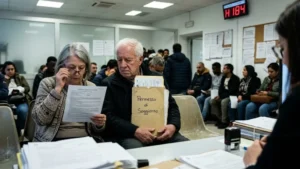
As An American in Italy notes, nearly every expat will tell you that Italian bureaucracy is one of the hardest parts of the move — slow-moving, and often requiring months of waiting for appointments that simply can’t be skipped.
Between the permesso di soggiorno (for non-EU citizens), residency registration, the tessera sanitaria, the codice fiscale, and potentially an Italian driving licence, there are multiple parallel processes, each with its own office, its own document requirements, and its own timeline.
This isn’t a reflection of you doing something wrong.
It’s a structural feature of the system — one that rewards preparation, patience, and, ideally, someone who already knows the sequence.
How to Prepare Before You Move
If you want your move to feel smoother, start with realism, not fantasy.
Before you move to Abruzzo, think carefully about your non-negotiables:
- Do you need fast internet for remote work?
- Do you want to live year-round or part-time?
- Will you rely on public transport, or do you need a car?
- Are you comfortable in a quieter town where English isn’t widely spoken?
These questions matter more than whether a village looks postcard-perfect.
It also helps to gather your documents early and keep everything organised.
Italy tends to reward people who are patient and prepared.
Having a clear folder system, printed copies when needed, and backup scans can save a surprising amount of stress later.
One detail worth knowing in advance: name discrepancies between documents — a passport showing “Catherine” while a birth certificate shows “Katherine”, for example, are a genuinely common cause of delays when getting the Italian tax code (Codice Fiscale).
Checking that all your documents are consistent before you start is a small thing that prevents a real headache.
If possible, spend time in the exact area you’re considering before committing.
- A coastal town in summer can feel very different in November.
- A beautiful hillside location can feel less idyllic if every errand requires a long drive.
What works for a holiday isn’t always what works for daily life.
Choosing Where to Live in Abruzzo
This is where local guidance becomes especially valuable, because the best place for you depends on lifestyle, not general rankings.
Pescara often appeals to newcomers who want more convenience, services, shops, transport links, and a less isolated transition into Italian life.
It can be a good fit if you want a city feel without the scale and cost of larger urban centres.
Places like Francavilla al Mare, Silvi, and Pineto can suit people who want coastal living with a slightly calmer rhythm — a nice middle ground between everyday practicality and that relaxed seaside atmosphere many movers are looking for.
Towns inland, including places around Chieti or smaller historic centres like Sulmona or Guardiagrele, may offer more character, stronger local identity, and lower property costs.
They can be deeply rewarding, especially if you want immersion and a slower pace.
But they may also require more independence, more Italian, and more comfort with limited services nearby.
There is no single right answer.
The mistake is choosing based only on romance or price.
The better approach is matching the place to your real routine.
The Practical Side of Settling In
Once you arrive, the move becomes less about decision-making and more about follow-through.
This is the stage where many people feel the most overwhelmed, because there are several moving parts at once.
You may need help with home search support, utility setup, WiFi installation, local orientation, or accompanying support for appointments.
Even confident, capable people can feel out of their depth here, especially if they don’t yet speak enough Italian to catch the details that matter.
This is also where having someone local who speaks your language can make a real difference.
Not because you can’t do it yourself, but because doing it alone often costs more time, more stress, and more second-guessing — as both the car registration story and the house purchase stories mentioned above illustrate.
A good relocation guide helps you understand what’s happening, what order things usually happen in, and where avoidable mistakes tend to show up.
That kind of support is practical, but it’s also emotional.
Starting over in a new place can feel lonely, even when it’s something you chose.
Having a calm, knowledgeable person beside you changes the experience.
Instead of constantly wondering whether you missed something, you can start building your life with more confidence.
What Life in Abruzzo Feels Like Once You’re Settled
For the right person, life here can feel refreshingly ordinary in the best way.
The wins are often small at first:
- You know where to buy what you need.
- You stop translating every conversation in your head.
- You learn the rhythm of your town.
- The person at the coffee bar recognises you.
- The process that once felt impossible becomes familiar.
Abruzzo tends to reward people who are willing to slow down and adapt.
If you need constant novelty, instant results, or highly standardised systems, there may be moments of friction.
But if you’re looking for beauty, community, and a more grounded pace, the region has a lot to give.
It’s also a place where your experience can deepen over time.
What feels quiet at first can later feel peaceful.
What feels unfamiliar can become belonging.
Many expats don’t just stay because Abruzzo is affordable.
They stay because life starts to feel fuller and less rushed.
—
Ready to Move to Abruzzo Without the Chaos?
A relocation doesn’t need to be perfect to go well.
It just needs the right support in the right moments.
That might mean getting help before you sign for a rental, before you book appointments, or right after you arrive, when everything still feels blurry.
It might mean having someone explain the next step in plain English, help you get oriented, or simply make the process feel less isolating.
That’s exactly where a locally focused service like Wanderlust Abruzzo can be so useful — not as a distant agency, but as practical, on-the-ground support from someone who understands both the region and the emotional weight of the move.
At Wanderlust Abruzzo, we help English- and German-speaking expats avoid exactly these kinds of avoidable delays and costs — from property searches and paperwork to utilities and the first settled weeks.
Personal, bilingual, and on the ground.
If Abruzzo already feels like the place you want to begin your next chapter, trust that instinct — but give yourself the gift of good preparation.
Starting over is hard enough.
It helps when you don’t have to figure out every step alone.
Get in touch today and let’s talk about your move to Abruzzo
—
Frequently Asked Questions
What’s the biggest mistake people make when moving to Abruzzo?
Underestimating how long Italian bureaucracy takes and trying to manage every step alone without local knowledge. Most serious relocation stress doesn’t come from one big problem — it comes from an accumulation of small delays: a missing document, an unreturned email, a notary appointment pushed back. Going in with realistic timelines and the right local support prevents most of this.
How long does it typically take to settle into Abruzzo?
The administrative side — residency, codice fiscale, health card, utilities — usually takes a few months to fully complete, depending on your specific situation and how well-prepared your documentation is. Feeling genuinely settled, emotionally and socially, tends to take longer: most expats describe real comfort arriving somewhere between three and six months after arrival.
Should I rent or buy when first moving to Abruzzo?
For most newcomers, renting first is the safer approach. It gives you time to properly understand different towns and neighbourhoods, test what daily life is actually like across different seasons, and avoid rushing into a purchase before you fully understand the local property market. That said, renting is becoming a real issue, due to the lack of rentals offered. Most landlords prefer renting for the summer holidays, getting more money from their investment. That’s why buying it’s becoming a valid alternative, if you do it properly and with the right support.
Is it worth getting local help when moving to Abruzzo, or can I manage alone?
Many people manage parts of the move independently, especially if they have strong Italian or significant patience for bureaucracy. But local, bilingual support tends to prevent the kind of costly, time-consuming mistakes that are common without it — delayed registrations, miscommunication with landlords or agents, and confusion about correct procedures. For many, the cost of support is considerably lower than the cost of the mistakes it prevents.
What should I do before I even start the move to Abruzzo?
Get clear on your non-negotiables: internet needs, car dependency, language comfort, and whether you want year-round or part-time living. Gather and check the consistency of your documents early, since name discrepancies and missing paperwork are common causes of delay. And if possible, visit your target area outside of summer, so you see what daily life actually looks like rather than just the holiday version.


 English
 Deutsch