How to Move to Abruzzo Without the Chaos: The 7-Step Blueprint

Learn how to move to Abruzzo with less stress. From visas and housing to utilities and residency, here’s what to plan before you go.
Moving to Abruzzo: Why Doing it Alone Costs 3x More Than Hiring a Local Expert

You’ve spent months on Idealista. You’ve mapped out the villages near Pescara or the hills of Teramo. You’ve told yourself, “I can handle the move myself — how hard can it be to sign a lease and get the lights turned on?” It’s a common thought. But when calculating the cost of moving to Abruzzo, many expats forget to factor in the “Inexperience Tax.” In Italy, what you don’t know can cost you — not just in stress, but in hard currency. Here is a transparent look at the “Solo Move” vs. the “Wanderlust Abruzzo” approach. The “Ghosting” Expense: Wasted Travel The Solo Way You find 10 houses online and fly to Abruzzo for a week. You email agents in English. Only two reply. When you arrive, one house is already sold, and the other looks nothing like the photos. You’ve spent €1,500 on flights and car rentals for zero results. The Wanderlust Way We handle the calls in Italian. We pre-select properties that actually meet your requirements. Often, we perform a live video visit before you book your flight. You fly once, see the winners, and sign with confidence. The “Upsell Trap” and Utility Confusion The Solo Way You manage to get a provider on the phone, but the conversation is a struggle. Without realizing it, you agree to a contract filled with “add-ons” — insurance policies or maintenance fees you don’t need. Or worse, you choose a provider with a low introductory rate that triples after six months because you couldn’t decipher the Italian contract terms. The Wanderlust Way We don’t sign for you, but we stand with you. We help you choose a transparent provider, assist in filling out the complex paperwork, and act as your “bureaucracy shield” to ensure you aren’t paying for extras that only benefit the provider. The “Catch-22” of the Codice Fiscale The Solo Way You arrive in Abruzzo ready to start your life. You go to buy a SIM card or sign a rental contract. They ask for your Codice Fiscale. You head to the Agenzia delle Entrate, wait in line, and realize you don’t have the right form. You spend an extra week in a hotel just waiting for a tax number. The Wanderlust Way We facilitate the Codice Fiscale via delegation while you are still abroad. You arrive on Day 1 with your tax code in hand, ready to hit the ground running. The Bottom Line: Avoiding the “Small Mistakes” Whether it’s a misunderstood clause in a rental contract or a fine from the Comune because your waste tax (TARI) wasn’t registered properly, the costs of “doing it alone” add up quickly. When you add up the “beginner mistakes” — the extra months of rent, the repeated flights, the security deposits lost to bad contracts, and the sheer time lost to frustration — the DIY move often costs three times more than professional support. With Wanderlust Abruzzo’s full relocation support packages, you pay one clear fee for a local advocate who ensures you are treated fairly, helping you save thousands in avoided errors and wasted time. FAQs: Moving to Abruzzo Costs Q: Can’t I just use Google Translate for everything? A: Google is great for menus, but it doesn’t understand the nuance of Italian bureaucracy or local “office customs.” A mistranslated word on a housing contract or utility form can lead to long-term financial errors. Q: Do you sign contracts on my behalf? A: No. You remain the decision-maker and the signer. We act as your bilingual bridge—helping you choose providers, explaining the fine print, and handling the frustrating phone calls so you aren’t struggling alone. Q: Why do I need help with the Codice Fiscale before I arrive? A: Without it, you are “digitally invisible.” You cannot get a permanent SIM card, open a bank account, or sign a utility contract. Getting it early ensures your first week in Abruzzo is spent enjoying an aperitivo, not standing in government lines. Q: Is hiring a relocation expert really an “investment”? A: Yes. When you factor in the cost of flights, temporary accommodation, and the overpayment of utilities due to incorrect contract choices, our support typically pays for itself within the first few months of your move. Ready to Move Without the Chaos? Relocating to Abruzzo should be the start of a beautiful chapter, not a battle with paperwork. At Wanderlust Abruzzo, we provide the personal, bilingual support you need to settle in with clarity and calm. Are you ready to trade the paperwork headache for a glass of Montepulciano? Don’t pay the “Inexperience Tax.” Book your Strategy Call today, and let’s plan your move to Abruzzo the right way.
Codice Fiscale in Italy: What It Is and How to Get Yours

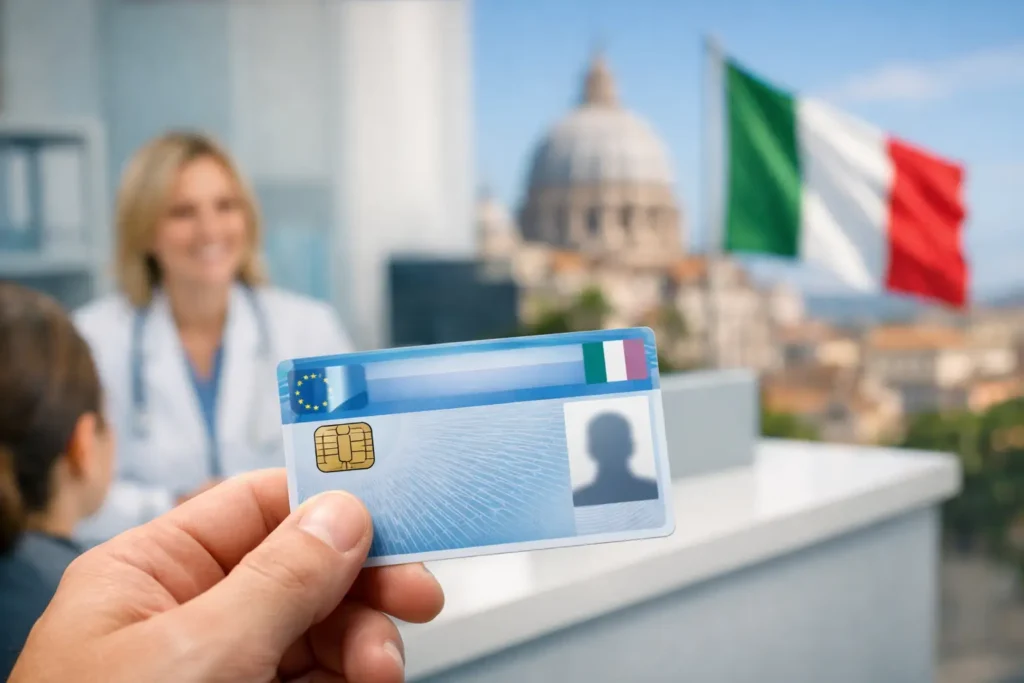
If you’ve spent more than five minutes researching your move to Abruzzo, you’ve hit a wall called the Codice Fiscale. But what is Codice Fiscale Italy, really? Think of it as your administrative DNA. It is a 16-character alphanumeric code that the Italian government uses to identify you. While it is technically a “tax code,” it is used for almost everything in your daily life except taxes. From signing a lease to getting a SIM card or connecting your WiFi, this code is the “Master Key” that unlocks your life in Italy. What a codice fiscale actually is A codice fiscale is your Italian tax identification code. It is used by public offices, landlords, banks, utility companies, employers, and healthcare providers to identify you in the system. It is not the same thing as a residence permit, and it is not proof of residency. Think of it as a personal ID code for administrative and financial life in Italy. You may need it long before you complete other parts of your move. For most people relocating to Abruzzo, it becomes one of the first documents to sort out because so many later steps depend on it. Who needs a Codice Fiscale? If you are moving to Italy, you will likely need a codice fiscale for: buying property renting a home opening a bank account setting up utilities working studying inheriting property handling most official transactions Even people who are not yet full-time residents often need one early. For example, if you are house hunting in Abruzzo and want to sign a rental contract before your permanent move, a codice fiscale may be required before the paperwork can move forward. Children can also have a codice fiscale, so families relocating together often apply for more than one. Deciphering the Codice Fiscale: What Do the Letters and Numbers Mean? Unlike tax numbers in the US or other European countries, which are usually random, the Italian code is built directly from your personal identity. Here is how the 16 characters are calculated: First 3 Letters: Derived from your Surname (usually the first three consonants). Next 3 Letters: Derived from your First Name. First 2 Numbers: The last two digits of your Birth Year (e.g., 1985 becomes “85”). The 9th Character: A letter representing your Birth Month (January is A, February is B, etc.). Next 2 Numbers: Your Day of Birth + Gender. For men, it’s the date (01–31). For women, we add 40 to the date (so a woman born on the 5th would have “45”). Next 4 Characters: Your Place of Birth. For those born outside of Italy, this starts with a “Z” followed by a specific country code (e.g., Z112 for Germany). The Last Letter: A “Control Character” used by the system to verify the entire string is correct. Codice Fiscale vs. Tessera Sanitaria: What’s the Difference? This is where many expats get confused. Are the codice fiscale (Italian tax code) and tessera sanitaria (Italian health card) the same thing? Yes and no. Here’s the difference: Codice Fiscale: This is the number itself. It never expires. You can have the number printed on a white piece of paper, and it is legally valid for life. Tessera Sanitaria (Health Card): This is a plastic card with a microchip. It contains your Codice Fiscale printed on the front, but it also links you to the National Health System (SSN). The Key Distinction: You can get a Codice Fiscale certificate as a non-resident. However, you can only get the Tessera Sanitaria card once you have officially registered your residency in Italy and paid your health insurance fees. To survive your first 90 days in Italy, the paper certificate is enough. You’ll only see the plastic card later. How to get the Codice Fiscale: the two main ways There are two common routes, and the right one depends on where you are when you apply. Apply through an Italian consulate abroad If you are still living outside Italy, you may be able to request a codice fiscale through the Italian consulate responsible for your area. This can be useful if you need the number before arrival, especially for property purchases or pre-move paperwork. That said, consular procedures are not always identical. Some consulates process requests quickly. Others have limited appointment availability or stricter document checks. If you are on a tight timeline, it is worth confirming the exact local procedure before assuming this will be the fastest option. Apply in Italy through the Agenzia delle Entrate If you are already in Italy, the usual place to apply is the Agenzia delle Entrate, which is the Italian Revenue Agency. This is the most direct route for many expats. You go to the office, submit the application form and your identification documents, and receive your codice fiscale. In some cases, the number is issued quite quickly. In others, timing depends on the office, the queue, and whether your documents are accepted without questions. The Modern Hurdle: Consulates are Closing Doors In years past, getting your code was as simple as visiting an Italian Consulate in your home country. Today, that is rarely an option. Most international embassies and consulates have stopped providing this service, telling expats to “get it when you arrive”. But as we’ve discussed, waiting until you arrive is a trap. You can’t rent a home without the code, but you can’t easily get the code without an Italian address or a pre-booked appointment that could be weeks away. Documents you will usually need The core requirement is valid identification. For EU citizens, that often means a passport or national ID card. For non-EU citizens, a passport is typically the starting point, and sometimes visa or immigration documentation may also be requested depending on the context. You will usually need to complete the official codice fiscale application form AA4/8. Some offices provide it on-site, but it is better not to rely on that if you