
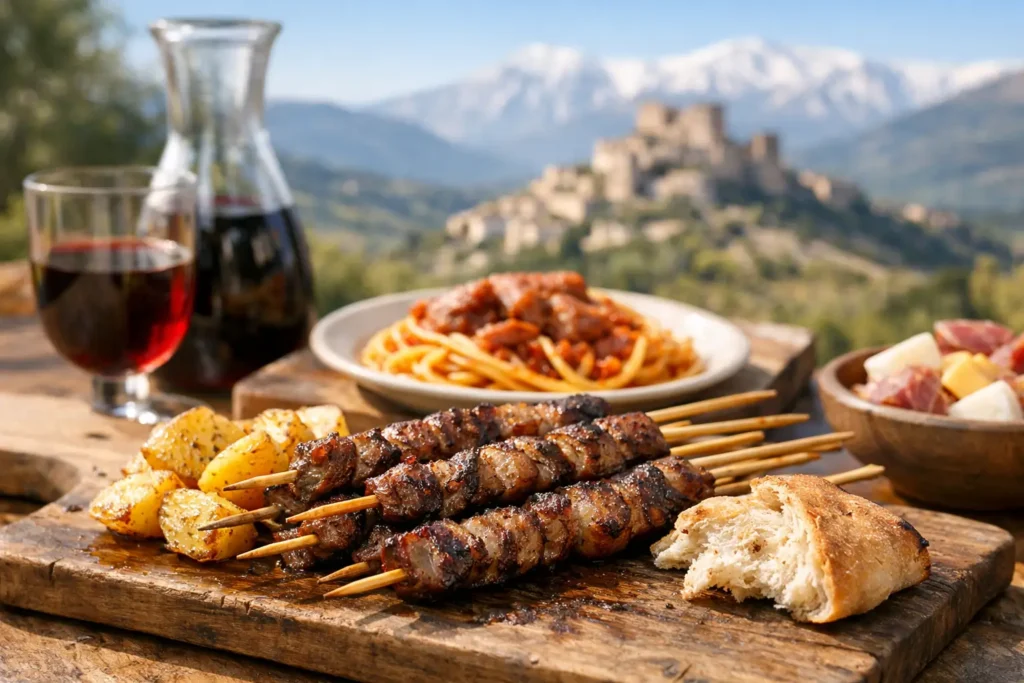
If you’ve just started asking “what is a famous dish from Abruzzo”, the most honest local answer is Arrosticini.
It’s not a complex pasta with a heavy reduction sauce or a delicate dessert dressed up for Instagram.
Arrosticini are simple skewers of grilled lamb, and they tell you everything you need to know about the region before you’ve even unpacked your boxes.
For anyone moving here, food is never just sustenance.
In Abruzzo, the table is where integration happens.
It is the fastest way to understand the “Strong and Kind” (Forte e Gentile) pace of the people.
1. Arrosticini: The Shepherd’s Legacy
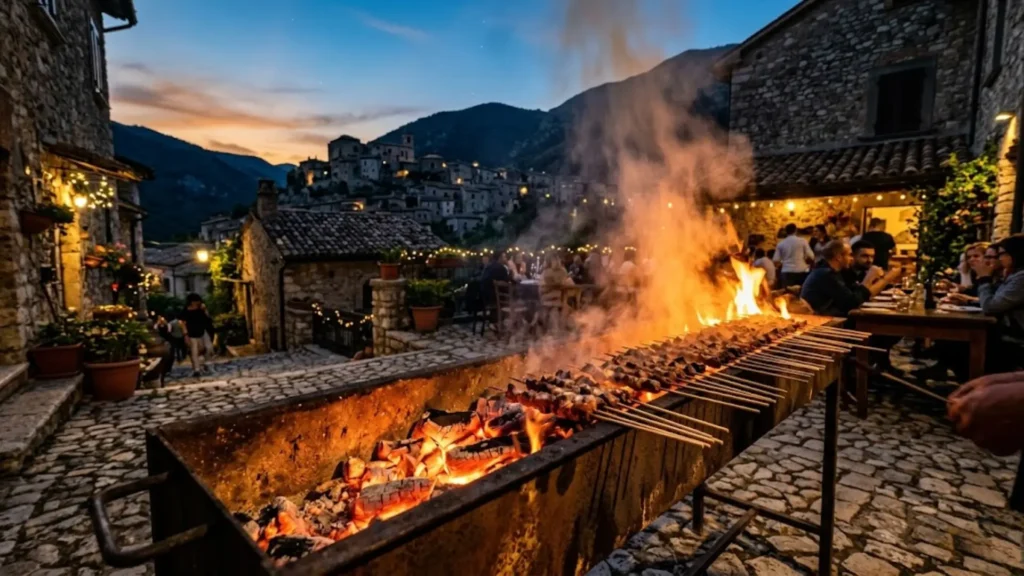
Arrosticini are small cubes of castrated sheep meat (ovino) threaded onto skewers and cooked over a narrow charcoal grill called a fornacella.
The Origins
This dish was born from the Transumanza — the ancient seasonal migration of sheep from the mountains to the plains.
Shepherds needed a meal that was portable and utilized every part of the animal.
They cut the meat into tiny cubes to ensure even cooking over small mountain fires.
How to Eat Them Like a Local
- The Seasoning: Only salt. If you see sauce or herbs, it’s not authentic.
- The Side: Always served with slices of “Pane di Genzano” or similar rustic bread brushed with extra virgin olive oil.
- The Batch: You don’t order one; you order twenty. They arrive wrapped in foil to stay hot, and you pull the meat off with your teeth.
2. Maccheroni alla Chitarra: The Culinary Architecture
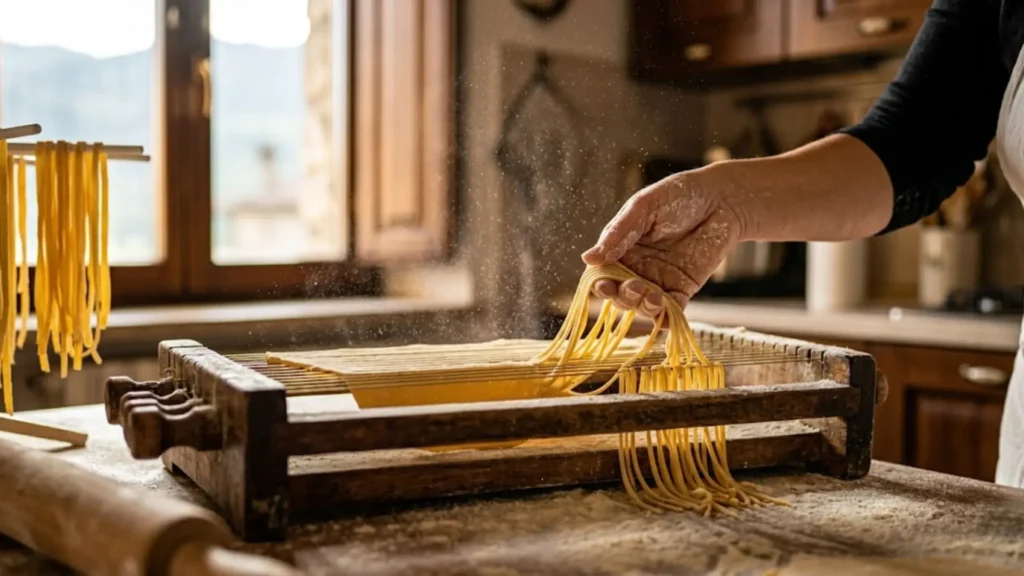
While Arrosticini represent the mountains, Maccheroni alla Chitarra represent the Abruzzese home.
The “Guitar” Method
This pasta is made by pressing a sheet of egg dough through a wooden frame strung with thin steel wires — resembling a guitar (chitarra).
This creates a square-shaped spaghetti with a porous surface, perfect for “grabbing” heavy sauces.
The Pairing
Traditionally, it is served with a ragù abruzzese made from a mix of lamb, beef, and pork, or with pallottine — tiny, hand-rolled meatballs the size of a marble.
3. Pallotte Cacio e Ova: The “Poor Man’s” Meatballs
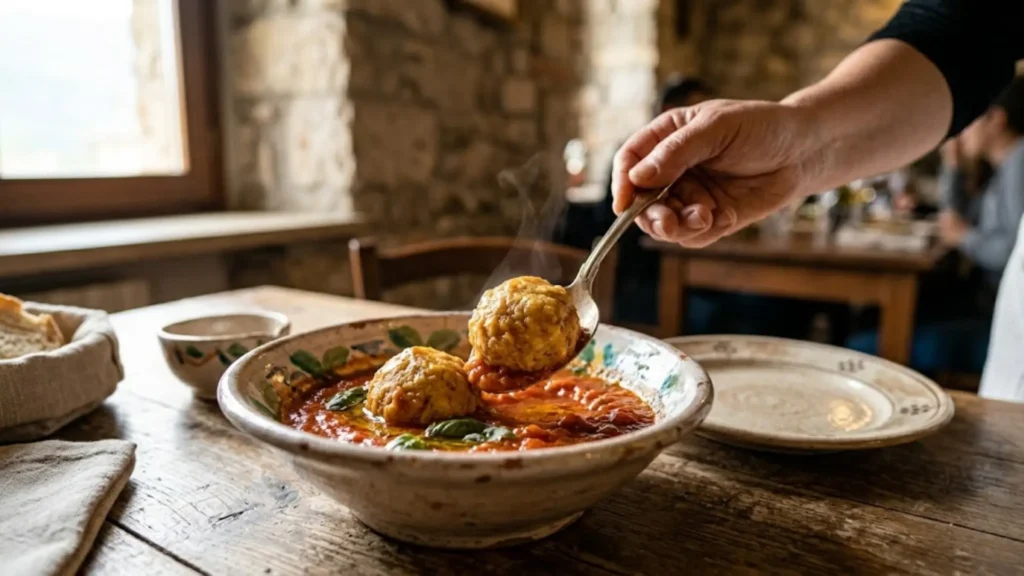
For expats settling in the Abruzzo countryside, this dish is a lesson in regional resourcefulness.
The Philosophy of Cucina Povera
In the past, meat was a luxury.
Pallotte Cacio e Ova are “meatballs” without the meat.
They are made from stale bread crumbs, eggs, and aged pecorino cheese.
They are fried until golden and then simmered in a rich tomato and bell pepper sauce.
The Taste
They are savory, fluffy, and incredibly filling.
It is the ultimate comfort food and a staple at every Sagra (food festival) from Teramo to Vasto.
4. Scrippelle ‘Mbusse: The French Connection?
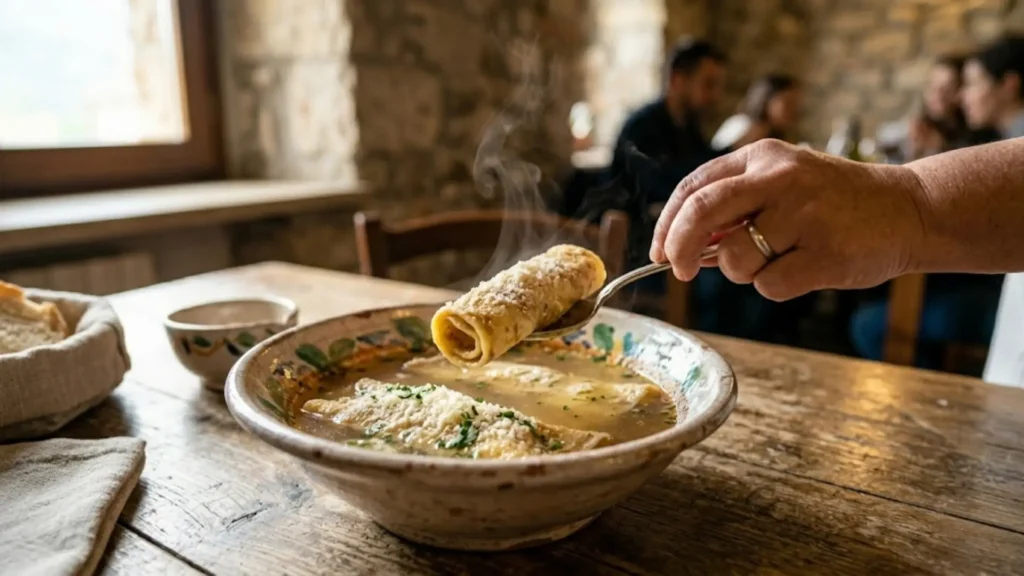
Mainly famous in the province of Teramo, Scrippelle look like French crêpes, but they are uniquely Abruzzese.
- Scrippelle ‘Mbusse: Crêpes dusted with pecorino, rolled up, and served “wet” in a hot, clear chicken broth.
- Timballo: A towering masterpiece where the scrippelle replace lasagna sheets, layered with ragù, artichokes, and tiny meatballs.
Why Food Knowledge is Your Secret “Residency” Tool
Settling into a new region is about more than getting your residency paperwork or utility setup sorted.
It is about learning where the connection happens.
In Abruzzo, a conversation about the “best Arrosticini spot” is a bridge to a new friendship.
When you show a local that you know the difference between a handmade (fatto a mano) skewer and an industrial one, you are no longer a “tourist” — you are a future neighbor who respects the culture.
One of the most surprising things newcomers notice when they move to Pescara or Chieti is how food traditions unify the region.
The coast and the mountains are not separate worlds; they overlap on the plate.
—
How to Navigate the Abruzzo Food Scene
The best experiences are rarely found in restaurants with English menus.
Look for:
- Agriturismi: Farm-to-table estates where the family cooks what they grow.
- Sagre: Summer festivals dedicated to a single ingredient (e.g., the Sagra del Tartufo).
- Macellerie with Grills: Some butcher shops in Abruzzo villages have a fornacella out back. You buy the meat, and they grill it for you on the spot.
If you want to live a truly Abruzzese experience, you can learn to grill them yourself in one of the most wonderful places of Abruzzo: at the Gran Sasso mountain.
In Campo Imperatore, there are two small butcher shops where they sell you the meat (along with cheese, bread, and other delicious food), and you can grill it yourself in the barbecue area they have set up in front. They’re called Ristoro Mucciante and Ristoro Giuliani.
At Wanderlust Abruzzo, we know that feeling “at home” grows through these shared meals.
Sometimes the first sign that you’ve truly arrived isn’t your health card coming in the mail — it’s knowing exactly which village makes the best Pallotte and having the confidence to order them in Italian.
—
Frequently Asked Questions
Is Abruzzese food spicy?
Compared to the northern part of Italy, it may be. But if you’re wondering whether you landed in Italy or Mexico, it’s not that spicy. Abruzzo is famous for the peperoncino (chili pepper), often called diavoletto. Many dishes, especially pasta and oils, come with a kick of heat that you won’t find in Tuscany or Lombardy, but it’s nothing you should worry about.
Can I find vegetarian options in Abruzzo?
Absolutely. While Arrosticini get the headlines, Abruzzo has a massive tradition of legume-based dishes (like Lentils from Santo Stefano di Sessanio) and vegetable-heavy sides like Sagne e Fagioli (pasta and beans).
What wine should I pair with Abruzzese food?
The rule is simple: Montepulciano d’Abruzzo (red) for Arrosticini and meats, and Trebbiano d’Abruzzo or Pecorino (white) for seafood and pasta. For a true local experience, try Cerasuolo d’Abruzzo — a deep cherry-colored rosé that pairs with almost everything.
What is “Confetti” from Sulmona?
They aren’t the paper scraps thrown at parades! Confetti are sugar-coated almonds. Sulmona is the world capital of these treats, often crafted into beautiful silk-flower arrangements for weddings and celebrations.
Are restaurants in Abruzzo expensive?
Abruzzo remains one of the most affordable regions in Italy. A full meal with wine in a traditional trattoria often costs between €20 and €30 per person, offering incredible value compared to major Italian cities.


 English
 Deutsch